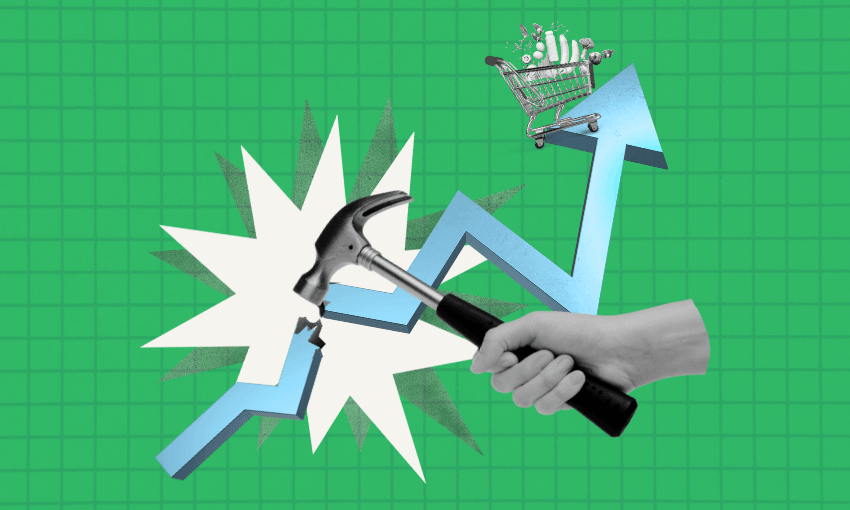

The cost of living is biting hard, and our government’s primary treatment plan relies almost entirely on the Reserve Bank hiking the OCR to ‘cool’ the economy. It’s a wildly inappropriate tool for a highly complex job, argues Jeremy Smith.
A foundational belief of modern central banking is that the best way to lower the cost of a block of cheese is to ensure the person trying to buy it no longer has a job. The intellectual genius of central banks’ primary economic cure relies on swinging an interest-rate hammer at the economy until everyday citizens are sufficiently traumatised into not asking for pay rises. The idea that the real tragedy of inflation is a family worrying about putting food on the table is a dangerous delusion, as it is clearly the far more harrowing trauma of a wealthy deposit-holder watching the purchasing power of their capital be slightly eroded.
We all want the same basic things for our communities: a warm, dry place to live, groceries that don’t require taking out a second mortgage, and the peace of mind that comes from knowing we can provide for our families. But right now, the current rules of our modern economy are making us sick, sweeping too many everyday New Zealanders into severe financial stress.
The cost of living is biting hard, and our government’s primary treatment plan relies almost entirely on the Reserve Bank hiking the OCR (official cash rate) to deliberately “cool” (a euphemism for harm) the economy. It’s an approach that feels a lot like trying to perform delicate open-heart surgery using a hammer. A wildly inappropriate tool for a highly complex job.
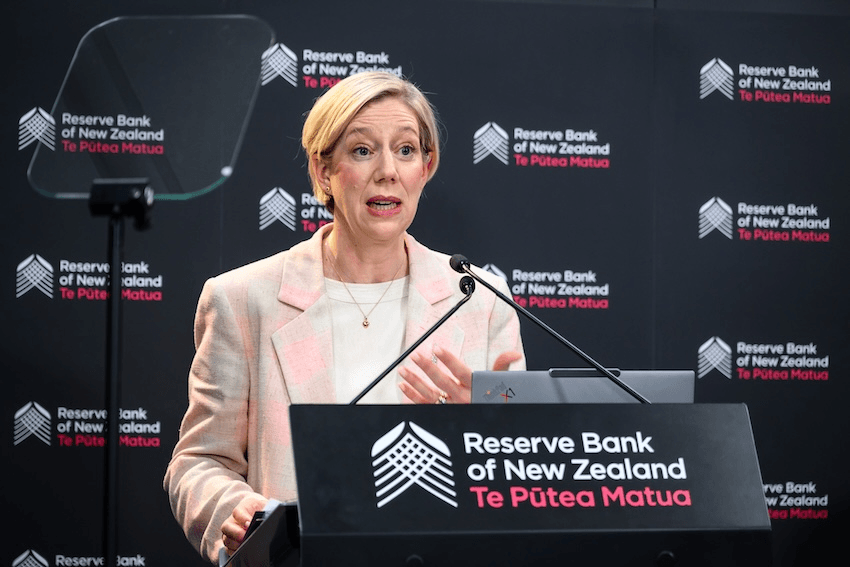
Even central bankers concede that the cash rate is a remarkably blunt instrument, while economists and commentators like Shamubeel Eaqub and Bernard Hickey question whether central banks are best equipped to manage inflation.
Yet the policy remains unchanged, and the Reserve Bank continues to swing the hammer.
A true diagnosis
If you want to cure an illness, you first need an accurate diagnosis. When prices jump, we’re often told by orthodox economists that the economy is “overheating” because ordinary people have too much cash and are spending recklessly. But modern economics tells a very different story, one rooted in global supply chains and corporate power rather than greedy consumers.
Think back to the 1970s. That infamous era of inflation wasn’t caused by “too much consumer demand”, it was triggered by massive global supply shocks, beginning with the 1973 Arab-Israeli War and the subsequent Opec oil embargo, and later compounded by the 1979 Iranian Revolution.
In the 2020s, we have lived through a similar sequence of compounding global emergencies. The Covid-19 pandemic caused severe supply chain disruptions, crippling ocean shipping, port capacities and air freight networks. Then, in 2022, the Russian invasion of Ukraine sent violent shockwaves through global food, grain and energy markets. The inflationary impact was remarkably similar globally.
Now, in 2026, the US-Israel war on Iran has introduced massive new risks and fossil fuel volatility into the global system. But there is a catch to these crises. As economists Isabella Isabella Weber and Evan Wasner – and even the IMF – have pointed out, large corporations aren’t just passively passing on these rising costs to us. Instead, they actively use the cover of global emergencies to pad their profit margins.
When a few massive companies dominate a sector, they don’t have to worry about competitors undercutting them. They set prices based on their costs plus a hefty markup, which directly reflects their monopoly power. This creates a domino effect across the economy. Price hikes in primary, systemically significant resources like fuel or food ripple through to manufacturing and eventually hit the service sector.
Because governments provided vital fiscal support to keep the economy from crashing during the pandemic, mega-corporations realised they could maintain – and even grow – their profits by simply charging us more.
And when workers finally ask for a pay rise, it isn’t to get ahead. It’s a desperate defence mechanism just to survive the brutal fall in their living standards brought on by that initial shock and the ensuing corporate profiteering. It is the final stage of conflict inflation, not the cause of it.
A quack cure
So, how do we currently handle this mixture of corporate profiteering and global supply chain chaos? By punishing the patient.
The orthodox economic model effectively misdiagnoses the problem as “too much spending”. The explicit goal of raising the OCR is to sedate consumer demand, slow down businesses and increase unemployment.
This is the dark, systemic flaw of central banking. The Reserve Bank is intentionally increasing unemployment to maintain a “buffer stock” of unemployed people. The grim logic: fear of unemployment makes workers less likely to ask for fair pay increases.
And the cruel irony? While the Reserve Bank is deliberately throwing people out of employment, Work and Income then harasses the same people for not trying hard enough to find jobs that no longer exist. New Zealanders who can’t find work are the ones blamed and stigmatised.
But wait, it gets worse. The OCR hammer operates as a massive, regressive wealth transfer. Higher interest rates effectively act as a government subsidy – a form of welfare. People with large amounts of spare cash sitting in term deposits see their wealth grow. And commercial banks reap windfall profits.
Who bears the cost? Indebted households, mortgage holders and small businesses are all placed under financial pressure. This old-fashioned story of inflation is restricting our opportunities rather than expanding them.

Preventive medicine
We don’t have to accept this economic quackery. If the treatment is making the patient sicker, we need new approaches.
Instead of the OCR hammer, we need a whole-of-government approach focused on preventive medicine – building a robust economic immune system that stops inflation from causing trauma in the first place.
Influential economists Pavlina Tcherneva and Patricia Pino advocate for a counter-inflationary employment guarantee. Instead of relying on the trauma of forced unemployment to keep wages down, the government could set a stable floor by funding locally administered unconditional employment at a living wage for anyone who wants to work.
Setting a standard for decent work protects people’s mental and physical health from the trauma of job loss and lets everyday people do meaningful, socially useful work in our communities.
It also creates a powerful macroeconomic stabiliser. When the private sector sheds jobs, the employment guarantee absorbs those workers, preventing them from falling into poverty. When the private sector booms, it hires workers out of the employment guarantee pool.
Leading economist Ganesh Ahirao emphasises that genuine responsible economic governance requires acknowledging that our economy is constrained by the real capacity of our productive resources – our natural environment, physical infrastructure and resources, and the unique skills and knowledge of our people and communities.
By accelerating public capital investments in renewable energy and building commodity buffer stocks, we can untether Aotearoa from the chaotic swings of global fossil fuel markets while safely expanding our economic capacity.
This is about nurturing our systems so our economy has the actual immune capacity to absorb future supply shocks, proving that robust productive resources are the ultimate medicine, rather than scrambling when shocks inevitably hit.
When crises hit systemically significant goods like energy, housing and food, the government can step in with targeted, strategic price stabilisations: short-term bandages.
Opponents will loudly claim that price controls are impossible, unnatural or will lead to shortages, but history shows they successfully helped manage inflation during World War II supply constraints. Ironically, the OCR is itself a massive economy-wide price control on the cost of money.
To truly anchor price stability, we must actually strengthen competition law instead of repeating performative political debate. Aotearoa’s small population and geographic isolation mean that our markets naturally default to “stable oligopolies”. The Commerce Commission needs robust powers to dismantle entrenched monopolies and duopolies that exploit consumers.
Implementing windfall taxes on corporate giants can also stop profiteering from another person’s misery.
And if excessive spending or bank credit creation is truly an issue, it can be managed through direct taxation and targeted credit controls on banks, rather than indiscriminate blanket interest-rate hikes that hurt many New Zealanders, businesses and communities.
Our economy is a human creation. It’s a set of choices. We don’t have to accept an outdated diagnosis that forces everyday workers, renters and mortgage holders to bear the brutal emotional and financial stress of inflationary pressures they didn’t cause.
By demanding a whole-of-government approach to minimising inflation risks, we can strengthen our economy by focusing on targeted interventions, fair taxes, resilient supply chains and guaranteed employment.
It’s time to put the hammer away and start practising the preventive medicine we need to build a fair and healthy Aotearoa.