
They’re supposed to pay higher rates and abide by various rules and regulations, but many Airbnb operators don’t bother – and get away with it. Christchurch is making moves to change that. Will other councils follow suit?
Short-term rentals are used by thousands of New Zealanders as a way to make income from properties they own, and by hundreds of thousands more as somewhere to stay in places they’re visiting for work or a holiday. While Airbnb is by far the largest and most popular of these accommodation providers, there are other alternatives like BookaBach, a New Zealand subsidiary of Expedia. But there are also regulations about how this is done – even if they don’t get enforced. Could that be about to change? Here’s what we know.
So what are the rules for running an Airbnb in New Zealand?
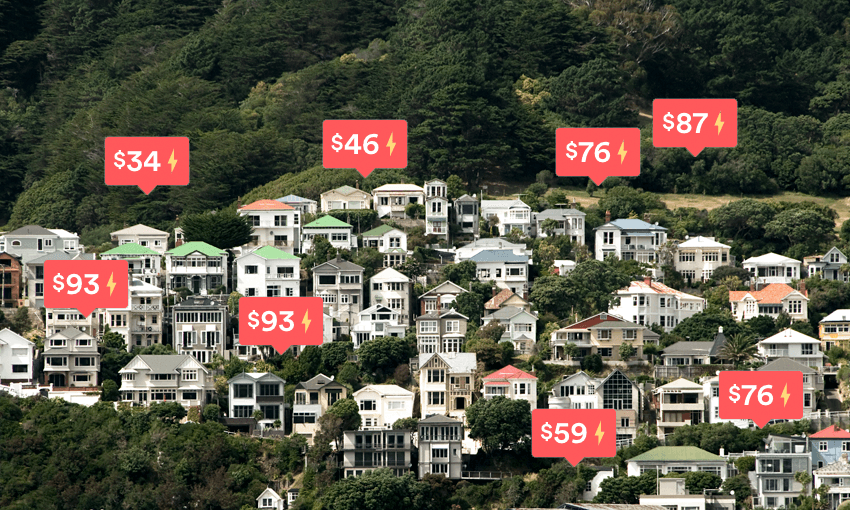
If you’re charging above the fixed nightly rate for short-term visitor accommodation (STVA), currently $57 to $63, you have to pay tax to IRD on this income.
Many councils have increased rates for people renting out their properties as STVAs. Auckland Council used to have a targeted accommodation rate, which it no longer uses, but STVA providers may be charged business rates, which are higher than general rates.
Christchurch City Council introduced Airbnb rules in 2023, including a maximum length of stay, restrictions around where STVA can be provided and resource consents being required in some cases.
The Mackenzie District Council has previously asked property owners offering short-term accommodation to pay higher rates – but the rules are currently being reviewed. Rotorua also charges higher rates for accommodation used for more than 60 days a year, and Thames-Coromandel District Council has proposed limits on how many people can stay in each STVA.
In Queenstown, short-term visitor accommodation requires a resource consent in many instances, and areas of the region have different rules for how many days short-term accommodation can be provided.
These regulations often arise out of criticism that owners providing short-term accommodation to visitors exacerbate housing shortages and push up prices by keeping properties from being available as long-term rentals – a claim that Airbnb denies.
Do they actually get enforced?
Christchurch City Council employed an Airbnb compliance officer in August 2025. Investigations revealed that the majority of properties were not complying with the rules – 41 of around 50 investigated properties. A council spokesperson told The Press that 10 of these were converted back to long-term rentals, and two were sold.
Because so few properties have been evaluated so far, Christchurch councillor Nathaniel Herz Jardine said that the compliance officer should be considered a “pilot programme” for what could happen if the rules were more rigorously enforced. “There are around 4,300 units in Christchurch listed on Airbnb,” he told The Spinoff. “If we scale up compliance activity, that could be 800 or more long-term rentals on the market, 150 or more properties sold, moving homes back into the community.” He’s suggesting a “hotline” for people to report STVA operators who aren’t following the rules.
A major issue for councils is property owners not paying the correct amount of rates for short-term rented properties. Commercial rates, which they should be paying, are about double standard residential rates. “The average Airbnb is dodging about half of their city taxes,” Hertz Jardine says. “That means we pay twice – with higher house prices and higher rents, and millions of dollars a year not going to the city.”

The New Zealand jurisdiction with the most stringent rules for Airbnbs – and also some of the most Airbnbs per capita – is Queenstown. Properties operating fewer than 28 days a year have standard rates; between 28 and 180 days a year increases rate payments by 25-35%, and operating more than 180 days a year increases rates by 50-80%. In 2017, the council proposed much more stringent regulations in its annual plan, but had to make a number of concessions after Airbnb took the local authority to court. With hundreds of thousands of tourists passing through Queenstown each year, the tech and property giant has resisted regulation that might channel more of those visitors to other accommodation like hotels, motels or hostels.
Julie Scott, of the Queenstown Lakes Community Housing Trust, told The Spinoff in September 2025 that regulations were “creating more of a level playing field between throwing your home on Airbnb versus renting it to a long-term family”. However, there are still thousands of Airbnbs available in Queenstown, and thousands of local families on long housing waitlists.

How has enforcing Airbnb rules worked in other places?
New Zealand is not the only country wrestling with the balance between providing accommodation for tourists and housing locals. Many Australian states and local agencies have strict requirements around what Airbnb can do. For instance, in New South Wales it’s impossible to list a property on Airbnb until you’ve received a registration number from the government, which costs $65, and inner-city Sydney is considering halving its current 180-day limit for short-term rentals.
Other areas have an even harsher approach. In Spain, where there has been a lot of “tourism backlash” in centres like Barcelona, Airbnb has been fined €65 million for continuing to operate properties in violation of local rules. The city of Barcelona has said it is phasing out all tourist apartments in residential buildings by 2028, essentially preventing Airbnb from operating there. Booking.com, another short-term rental and hotel platform, is also affected.
In London, landlords were getting around restrictions on the number of days a property could be let through Airbnb by creating multiple listings for the same property, which the Airbnb platform allowed. A spokesperson for the Greater London Authority told the BBC: “Illegal short-term lets pile pressure on supply at a time when affordable housing is desperately needed.”
On the other side are people who say that the source of income Airbnb provides is useful for local communities, and that Airbnb makes travel more affordable. In New York, effectively banning Airbnb has made hotel rates much more expensive. After rules were passed limiting Airbnb rentals in Mexico City, a network of “small hosts” who own three or fewer properties are saying that short-term rentals aren’t the main cause of housing shortages in Mexico’s capital. They are advocating for a way to rent their properties while limiting some of the social harms.
What’s next for Airbnb regulation in Aotearoa?
Queenstown mayor John Glover is calling for stronger government regulation. “If Airbnb are required to give our council the addresses of all the places on their platform, then that means at least we can follow up and make sure they’ve got the right permissions and they’re paying the right amount,” he told 1News last month.
One crucial component, Herz Jardine says, is to require short-term rental companies to share information with local authorities. Right now, Christchurch City Council is using data from third party “AirDNA”, or searches of the Airbnb website, which may not pick up property owners who remove their properties temporarily. “We’ve asked Airbnb for lots of info and they haven’t given it to us,” he says.