‘Ripe with humour and heart’: Seed by Elisabeth Easther, reviewed

Seed is Easther’s debut novel, out now.
Made possible by


Seed tells the stories of four New Zealand women grappling with their fertility, writes Tara Ward.
There’s a moment early in Seed where midwife Virginia makes a phone call she never thought she’d have to make. She’s in the middle of a busy shift in the maternity ward, and to distract herself from the crampy signs of her impending period, decides to call “her favourite gays” to ask a teeny, tiny, no-big-deal favour. At the age of 43, Virginia has decided she wants to have a baby, and as a single independent woman, just needs to find herself some Y chromosomes. She makes the nerve-wracking call that could change her life, and in between small talk about their social netball team and playing wing defence, Virginia asks her friends to father her child. What’s a little bit of sperm between friends, after all?
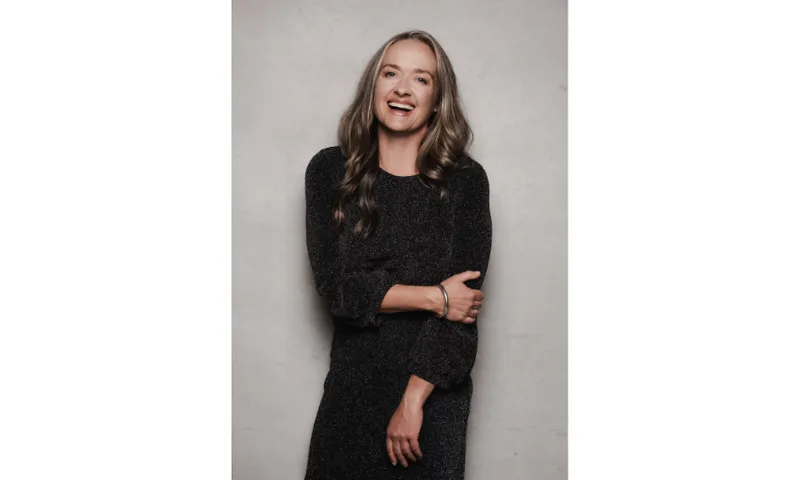
How far one woman will go to get a life is the main theme of Elisabeth Easther’s debut novel Seed. Easther is a writer, broadcaster and actor, perhaps best known to New Zealand television viewers as Carla Crozier, one of Shortland Street’s most enduring villains. Seed is Easther’s first novel, a work that began as an award-winning play about two sets of middle-class friends in their late 30s and early 40s grappling with the complexities of fertility and friendship.
As well as midwife Virginia, there’s Hillary, a single mum desperately trying for a baby with her new partner and whose life is ruled by fertility specialist visits and scheduled intercourse. It’s in stark contrast to her best friend Maggie, who eagerly scours the dating apps while raising her son in the ideal co-parenting arrangement. Both friends work in the waste management industry, and as Maggie wonders why she’s been feeling so rough lately, Hillary struggles with the moral quandary of bringing a new life into a world already dying from over-consumption.
Then there’s Virginia’s best friend Shelley, an advertising executive who recently returned to full-time paid work after eight years at home raising her two children. Shelley is desperate to prove herself in the office, but quickly finds herself in a depressing spiral of juggling her demanding career with the exhausting grind of frantic after-school pick-ups and fish finger dinners. Luckily, Virginia is always on standby with a bottle of red and the giddy promise of a night on the town. Virginia’s professional life is already filled with babies, but when she realises she wants to deliver one of her own, she decides to take matters into her own hands.
Two of these women want to conceive and two do not, and so begins Easther’s story. What lengths will each woman go to to get what they want? Why is it so hard to get pregnant when you’ve spent much of your adult life trying to avoid it, and what should you do when you find yourself unexpectedly up the duff?
There’s no simple answer to any of these questions, and Easther proves this beautifully in Seed. The novel focuses on the unique experiences of these four women, but collectively, it reminds us how the monthly cycle of hormones and menstrual bleeding influences women’s lives, regardless of whether they want to reproduce or not. Seed is anchored in the everyday, with each woman’s story full of the minutiae of ordinary life (lunchboxes, bath times, family barbecues) that feels familiar and real. And in the cracks of the everyday sits the weight of life’s monumental events: pregnancy, grief, separation and love.
That’s not to say Seed is a heavy read. Easther writes with a lightness and humour that makes Seed a warm, affectionate story, and she knows these women well. Hillary’s story is the darkest, as the unrelenting strain of fertility treatment begins to fracture relationships with those closest to her, while Virginia feels like the funniest, most richly-drawn character. Easther has a sharp, lucid awareness of the world around her, and recognises the ironies of living in a society where women are judged no matter what choices they make about their own bodies. She also understands the complicated nature of human relationships, and the way we all keep secrets and lies (some harmless, others catastrophic) from the people who know us best.
We see the far-reaching impact of those secrets and lies through Easther’s multi-narrative approach, with parts of Seed told by characters like Hillary’s boyfriend, Shelley’s husband and even the Ukrainian receptionist at Shelley’s office. These different perspectives provide a richer understanding, but they also become a little distracting. Rather than continually being pulled from one point of view to another, I found myself wanting to hunker down with the four main voices of Seed, to sit with these friends in the ebb and flow of their compellingly messy lives and linger longer during some of these more emotionally complex experiences. In the tradition of Marian Keyes, Seed is full of life stories, but is determined not to get too weighed down by the grim.
Regardless of whose story is being told, the emotional heart of Seed never stops beating. There were many moments that flashed me back to my own journey to motherhood, to the days when I felt an ache in my arms that would only be eased by holding a baby, or when people made sudden, thoughtless comments about being childless that would send me home early from social events, sobbing in the car. The ovulation apps, the doctor visits, the prescriptive sex – Easther pulls all of these real life details together so convincingly, and I can imagine her collecting snippets of conversations and quiet observations over the years and then lovingly planting them into the fullness of these women’s lives.
In Seed, Easther has successfully birthed a novel ripe with humour and heart, one that will resonate long after those period cramps have finally subsided.
Seed by Elisabeth Easther ($38, Penguin NZ) is available to purchase at Unity Books.
The Spinoff Books section is proudly brought to you by Unity Books and Creative New Zealand. Visit Unity Books online today.

Tara Ward
Tara Ward has written about television and culture for The Spinoff for several years. She lives in Ōtepoti Dunedin, where she tries to avoid walking up hills.


