
Edward Cowley, aka legendary drag performer Buckwheat, takes Alex Casey through his evolving style.
In the beginning, there was Shanton. It was the late 1980s, and Auckland’s newest drag performer Buckwheat was cobbled together with nothing more than a cheap wig, a couple of XL pieces from Shanton, and a quick bit of stage makeup. “They weren’t show costumes by any stretch of the imagination,” laughs Edward Cowley, the man behind the legendary persona. “Initially it was just a bit of fun and nothing serious – it was basically like playing dress-ups.”
Four decades of drag later, Cowley has amassed over 1000 garments and gowns, boxed up and catalogued across two full garages and a dressing room bursting with feathers and rhinestones. It’s not all just for him, he hastens to add: “I buy with a view for ensemble pieces – if they want four drag queens, I’ll dress all of them, because people want to see that magic. If we all just turned up in a little skirt and a little black top, everyone would be like, ‘what’s that?’.”
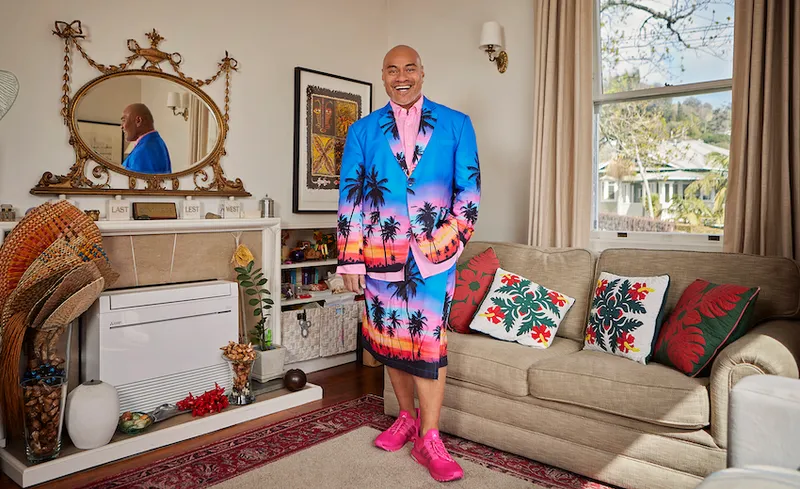
Long before he became Buckwheat, Cowley still wore matching garments with quite a different ensemble. “My mother would make all our clothes when we were children, and I’m one of eight, so every week she was always at the sewing machine making clothes for us,” he says. Church on Sundays meant eight matching outfits in bright, hibiscus print. “I always felt special, because I had something on that mum had made, and my family would all be in the same fabric.”
Sandwiched between his five sisters, Cowley says he grew up in a very feminine world. “There was no option for me to be anything else because of the influence that my sisters had on me,” he laughs. “I was always helping them with their hair and helping them get dressed, all of that.” As a teenager, Cowley started out working as a backup dancer in clubs, eventually moving to Staircase nightclub on Fort Street in his early 20s to work front of house.
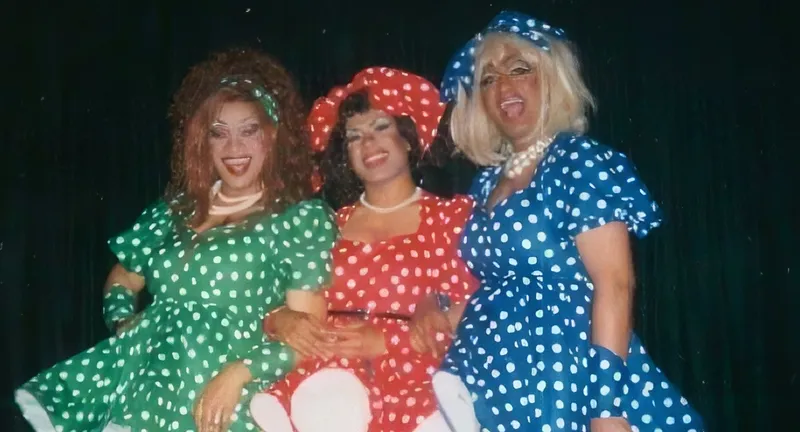
When a drag hostess at Staircase gave up her post for a job in Wellington, Cowley struggled to find a suitable replacement. “I thought ‘I’ll just do this myself’ so it all really happened out of necessity,” he says. “I fell into it, but I came to understand the power of it over time.” He chose the name Buckwheat, a nod to the character from The Little Rascals. As for the quality of Buckwheat’s early drag looks? “When you look back at it, it really wasn’t pretty.”
Not satisfied with hastily-stitched together Shanton frocks, Cowley’s mother Avei became instrumental in Buckwheat’s early costuming. “They were really fun, loud pieces,” he recalls. “Big frilly hoop skirts – think Dolly Parton – and really over the top florals.” Nearly 40 years later, he still has a sunflower set that his mum sewed up for Buckwheat for an early pride parade. “It was one of the first things she made for me, and it was a lot of fun.”
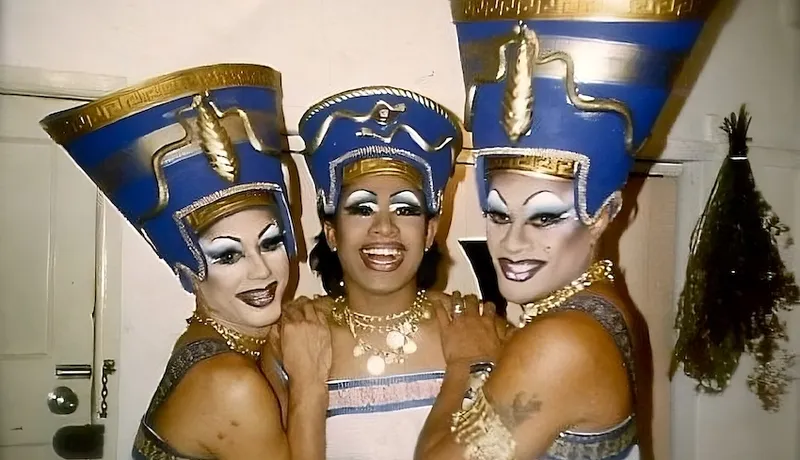
Since those early days, Cowley says the understanding around drag has evolved immensely. “Priscilla Queen of the Desert came out [in 1994] and it changed the entire landscape. It created this starting point for people to get an understanding of people that aren’t like them.” Business grew too, with people outside of the club scene now wanting to book Priscilla-themed parties. “It brought drag, and the queer community, right into people’s living rooms.”
The reality juggernaut RuPaul’s Drag Race was another milestone in taking drag to the world. “You get families going to see the Drag Race girls with little kids, which is incredible,” Cowley says. But the endless high fashion runway looks in the series also can create difficult expectations. “The drag is really elevated, the best of the best,” says Cowley. “All that finery costs thousands and thousands of dollars that local performers just don’t have access to.”
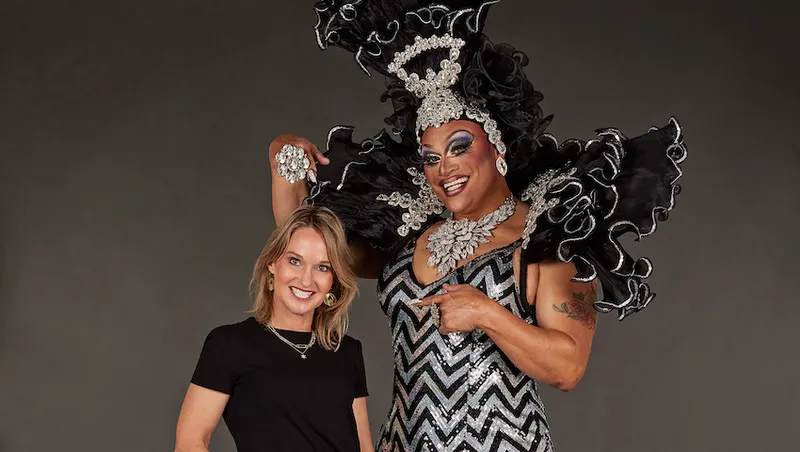
That’s not to say that Buckwheat hasn’t stepped up her own closet since the days of Shanton. Cowley started getting garments custom made in Thailand, bringing home luggage bursting with sequins and feathers. “It’s really all about the feathers. I have really broad shoulders, as we often do, so those ruffles just make you look a little bit more in proportion.” Favourite gowns can be found in every colour, “because you just never know what the occasion is going to call for.”
Alongside Buckwheat’s expanding closet, Edward has evolved his style too. He’s returned to those bright, Pacific-inspired florals that he once wore to church, having his own custom suits made by a tailor in Ōtahuhu. “The great thing about that is, I can find fabric from all over the world, he’ll sew it up into a lovely jacket and trousers. People think that I’ve spent a lot of money on it, but it only costs $200 – cheaper than buying something off the rack at any men’s store.”
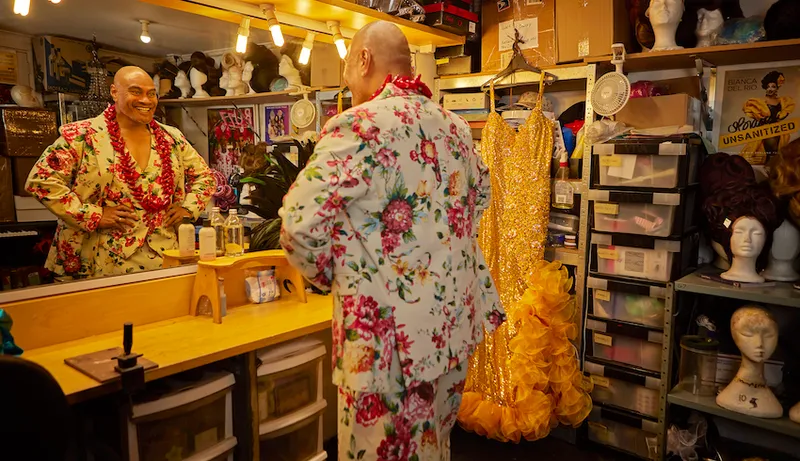
He’s photographed in one such ensemble – a floral lavalava and waistcoat, accessorised with an ‘ulafala and matching red Adidas gazelles – as a part of New Zealand Fashion Museum’s exhibition Inside the Closet, now running at Britomart in Tāmaki Makaurau . “Previously with drag, people would only see the persona, but now there’s an understanding of the person behind it,” he says. “For many years people only knew Buckwheat, but they never knew Edward.”
With the exhibition running free of charge for all of Pride month, Cowley says it is a chance for people to deepen their awareness of drag and the wider queer community – particularly in a time where division is rife. “It doesn’t matter how old I am, it’s incumbent on me to ensure that we keep the doors open and share the stories of what we did before, so that there’s an understanding of how we got here, and to make sure that people don’t go backwards,” he says.
“Hopefully, in showing people how the magic happens, it will allow them a better sense of understanding and knowing who we are.”
Inside the Closet will be displayed at Auckland’s Britomart district during Pride Month from February 1-28.

Alex Casey
Alex Casey is a senior writer at The Spinoff with over a decade of experience writing about popular culture and social issues in Aotearoa. She lives in Ōtautahi and likes watching reality TV and walking the dog, occasionally at the same time.


