First home buyers have taken over the housing market

First home buyers are having a moment. (Photo: Nazar Abbas/Getty Images)
Long considered the minnows of the property market, first-timers are now buying more houses than investors, movers or upgraders.
For generations, the first home buyer experience in New Zealand has largely followed the same script. You save for years while watching prices run away from you, beg a bank to let you take on eye-watering debt, fall in love with a listing and watch as you’re devastatingly outbid by an investor who already owns multiple homes. Eventually you either overpay or give up and move overseas.
Lately, that all seems to have changed. Amid a quiet market and three years of flat prices, first home buyers have become the most active group of buyers for the first time since Cotality’s records began in 2005, ahead of existing homeowners and all forms of property investors.
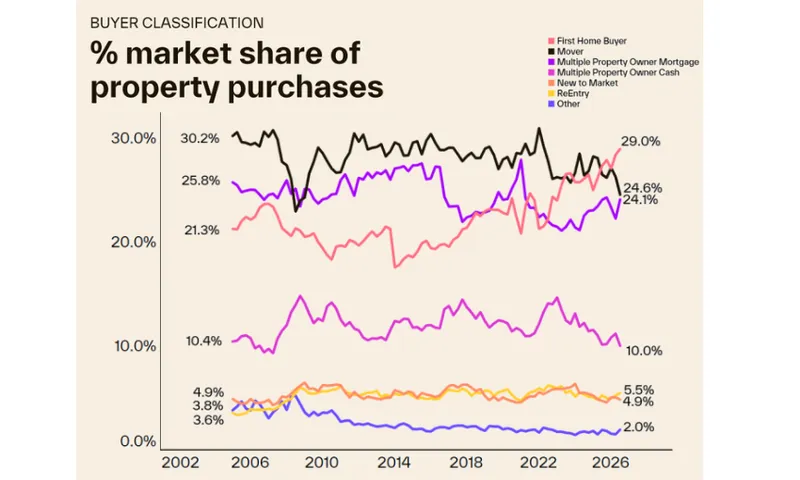
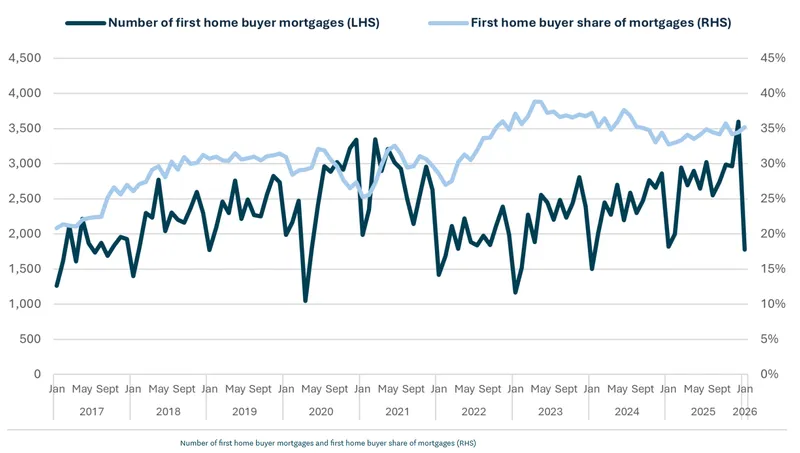
First home buyers make up 29% of the national market, and more in the main centres: 31% in Auckland and 37% in Wellington. It’s not just a proportional change either; the total number of people buying their first home has been steadily increasing since 2022.
What has caused such a drastic reversal to our longstanding national tradition of pulling the property ladder up after ourselves? How did first home buyers manage to flip the script?
The first and most obvious reason is that houses are cheaper than they were a few years ago. The NZ Home Value Index shows that prices are down 18.2% from their 2022 peak, with Auckland down 24.5% and Wellington down 27.2%. However, Cotality’s chief property economist Kelvin Davison says we shouldn’t put too much emphasis on comparing prices to the peak of the market: “It’s an artificial benchmark, because it was an artificial boom,” he says.
If you strip out the weirdness of the Covid-era interest rates that caused a rapid price spike and subsequent crash, which was driven by interest rates rather than fundamentals, house prices in most regions are up 15-25%, a solid but unremarkable return over seven years – and, importantly, lower than the rate of wage inflation over that same period.
“When you look at affordability measures such as the price-to-income ratio or mortgage payments as a share of income, they’ve returned to average and some have even gone a little lower. So, comparing it to the peak is a wee bit artificial, but it’s true that affordability looks better than it has in eight to 10 years,” Davidson says.
A bigger factor is reduced competition due to less activity from movers and property investors. “Movers are sitting tight; if you don’t have to move you’re probably not going to in this environment – but they’re not really competing for the same properties as first home buyers. Investors have a bit more caution too, because rents are flat, and council rates and insurance are up. Plus you’ve got the election, with the possibility of [Labour policies coming in such as a] capital gains tax and interest deduction being lost again,” Davidson says.
Sarah Wood, the CEO of realestate.co.nz, says the reduced activity of investors has been a key reason for the change. “While first home buyers are making up a large share of the market at the moment, it’s mostly a reflection of there being fewer investors looking to buy than in years prior. That’s given first home buyers a bit of space… there’s less time pressure overall which means they have more time to review their options and do their due diligence.”
First home buyers have also benefitted from easier access to low-deposit loans. In December 2025, the Reserve Bank loosened its loan-to-value ratio rules, allowing banks to offer up to 25% of loans to owner-occupiers with less than 20% deposit. It’s the latest move in a multi-year trend of low-deposit loans for first home buyers.
The availability of low-deposit loans could soon be expanded further. National pledged this week to increase the income cap on the Kāinga Ora First Home Loan scheme, where the government underwrites loans for people with deposits as low as 5% in return for borrowers paying an additional 1.2% insurance premium on mortgage payments. It is currently only available to individuals with an income under $95,000 or $150,000 for a couple. National wants to expand the income cap to $300,000 for all buyers.
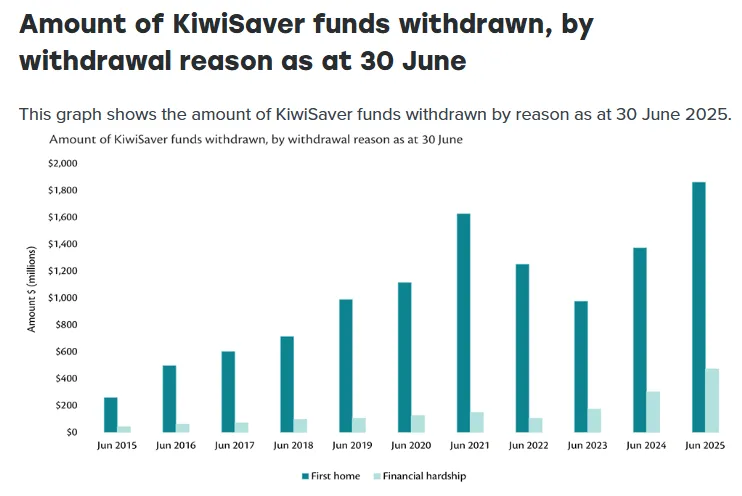
On top of lower-deposit loans, the data shows that KiwiSaver is an increasingly common source of first home deposits. “People are really tapping into those. It might not cover the full deposit, but it’s a help. And the longer that scheme goes the more people have in those pots,” Davidson says.
Perhaps the most significant factor of all is simply that there are more houses available. “The big thing that has maybe flown under the radar is housing supply,” Davidson says. “Even after the downturn we’ve still been building quite a few new houses. Add them up over five or six years and there’s a lot more balance out there in terms of supply vs demand. You don’t really hear the word ‘shortage’ any more.”
Wood says this has shown up in the number of properties listed. “Stock levels are high. There are 45% more homes for sale than there were three years ago, which means lots of options for buyers.”
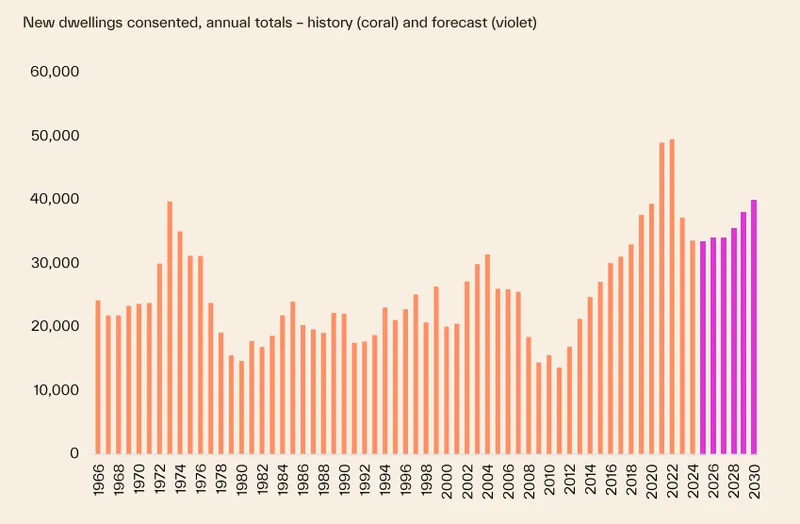
Shockingly, it turns out that when you build more houses, more people can buy them.

Joel MacManus
Joel MacManus is a senior writer for The Spinoff. He previously worked at RNZ and Stuff, and began his career at Critic Te Ārohi. His writing explores the political, economic and cultural systems that underpin modern New Zealand. He won the 2025 Voyager Media Award for Best Columnist, Opinion or Critique.


