The best wild beers in New Zealand come from a shed in the back blocks of Hamilton

Darryl Bryant outside Karamu Barrelworks (Photo: Hayden Donnell)
On one side, the country’s largest and most well-funded breweries. On the other, a guy called Daryl with some barrels.
To call Karamu the middle of nowhere would be unfair to the middle of nowhere, which has achieved a level of geographic notoriety. By contrast, the sparsely populated area 30 minutes southwest of Hamilton is almost unknown, even confused by search engines with the more populous town of the same name in Hawke’s Bay. The drive there runs past nondescript paddocks. A road sign at an intersection points to a lone pentecostal church. After that, it’s 10 minutes of cows until you come to a driveway lined with mature redwood pines, which leads to the wooden shed out the back of a farmhouse. It’s there Daryl Bryant makes some of the country’s best wild beers as the owner, founder and sole employee of Karamu Barrelworks.
This remote setup is unusual, but Bryant’s an unusual guy. The 65-year-old possesses enthusiasm and natural aptitude for DIY that’s extreme even by New Zealand standards. He built this shed, which is more of a small house really, by himself out of wood, copper and corrugated iron after studying books on 16th century European framing and joinery techniques. The door is kahikatea, pulled from the river below his house after being churned up by a storm.
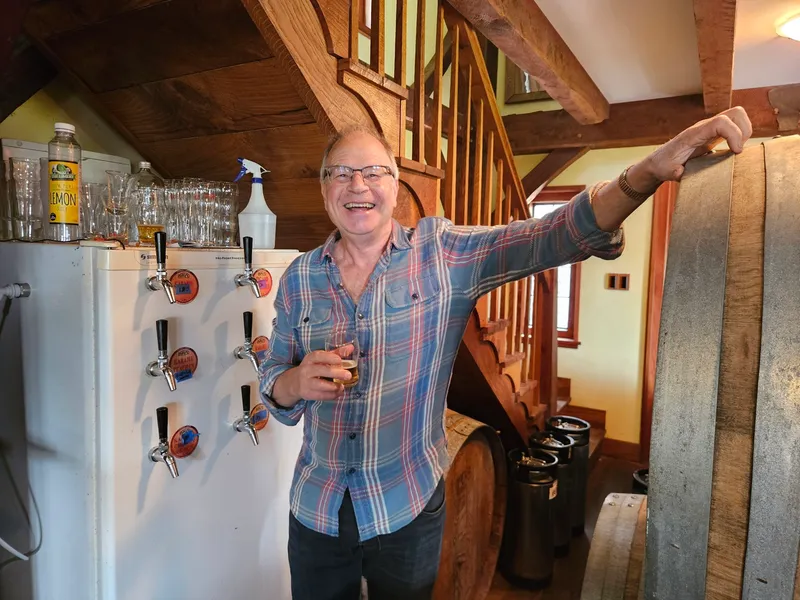
Bryant brings the same independent, self-reliant approach to his brewing, which he traces back to a childhood spent making bootleg ginger beer in Agee jam jars to share with his schoolmates. Even then he was a connoisseur, spurning his peers’ tooth-rotting creations. “I had a style. I knew I loved the really dry ginger beers, the effervescent ones, the champagne-style ginger beers. Most kids added too much sugar at the end and had to keep it in the fridge,” he says.
It was a start. Bryant spent his career as a civil engineer accepting contracts on a mishmash of infrastructure projects across the world. He worked in New Caledonia. Fiji. The Kwajalein Atoll. In Saudi Arabia, alcohol was illegal. He got around the restrictions by brewing an alcoholic concoction out of potatoes and grape products. “We called it potato champagne,” he says.
Karamu Barrelworks is a retirement gig. Bryant bought its eponymous barrels after building his shed, and promptly started working on the first of many batches of fruity, Belgian-style beers. He was named the nation’s best homebrewer in 2019. The award gave him the confidence to turn professional two years later. Karamu Barrelworks was named best microbrewery at the 2025 New Zealand Beer Awards.
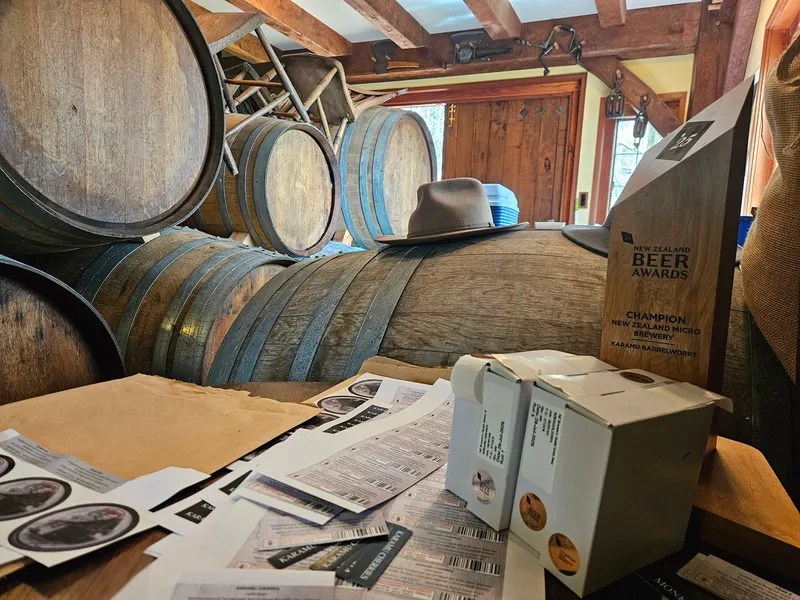
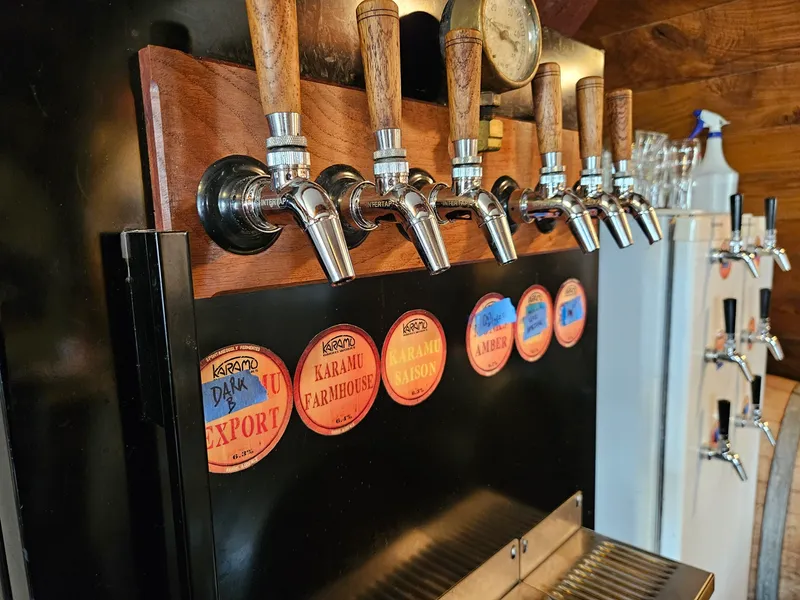
The microbrewery category accepts anyone who produces up to 50,000 litres of beer a year. Karamu only puts out 10,000. Bryant’s brews would be called sours in some markets, though he doesn’t love the label. “Orange juice is just as acidic but we don’t call it sour juice,” he says. He prefers the name “wild” or “spontaneously fermented”. His bestseller is Karamu Cherries. It uses fruit imported from Poland. The only local sour cherry supplier is in Oamaru, and has started using the vast majority of its harvest as a high-end dog food ingredient. There are plenty of other fruit-forward brews too, all lined up on taps plumbed into the fridges on the ground floor of the Karamu shed. A saison. A Belgian-style quadrupel called Monks’ Dark. Sours like Karamu Apricots or Karamu Peaches, which can often be found at craft beer outlets The Beer Spot and 16 Tun in Auckland, or Brewaucracy in Hamilton.
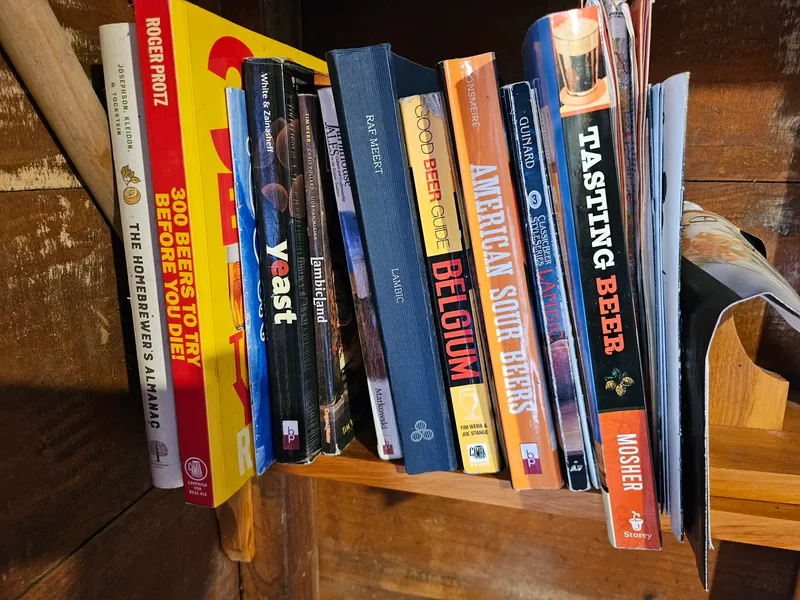
Just as he did with European framing and joinery, Bryant learned his craft by reading. He regularly travels to Belgium and Italy to refine his techniques, which are, as with nearly everything around here, outside the norm. Conventional beer brewing is, in large part, a science. Producers meticulously craft recipes, specifying the exact amounts and types of hops and malt they want, then take every step possible to eliminate variation between batches.
The “wild” method means every barrel will produce something slightly different, and the variation only increases when Bryant adds fruit. “Sometimes I’m using fresh peaches straight off the tree, sometimes they’re big peaches, sometimes small peaches, sometimes from my place, sometimes Mangaweka,” he says. He loves it because every barrel feels like a new creation. Instead of pressing buttons and letting a recipe go to work, he’s going on – in his words – a “journey”.
Throughout his career, Bryant fought entropy – the way all things tend inexorably toward disorder. He’d build something one day, and the next he’d come back to find it slightly worse. Systems had to be updated. Structures would need to be refined. In wild brewing, he feels like he’s working with nature. He throws open the windows upstairs, and instead of everything degrading, something delicious gets created. “I love the process more than the beer,” he says. “In engineering, you’ll have written the best standard operating procedure there is, but unless you’re constantly re-educating people and pushing them, it all falls apart. If you’re working with, I guess, the life force, then things are happening while you’re asleep. All you’re doing is steering.”
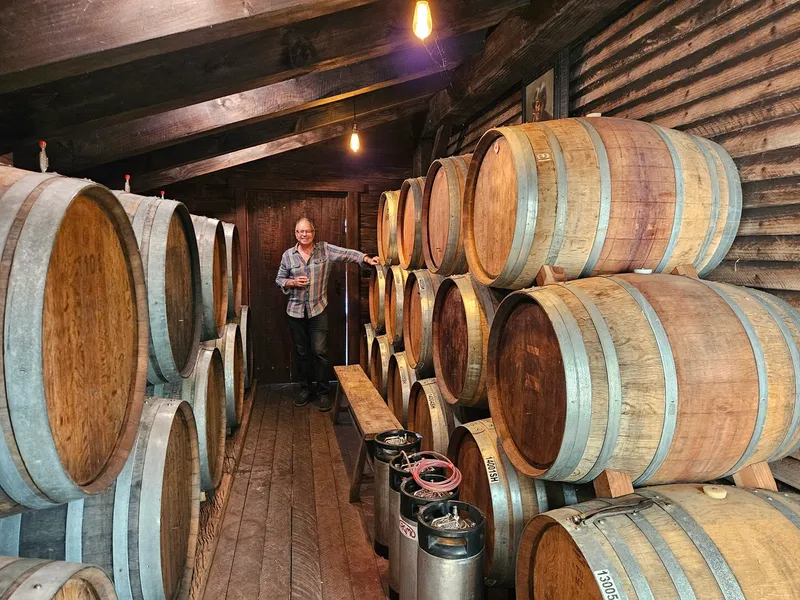
He’s lucky he gets a kick out of the process. For a long time, Karamu’s beers cost more to produce than what they’d bring in through sales. Bryant’s wife, Lynnette, liked to joke that he’s not a businessman, he’s a philanthropist.
But lately the business has been eking out a small profit. Even Lynnette has admitted he may be onto something. On the Sunday after our interview, Bryant is heading to Palate restaurant in Hamilton where the chef Mat McLean has created a tasting menu to match his brews. As is so often the case in Karamu, something that started in a shed is taking on a life of its own.
But that doesn’t mean there are plans to grow too much or go too far. Bryant is old enough to claim super. He doesn’t want to launch a mass-market product or open a brew bar. He’s content where he is. For the foreseeable future, the best wild beers in the country will only come from one place: a shed, on a farm, in what could charitably be called the middle of nowhere, Karamu.

Hayden Donnell
Hayden Donnell is a senior writer for The Spinoff. He previously worked at RNZ, TVNZ and the New Zealand Herald, alongside other media companies that have since closed down or been renamed. His primary passions are local politics and the Big Fresh animatronic fruit and veggies.


