An ode to the jacket potato

All hail the jacket potato. Image: The Spinoff.
Claire Mabey pens a love letter to the most humble and comforting of meals.
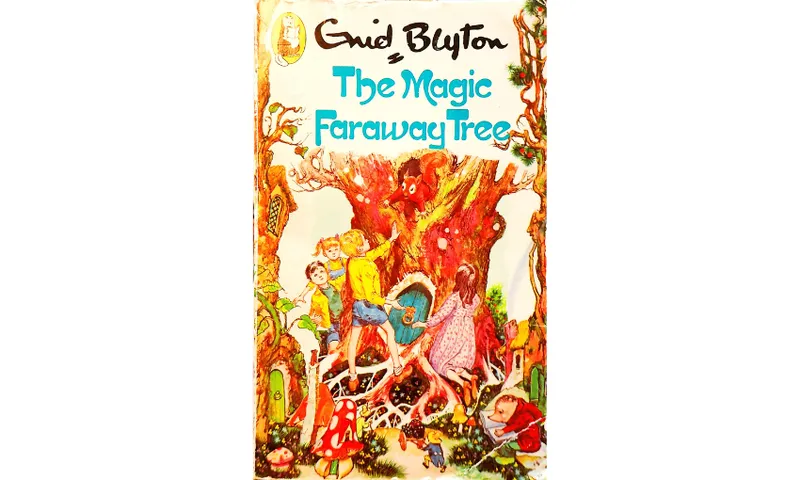
It was Enid Blyton that started it. The mother in The Faraway Tree books always promised there would be “hot baked potatoes with butter and salt” when Dick and Fanny and Jo and Bessie got back from the weird woods. Hot baked potatoes with butter and salt. Has there ever been a more alluring sentence? Has anything sounded more comforting?
Enid Blyton started it, but Hashimoto’s cemented it. I was diagnosed with the hypothyroidism-related autoimmune disease about three years ago (I can’t be more precise because, among other fun things, Hashimoto’s gives you brain fog that would make Covid proud). To mitigate the condition’s muddling effects I, along with my sister who also has it, have undertaken a gluten-free diet. An anti-inflammatory diet, if you will. It’s also supposed to include sugar and alcohol; but one thing at a time.
This change of diet has relegated my beloved bread to very occasional sustenance and boosted the potato to even more than a staple: it’s a saviour. I eat them roasted, boiled, mashed, fried, crisped, hashed and chipped. But in this year of 2025 I have rediscovered a long-dormant admiration for the baked potato, ideally also stuffed, and it has been nothing short of a revelation.
In the Tauranga of the 1990s there was a baked potato food truck called Poppies. Or Poppy’s? My internal photography is smudged and the one “Tauranga History Online” Facebook post I can find has nostalgic potato-cravers spelling it both ways. The truck was parked in Red Square, in the middle of the then-bustling CBD, and served up a range of baked and stuffed spuds.
To assemble the starchy creations they’d first smear a healthy dose of garlic butter on the steaming innards, then showers of salt and pepper. Next, the various parts of the specific menu item you’d ordered. I, being a Dolly-reading teen, often got the tragically named “Weight Watchers” which included a huge blob of cottage cheese, tomato slices and shredded lettuce. My sister remembers beans, too, but I don’t.
Poppies’ potatoes filled you up. They were the hangover cure of champions, all warm and hefty as a baby in your arms. I’d trot down and collect one on my lunch breaks when I worked at the outdoor clothing shop on Devonport Road. I’d think about them on my days off. My stomach crafted a special hollow that only Poppies could fill. At home I’d get my fix by microwaving agrias as big as my face. Pricking them all over then watching them revolve in the glowing box wondering just what went on in there to soften the spud so fast. I remember waiting for the beeping to be done with completely before I opened the door to retrieve my creations. I didn’t want to be partially nuked by loose micro waves.
In the years following, I had very few stuffed, baked potatoes. My student years in Dunedin were full of fries at the Cook; and then in Wellington it was more the crisp that sustained me. There was nothing like Poppies outside of Tauranga, that I knew of at least, and I was far too lazy to assemble a stuffed potato of my own volition. God knows I regret it now. But recently, on a trip to the UK, the beclothed vegetables came back into my life.
Haddon Hall is one of England’s best preserved Medieval homes, still occupied by the owners. At least, a wedge of it is. The rest is open to the public. I had wanted to go there for years, after spying it online when I was imagining old, storied houses for a book I was writing. Happily, it was even more lovely and strange than I had hoped. But before the house, was the cafe.
The Haddon Hall cafe was long and friendly with portly bottles of Enid-Blyton-esque ginger beer in the fridge. The menu was divided into Breakfast (served until 12pm) and Lunch (from 12pm). Nothing on the breakfast list appealed. But there, under lunch, was “Jacket potato with chilli and cheese. Comes with a side salad.” It was only fucking 11.15am.
“Could I order a jacket potato even though it’s not lunchtime?” I asked.
“Course, love,” the lady replied. They’re nice, in these Northern parts.
Jacket potato. Jacket is both a snug and snappy word. Arranged in the right way, it can sound aggressive, like an insult or a command. “Jacket!” A jacket potato can sound at once cosy, prepared for England’s weather, and utilitarian. The origins of potato-based cuisine comes from South America, at least so the internet says. Potatoes fuelled the Incan Empire and were prepared in many ways. The baked version was likely made with hot coals and earth.
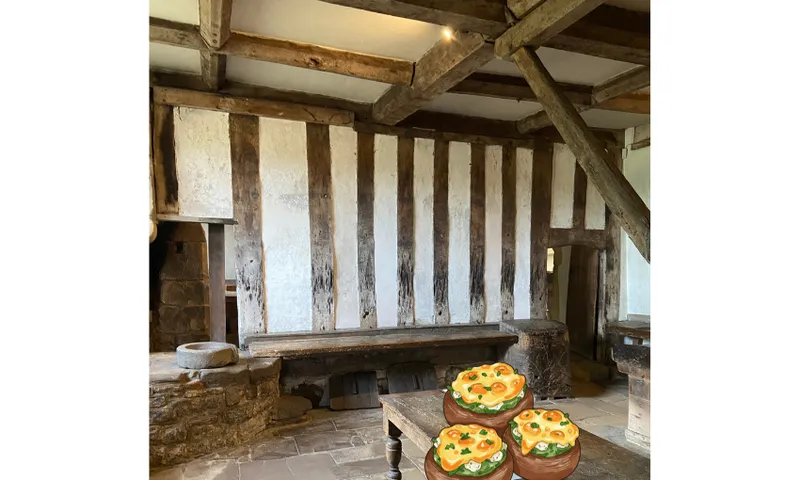
There, at medieval Haddon Hall on the other side of the world, I returned to the potato. The lovely, understanding lady placed before me a mole-hill sized mound of goodness: a rich pile of spiced and tomato’d mince sprinkled with cheddar cheese; a crisp, dressed salad on the side but not so to the side that lettuce leaves closest to the mound weren’t turning limp with the mince juices. The potato underneath was soft but sturdy, the skin rippling with its transformation. I ate it like an animal.
It tasted like the first and last meal: like the only possible option for me in that moment of intense hunger and intense anticipation. Poppies taters always had this tangy buttery saltiness, which this English spud didn’t. I’m not sure I’ll ever get the taste of my teens back. But in its own, unique way, the Haddon Hall cafe jacket potato found its way into the cobwebbed hollow in my belly. The potato’s floury innards serviced the toppings, welcoming in the oils and spices. The vinegary salad was the ideal level of zesty chlorophyll to offset the fudgey melted cheese.
It was more sophisticated than my microwaved, childhood concoctions, but it still had the mellow undertone of innocence. An entire vegetable prepared in an ancient way and in need of little else but a faithful to consume it. I probably could have eaten two, only people were watching and the meal was the equivalent of $25NZD and I can’t imagine spending $50 on potatoes, even potatoes so perfectly adorned and embellished.
The jacket potato is whole – a complete meal not just in flavour and nutrients, but in effect. A soothing amalgamation of simple parts designed to return you to yourself, no matter how many fantastical trees you’ve climbed or customers you’ve served. The pile up of carbs and salt, and acid and fat is like eating the world itself: eating childhood. I was even reminded of the taste of dirt. All the better for a spud to emerge from the oven with grains of its maker still clinging to it.
When the revolution comes I hope there will be jacket potatoes. Poppies trucks, lining the streets, forming barricades while the workers dance. Great big orbs, apples of the earth, hauled up from the ground and blitzed and piled up and salted and buttered. “Sustenance!” the vendors will cry. Sweaty and starved we’ll line up and take the goodness in. Garlicky butter dripping down our chins. Dirt in our teeth.
Claire Mabey
Claire Mabey is a children's author of The Raven's Eye Runaways, The Raven's Eye Rebellion, and a picture book Cass and the Beast illustrated by Jill Calder. For a long time Claire worked on literary festivals and is the founder of Verb Wellington. She lives in Te Whanganui-a-Tara with her partner and son.


