Flippin’ heck! New Zealanders are getting less tolerant of swearing

Image: The Spinoff
It may have been a big year for swears, but 2025 saw New Zealanders clutching their pearls over rude words more than ever, according to the Broadcasting Standards Authority’s annual survey. Chief executive Stacey Wood explains.
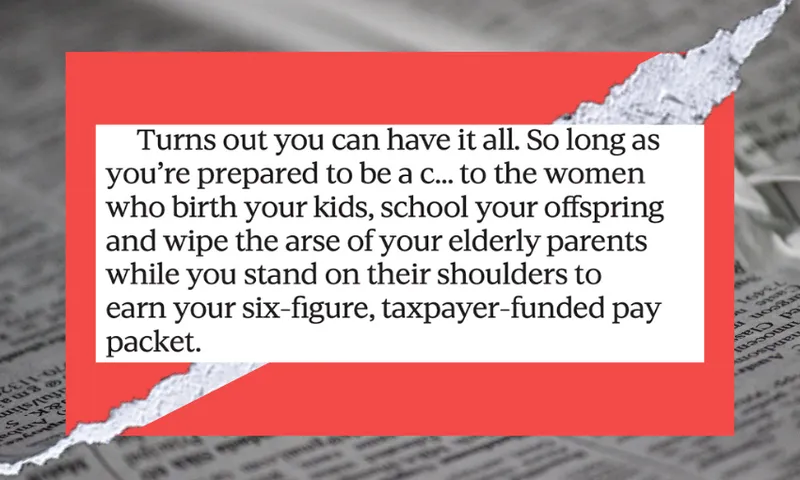
In some ways, 2025 was a big year for swears. Donald Trump dropped what’s thought to be the first (intentional) presidential F-bomb on camera. Closer to home, New Zealand’s “quote of the year” from Andrea Vance led to the first recorded use of the C-word in parliament. But where do New Zealanders draw the line on swearing in media? Our latest research shows they might be getting tired of it.
Every few years, the BSA checks in with the public to see how attitudes are shifting. Our latest survey of more than 1,500 adults shows tolerance for offensive language has dipped in the past four years. This partially reverses a long-term trend that had seen audiences become more relaxed about swearing and strong language on air.
It’s a snapshot of how attitudes and values are evolving, and a reminder that context – and which community you ask – matter more than ever in determining the level of offence.
Audiences rejecting racism and misogyny
One thing that stands out is the ongoing hardening in the public’s stance against racial slurs and language targeting specific communities. The N-word remains the least accepted term – 70% of respondents say it’s totally unacceptable on air, a jump from 65% four years ago. Six of the 10 most unacceptable terms relate to race, ethnicity or culture. New Zealanders are sending a clear message: language driven by racism is not welcome.
There has also been a sharp rise in people calling time on gender-based insults, especially misogynistic terms. The C-word has cemented its place in the top three most rejected terms. This likely reflects recent public debates and visibility of such language in political contexts.
If we want to draw a common theme across the words that have become less acceptable, there seems to be a rejection of slurs and denigrating language that target people’s personal identities or their heritage.
Even blasphemous language – like “Jesus f…ing Christ” – which has trended down the rankings over the years, saw a rise in the latest survey with 53% finding this term totally unacceptable. In contrast, words like f..k or s..t, which don’t carry a malicious message towards any specific group, are seen as less offensive by most people.
Our research shows Pacific peoples, older women and Christians are least accepting of strong language. Younger adults tend to align with national averages, but young women are less tolerant than young men of the most offensive words.
While we’ve seen a rebound in objection to strong language generally, this is set against a prolonged softening since the BSA’s first survey in 1999. Back then, the word “bugger” in a well-known Toyota ad sparked national outrage. That word has long since dropped down the ranks, so much so that it is no longer included in our survey.

Context is everything
One thing hasn’t changed: context is crucial, and there’s a time and place for profanity. The survey shows strong language is least accepted in broadcasts with a host or presenter – think talkback radio, sports commentary or factual programming – and before the 8.30pm “watershed”, when kids are more likely to be watching. Comedy, TV drama, music and reality TV get a bit more leeway from audiences, especially after the watershed.
Reality TV audiences bucked the trend, showing considerably higher tolerance for strong language than we saw four years ago. This may reflect the rising popularity of reality shows focused on adult relationships, conflict or explicit behaviour.
Whatever the genre, broadcasters can usually avoid shocking their audiences by airing content at suitable times and using accurate programme classifications and content labelling, so people can choose for themselves what they want to see and hear.
Why does it matter?
The BSA doesn’t have the power to wash anyone’s mouth out with soap, and it’s rare the authority upholds complaints about strong language – broadcasters generally aim to keep programming consistent with audience expectations. But we do have a mandate to uphold the public’s standards, and to do that we need to know what those standards are.
Doing this survey every few years gives us an insight into what New Zealanders expect when they’re choosing what to watch or listen to. The results can also hint at what values or current issues are driving an increase or decrease in tolerance towards swearing. The survey is a useful data point when the BSA gets complaints that a programme has gone beyond acceptable limits, taking into account the time and context when it was broadcast.

Stacey Wood
Stacey Wood is the chief executive of the Broadcasting Standards Authority (BSA). She studied law and English at Otago University and journalism at Massey University in Wellington, and worked as a reporter for the Dominion Post for several years before joining the legal profession. She joined the BSA in 2022.


