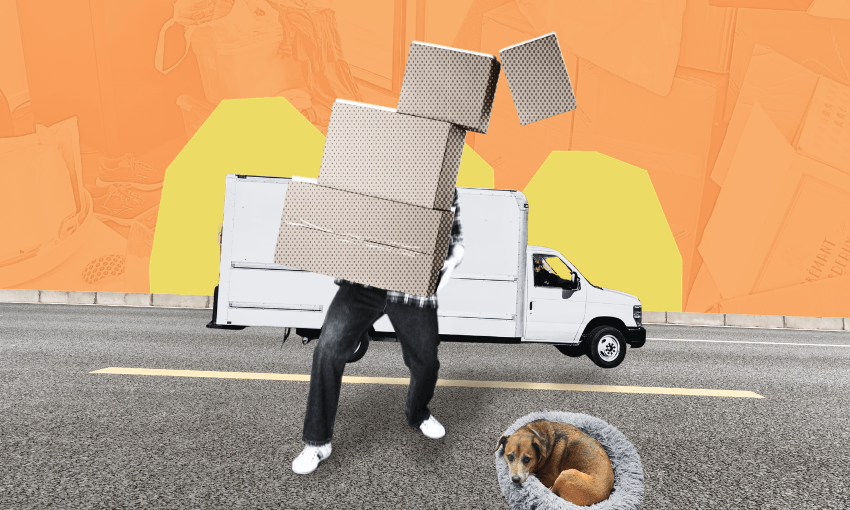



We started too soon, didn’t have a plan, and tried to do too much of it ourselves instead of leaving it to the experts. Tantrums ensued.
Cardboard was stacked in corners. Boxes were piled high by the front door. Junk erupted all over our small rental. Space was at a premium. Want to get to the fridge? Step over the box marked “summer duvets”. Keen to watch TV? Sweep the sandwich press off the couch first.
Three months ago my family moved house. So keen were we to get going that we started sealing boxes six weeks out. Soon, every evening was a desperate search for things we needed and couldn’t find, endless conversations that started with, “Have you seen the …?”
It became a constant source of tension. Kitchen implements, pet toys and clothing went missing. When I cut the tip of my finger off, the plasters were lost. We got so frustrated my son perched a whiteboard on top of a pile of boxes and tallied up our tantrums in green marker.

The problem? We started packing too soon. “Six weeks is a sensible time to start preparing, but probably too soon to seal up everything you use regularly,” says Emma, the very wise head of moving at Wise Move. It isn’t the only thing we got wrong.
If you’re about to move house, learn from our mistakes and follow these guidelines instead.
Create a timeline, have a plan, stick to it
Most moving problems are caused by smaller issues, not one big problem. Start your move by making a plan that includes a timeline, to-do list and inventory, suggests Emma. Identify key issues in advance, like unclear access, fragile belongings and large items.
This gives your moving team the best chance of keeping everything running smoothly. Proper packing can begin a lot closer to the actual moving day. “A good rule is to start planning six weeks out, rather than living out of boxes for six weeks,” Emma advises.
Save clothing, kitchen basics, work equipment, children’s items, pet supplies, medication, chargers and toiletries for the final few days. A “do not pack” area can help too. “That prevents passports, keys, chargers or the kettle from disappearing into a wall of identical cardboard boxes,” says Emma.
Your outside stuff is going with you too
We estimated we had half a truck worth of stuff. We filled an entire truck. That’s because we’d forgotten about the things outside, the table and chairs on the deck, the bikes and BBQ in the shed, the gardening stuff in the garage, the ladder and tools under the house.
This is a common issue. “At Wise Move, we often find that people mentally inventory the main rooms and furniture but forget everything around the edges of the property,” says Emma. She suggests creating an inventory. “Open every cupboard, look behind doors and photograph the larger or unusual items,” she says. Send your moving team your list with photographs and, if possible, a short video.
Use moving as an excuse to hiff stuff out
Two months after moving into our new home, stuff remains piled in unopened boxes in the garage. Books, boxes, clothes, bedding and a box of cords, chargers and wires are sitting there waiting to be sorted. We haven’t used any of them, and probably don’t need them.
Moving is a great time to get your Marie Kondo on. Don’t pay movers to shift things you won’t need, says Emma. “The first few weeks are best used for decluttering, selling or donating unwanted belongings, gathering packing materials and packing things that are rarely used.”
You don’t have to move precious things yourself
On moving day, we filled up our cars, making multiple trips for the TV, stereo, art, record player and vinyl. This was unnecessary. “Wise Move’s experienced moving teams can handle fragile items provided they know about them in advance and the items are packed appropriately,” says Emma.
Let your movers know about high value or specialist items in advance, like pianos, safes, aquariums or large artworks. Use the original packaging, if possible, but purpose-made cartons and padding can work too. Professional packing is an additional service and should be arranged beforehand, Emma says.

Tell movers where your stuff is going
After packing our stuff up, our movers couldn’t access our new property. We’d forgotten to give them the gate code, wasting their time and costing us money. “Moving teams appreciate knowing about parking, access, stairs, lifts, narrow hallways, and furniture that needs dismantling or reassembling,” says Emma.
Once they were inside, they had no idea where to put anything. Neither did we. We hadn’t decided who was getting which bedroom, where the couches were going or what box went where. “The best time to decide where the bed is going is before it is halfway up the stairs,” says Emma.
Making a floor plan is a good idea. Emma suggests labelling rooms at your new property, then using the same labels for the boxes. That means you’ll be able to find everything you need when you start unpacking – including your tantrum whiteboard.