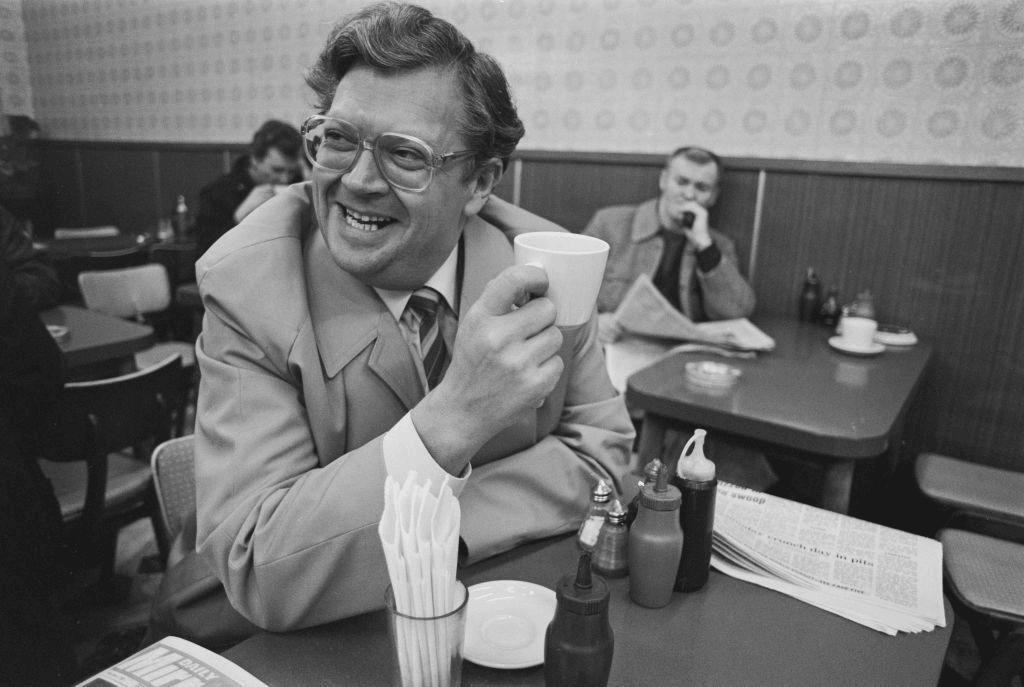


Few people are allowed to listen to recordings made by David Lange in the 1980s. Greg Bruce was admitted to the exclusive club and came away angry that we have stopped recording diaries with prime ministers.
Each morning, for a week, I would sit down at one of the tables in the library’s Katherine Mansfield Reading Room, between 10am and 11am, put my headphones on and pipe the unfiltered and publicly-unheard thoughts of David Lange directly into my brain, in spells of up to six hours, broken only by brief excursions to eat, drink and use the facilities.
I had received a grant from the Friends of the Turnbull Library to carry out research for a book centred on Lange’s famous 1985 speech at the Oxford Union and I had spent almost the whole week with the former prime minister in my ears, talking non-stop and at quite high speed.
The recordings I was listening to were from a few years after that speech and shared the full range of his thoughts and feelings about the life he was living at the time he made them, which, as he knew even then, was an epochal, nation-shaping one.
The recordings were part of the library’s political diary oral history collection, which was begun in 1984 and in which politicians and those adjacent to power made regular recordings with an oral historian to record their unfiltered reflections on the events of the time.
Lange’s had been made in the late 1980s, but no one had been permitted to hear them in his lifetime and, although it’s unclear how many have heard them since, it’s not many. The library severely restricts access and the number of hoops required to jump through to hear it is many. I had to sign a large number of forms regarding access and I’m not allowed to reveal any of what I heard without the written permission of the library, who in turn have to get permission from unnamed others.
I tell you all this only to give context to the situation in which I listened: I had gone to a lot of effort and I had been accepted into an elite club, possibly of one. I felt special and privileged and very, very excited. The experience was, as Lange would have said, extraordinary.
Over the week I spent in the library, time warped and became – and I can think of no better word for it – weird. Some factors: the aforementioned sense of exclusivity, the quantity of time I spent listening, the distance of time between the transmission of his thoughts and feelings and my reception of them, the resonance in the present of many of the issues being discussed in the past, and the twin temporal distortions that come from being both fascinated by a subject and totally absorbed in a task.
Then there was the place in which I was listening: the Katherine Mansfield Reading Room is a sealed chamber, a time machine, a library inside a library into which you cannot bring in pens or bags or – god help you – water. To enter, you pass a desk where two people sit and decide whether to let you in by pressing a secret button somewhere on their desk. Inside, two more desk guardians overlook a space that is silent, spacious and windowless. You are entombed in a world of research far removed from the concerns of the world beyond its walls.
The political diary collection is taonga, and as I sank into the world of Lange contained within it, I felt both disappointment and anger at the fact recordings were stopped in 2024, in what then-acting chief librarian Jessica Moran told the New Zealand Herald was an “operational decision” that would “allow us to focus our efforts on making the collection accessible to researchers in accordance with participants’ agreements, including completing description of the 5000-plus recordings and digitisation of recordings on audio cassette”.
Sure, the collection probably won’t improve the country’s productivity or balance of payments, and it’s unlikely to get more Kiwi kids into Harvard, but that doesn’t mean it’s not valuable.
I am not (yet) able to tell you what Lange said in the recordings I listened to, but I can tell you that what I learned will make my book a far better and richer work than it would otherwise have been and that I believe it will help me provide new insight into, and understanding of, both David Lange and the country he helped shape.
Literature, societal understanding and personal spiritual experiences in a national library might be harder things to put a dollar value on than, say agricultural exports, but that’s not because they’re not valuable; it’s because they’re priceless.