Why you should get excited about tonight’s lunar eclipse

Wherever you are in New Zealand, you should be able to see the eclipse from 11pm (as long as it’s not cloudy)
Shanti Mathias makes a passionate argument for staying up late, going outside and marvelling at the red moon.
It is my duty and pleasure to inform you that once again there is something happening in the sky you should know about. It is a total lunar eclipse, and it means that tonight, the moon will turn very red, instead of white! How novel.
Most media outlets promote a scarcity mindset when it comes to celestial phenomena, framing them as events that hardly ever occur. The line for this eclipse is that this exact arrangement of sun, Earth and full moon won’t be visible again until 2028. Look through any piece of moon-related news – super moon, blue moon, eclipse, take your pick – and you will spot this framing again and again. Oh no! This rare event isn’t going to happen again until 2036!
This is precisely the wrong way to go about promoting astronomy enthusiasm, because clearly, cool stuff is happening in the sky all the time. Planets are shifting around! Meteors are showering! Jupiter is moving into alignment in a way that will make it particularly bright and shiny! Why get excited about a total lunar eclipse, if next month there could be an aurora display or a transit of Venus?
While getting people excited about space is always a good thing, astrophysicist Yvette Perrott can see the problem. “If you talk about things being rare and special all the time, they might stop seeming so rare and special,” the Victoria University of Wellington senior lecturer says.
There’s a better way to think about eclipses. The universe is big and the third planet out from one star in one galaxy is small. We are the last surviving hominin species on this little planet, and crazy stuff is happening in the sky all the time, at unimaginably large scales. It’s the kind of stuff Perrott studies when she’s not answering questions from journalists who are still salty about the time they didn’t see an aurora display.
Most of this has nothing to do with us, except that we are – occasionally – able to observe it. Scientists talk about the observable universe: this is what it is possible to see with the most powerful and expensive telescopes our hominin species has been able to develop in millions of years of evolution. These telescopes can see what is millions of light years away, yet the size and shape of the universe, and the “dark matter” that makes up most of its mass, is still mysterious to us.
The universe that most non-astronomers can observe with our bare eyes is even smaller. The moon and the sun; stars, a sparse handful or a shimmering band, depending on how much light pollution is around you. “It’s special to see things with your eyes, even if you can see photos online from the Hubble Space Telescope that are a thousand times better,” Perrott says. Space is so unimaginably enormous that it’s easiest to understand the heavenly bodies closest to us. Our sun follows the same rules as all the other suns in their far-away galaxies. Our moon is intimately acquainted with gravity, just as we are, when we leap and when we fall.
Forget the scarcity mindset, the once-in-a-hundred-years headline. Instead, think about this: tonight’s eclipse is a reminder that there is much happening outside of our little atmosphere, outside of our little lives. It doesn’t take long to look at the moon, and it takes even less long to want to look at the moon.
Unlike chemistry or engineering, astronomers can’t go into a lab to see what happens. It is only possible to study what it is possible to see. “We are passive observers, we take the chances we’re given,” Perrott says. Sometimes, waiting to study something takes years, because there’s something in the way.
Every day, miracles happen, and sometimes that miracle is a lunar eclipse. I will be thinking of this tonight when I contemplate the red moon, if the clouds are so generous as to part. All that sunlight streaming through the precious atmosphere which keeps us alive will refract onto the moon, but just in the red and yellow wavelengths. This will turn the moon red.
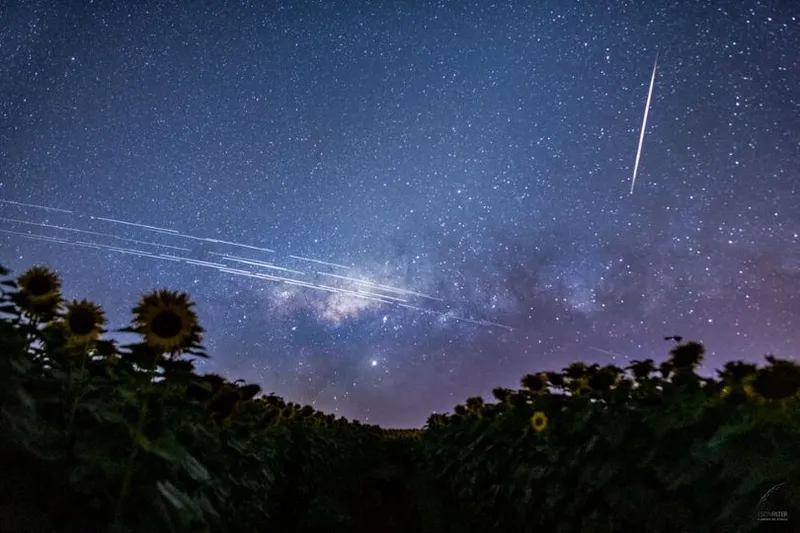
Even New Zealand’s biggest cities have relatively little light pollution, and it’s possible to easily see stars or the moon any day of the week. That’s not the case everywhere, where the sky at night is just a smudge, the stars invisible through the haze. Perrott and other astronomers are worried that the current rate of satellite launches could make it harder to access the night sky. A SpaceX proposal for a million satellites to host data centres in space would make the sky lighter, wherever you are.
Personally, I’ve been known to fret about my “party era” being over, usually when I am staying up past 11pm to finish a book rather than dancing. Tonight, though, the party is in the sky, and I will be poking my nose outside at 11pm, when the eclipse starts. I might even stay up until 12.30am, when the eclipse will be at its best. I don’t have binoculars or a telescope, but if I did I would bring them with me for a better view. Anywhere with a clear view of the sky will give you a good chance of seeing the eclipse – an apartment roof, park or hill.
Perhaps all this enthusiasm is unwarranted, and sleep is more important to you than looking at the moon. But so many things to celebrate come with caveats and costs. Even when enjoying something, there is the shadow of so many people who are not, who cannot, through no fault of their own but dire circumstance. The moon has nothing to do with that; eclipses come and go no matter how you feel about them. We might be leading up to another cost-of-living election but forget about the politicians and the bills: the eclipse is free.
And say you miss it? Well, the sky will keep doing its thing regardless. The sun will rise tomorrow, the moon will tug the tides up and down, the stars will arch above in their distant and fiery way. There will be another eclipse, and another supermoon, and another meteor shower. But this one, tonight, is special too. Take the chances you get to look upwards, like Perrott does. The consequences are low, and the rewards are high: a dark red moon, hanging high above.

Shanti Mathias
Shanti is a contributing writer at The Spinoff with a focus on Christchurch and the South Island. Email her at shanti@thespinoff.co.nz


