The second Mt Victoria tunnel is a money pit, but there could be a silver lining

There could be hidden wins for walking, cycling and public transport
Buried inside a megaproject for cars is a rare opportunity to carve out bus lanes, bike routes and walkable streets – if Wellington’s leaders are bold enough to take it. Joel MacManus explains.
The government’s proposal for a second Mt Victoria tunnel and SH1 realignments through Hataitai and central Wellington is a monstrously over-designed money pit, estimated to cost as much as $3.8bn. By comparison, the City Rail Link came in at $5.5bn, but promises to fundamentally reshape Auckland’s transport, identity and economy. It’s hard to make the same argument for this road.
Still, it seems like it’s going ahead. Transport minister Chris Bishop is pushing it through a fast-track process, Wellington mayor Andrew Little supports it, and Wellingtonians are so sick of infrastructure investment being cancelled, delayed, or stuck in endless loops of design reviews that they just want something, anything, to be built.
According to NZTA calculations, it has a benefit-to-cost ratio of 1.2, or 1.0 if it is tolled – and that would fall even further if congestion charging is brought in to limit traffic at peak times. It will likely end up costing more than the benefits it produces.
There are benefits; It should enable some housing growth in the eastern suburbs, though that’s limited by hills and flood risks. It will improve travel times for cross-town car journeys and make airport connections more reliable. While it’s helpful for people travelling across the city to or from the airport, it’s less useful for people going about their lives in Wellington city. Urbanists are particularly concerned about induced demand: the idea that if you make it easier to drive, more people will drive, and the city’s streets will be clogged with traffic.
But there may be some silver linings. Hidden within this monument to car dominance could be unexpected wins for walking, cycling and public transport. If Wellingtonians play their cards right, and local politicians are willing to fight for it, a highway could unexpectedly make Wellington’s streets a whole lot more liveable.
A harbour boulevard
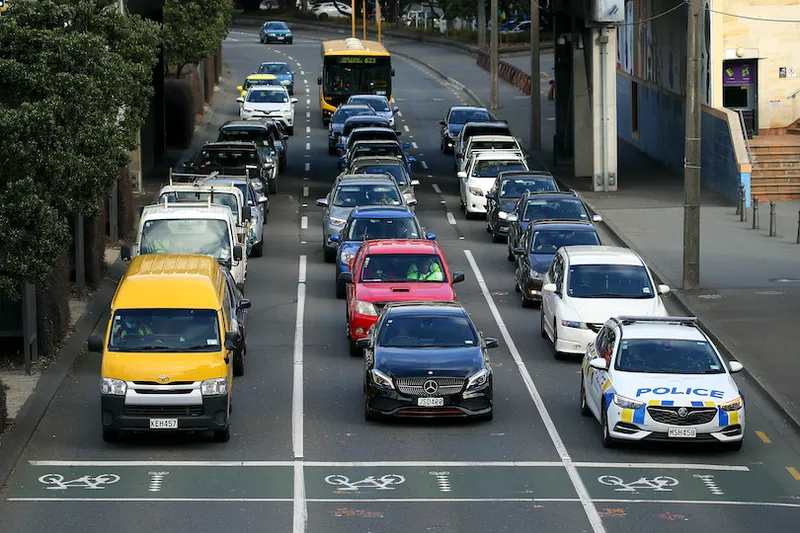
Currently, the harbour quays (Waterloo Quay, Customhouse Quay and Jervois Quay) are a six-lane car sewer that creates a barrier between the city centre (where all the people are) and the waterfront (where all the nice bars and public spaces are). The SH1 improvements will shift greater traffic volumes to the south side of the city and away from the harbour. This is a chance to make the harbour quays more people-friendly by converting it to a tree-lined boulevard with centre islands, slower speeds and better pedestrian crossings, encouraging more people to frequent waterfront business.
A second spine for buses and bikes
Almost every bus in Wellington runs down Courtenay Place and Lambton Quay. This causes congestion and frustratingly slow speeds for bus commuters. The Golden Mile project is intended to partially fix this, but it’s mostly about making nicer public spaces. The big upgrade would come in the form of the long-mooted “second spine”, a bus lane running each way along the harbour quays, which would allow Metlink to run faster, higher volume bus services through the centre city.
Similarly, Cycle Wellington has spent several years campaigning for a bike lane along the harbour quays to reduce bike-pedestrian conflict on the waterfront path. Both of these would be politically difficult if the reduced road space causes traffic jams for cars, but with the SH1 improvements, they suddenly become viable.
A Cuba Street for people
Part of the redesign involves removing parking from Vivian St, converting it to three lanes to handle the volume of traffic coming off the Wellington Urban Motorway. But that traffic will still have to contend with five intersections in less than a kilometre, slowing down cars and negating some of the project’s goals.
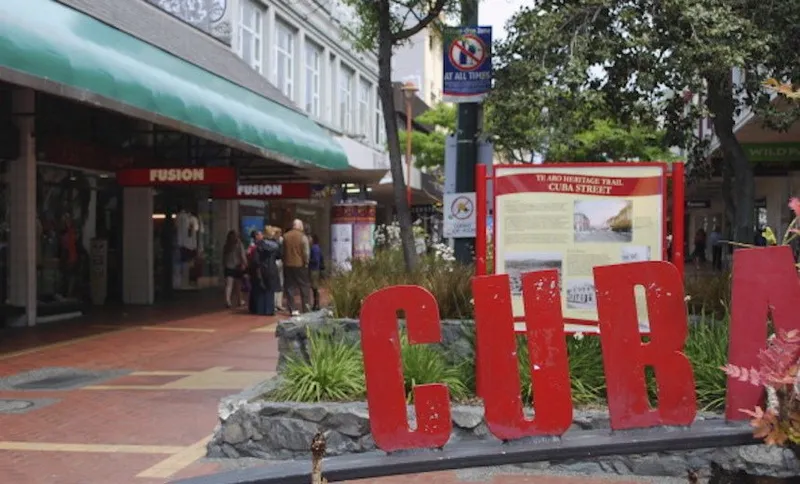
Most notable is the intersection with Cuba St, a busy shopping and entertainment street with high foot traffic. The delay doesn’t really come from pedestrians; dozens of people can cross a road together in a few seconds. The big slowdown is from cars turning from Cuba St into Vivian St or vice versa. How could you reduce that? By closing Cuba St to vehicles.
Cuba Mall has been an enormous success ever since it opened in 1969, and this SH1 project could be the trigger to finally expand that to the rest of the street. Despite what local media chooses to focus on, this is something that many upper Cuba St business owners support.
The key to these three street changes is joined-up thinking. If the mayor and councillors are tactical, they can negotiate with NZTA and use the government’s highway expansion to deliver street-level improvements across the city. It doesn’t have to be just a car project; it can also deliver wins for people who want better public and active transport – and, after a controversial delay to the Golden Mile, that’s a constituency that Andrew Little needs to win back.
Consultation on Wellington’s SH1 improvements is open until December 14.

Joel MacManus
Joel MacManus is a senior writer for The Spinoff. He previously worked at RNZ and Stuff, and began his career at Critic Te Ārohi. His writing explores the political, economic and cultural systems that underpin modern New Zealand. He won the 2025 Voyager Media Award for Best Columnist, Opinion or Critique.


