


The opportunity is here for a cultural reset, to establish a more resilient, healthier and, for heaven’s sake, cheaper way of living in this country. If only the government would take it, writes Simon Wilson.
You could argue that Donald Trump is already well on his way to destroying “a whole civilisation”, as he threatened on Tuesday, or at least all its good bits. The American civilisation, I mean.
Bleak jokes aside, surely it’s time for an internationally coordinated effort to condemn and isolate the United States. As quickly and comprehensively as possible.
The two-week ceasefire he agreed to on Wednesday provides time to make that happen. No support for Trump’s war, anywhere.
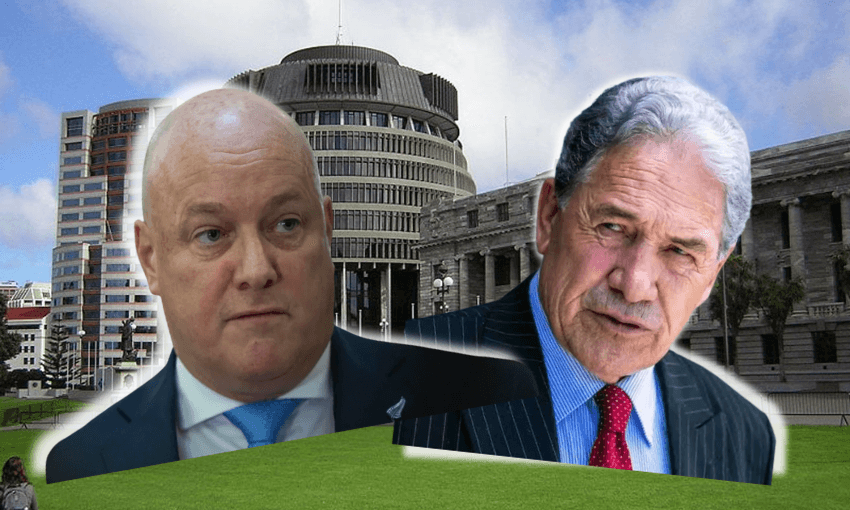
This is one of the things the government of Christopher Luxon, Winston Peters, Nicola Willis et al is not doing in this crisis. We don’t need to do it unilaterally, but we do play our part.
There are two more big ways in which our government is failing.
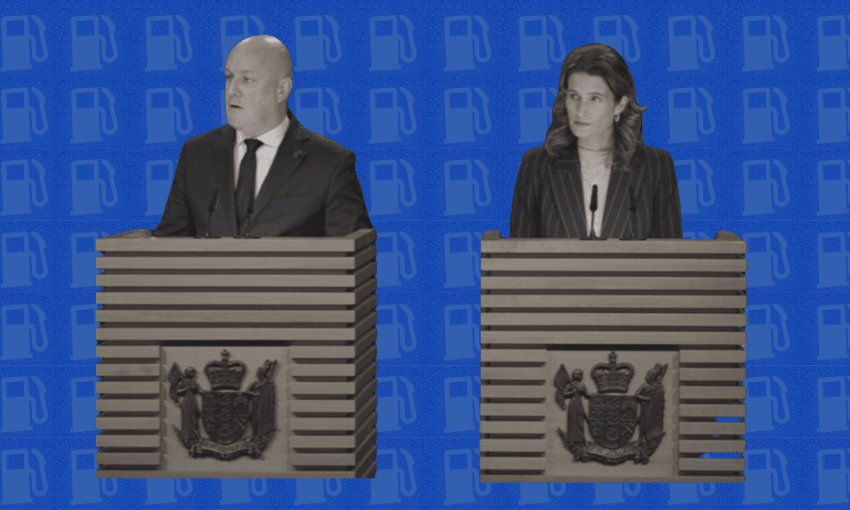
The first concerns the immediate challenges of rising fuel prices and precarious supply. The second is strategic: it’s the refusal to address our fragile energy security.
To be fair, there’s no way the government can win on fuel prices. If they lower them by reducing fuel taxes, they reinforce our dependence on petrol and diesel. Also, as Willis rightly says, if they reduce or pause a tax temporarily, how do they restart it without creating an outcry?
The value of higher prices is that they force us to think harder about how we use petrol and diesel. Freight companies, for example, say they are combining loads and doing fewer runs. Excellent.
But guys: you should keep those efficiencies in place permanently. Fewer trucks on the roads is a net gain for society: it reduces traffic congestion, boosts road safety and public health and lowers carbon emissions. And because it lowers your own costs, too, it should lower ours.

And yet there’s a massive downside to higher fuel prices, because they are cruelly regressive. Some people won’t notice; for others it will take food from the table and see the kids going without winter shoes.
So there needs to be a lot of support for those in need. To date the government has restricted this to payments to Working for Families recipients. But others also need help, including in-home care workers, many other service workers, beneficiaries and everyone else genuinely dependent on their car or their machinery on a farm or in the factory.
The net should be thrown wider, but that won’t solve the basic problem: targeted support always creates inequities. Some people miss out when they really shouldn’t.
This makes other forms of help vital. Public transport fares should be abolished (as happens now for SuperGold cardholders and used to happen for children) or made much smaller. Several other countries have already done this.
Also, public transport services should be funded to ensure they’re frequent and widespread.
The government should also offer carrots and sticks to businesses, to encourage not just public-transport commuting but working from home, car-pooling and walking and cycling to work. How about staff use of buses and ride-share scooters and bikes instead of cars for work-related trips across town?
Where’s the support for freight forwarders to use rail? For couriers to transition to cargo e-bikes?
As with trucking efficiencies, all these things could become permanent. The opportunity is here for a cultural reset, to establish a more resilient, healthier and, for heaven’s sake, cheaper way of living in this country.
Why is none of this on the government’s agenda?
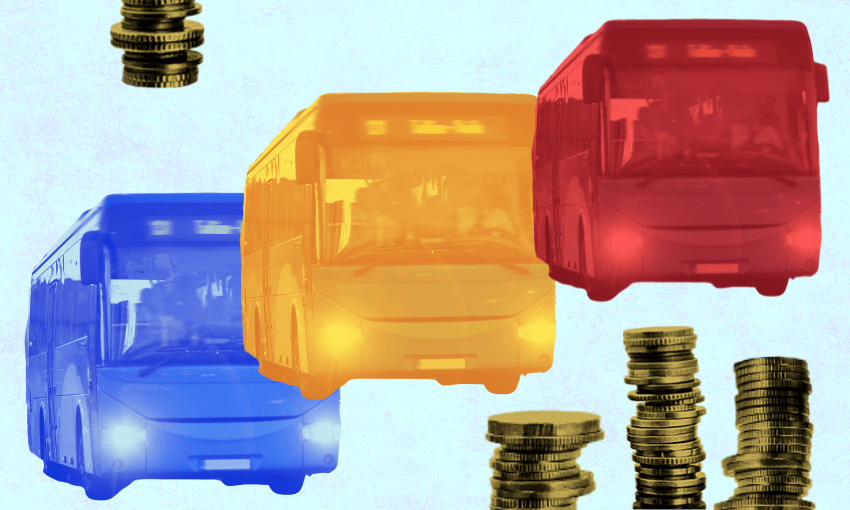
Right now we are ruled by car dependency. We drive all the time for everything. But we could create a new model. How about: cars are for when we need them.
Which leads us to energy security.
The time to deal with a crisis is before it happens. Stopbanks along the river are better than sandbags when it rains.
The time to deal with the next crisis, and all those to follow, is now. This is because when times are tough most people know we need to change. We can’t keep going on like this, said no one ever during the good times.
But the government has abandoned the opportunity. People should “carry on in as normal a way as possible”, Luxon told Mike Hosking on Newstalk ZB on Tuesday.
Breathtakingly ill-suited to leadership is what I’d call that.
There has been more than one oil “shock” every decade since the 1970s. Earth Sciences says there is now a 50% chance of major flooding in a New Zealand city at least every year. But the government seems to think these things are not happening.
We should be electrifying the economy, with a rapid build-up of rooftop and commercial-scale solar, backed by batteries, and with more wind power. We need a new transport plan that turns public transport, walking and cycling into the preferred choices for many more people than now.
There is lots of good news to inspire such changes. Late last month in California, for example, solar power stored in batteries supplied over 40% of evening peak demand on the grid. More than 90% of that capacity was built in just the last five years.
That’s fast change with almost no downside.
There’s also bad news. Luxon has just put Simeon Brown in charge of energy and National’s election campaign.
Brown celebrates our dependence on cars. Like Luxon, he seems not to grasp how that dependence has forced prices to rise. In more ways than one, it’s driving the cost-of-living hardship now borne by households, businesses and the entire economy.