For some New Zealanders, not all immigrants are made equal

Photo: Getty Images
As election-year rhetoric ramps up, a recent study suggests a quarter of New Zealanders have negative feelings about immigrants from India. Just 6%, meanwhile, feel similarly about immigrants from the UK.
I’ve lived my life primarily in three countries. I was born and raised in India, moving around the vast country regularly as my father undertook different military postings. I did all my university study in the United States, in both a rural, agriculture region of Pennsylvania, and then in the Virginia suburbs just outside Washington DC. In 2015, in my mid-30s, I moved to Aotearoa New Zealand – a country where my husband was born, and which I now consider my second home. Wellington is the city where I have lived the longest, ever, and where I love and have been loved by my local communities including those at my university, and in my son’s daycare and schoolyard.
A bit over eight years ago, my son Samraj was born in Wellington Hospital – the same place where his father and his six cousins were born, and where his maternal grandmother worked as a nurse in the 1980s.
Samraj has no doubt that he is a New Zealander. He is growing up in the same streets that his father did and is attending the same primary school and has joined the same sports clubs that his father, uncles, aunts and cousins did. He speaks English with an undeniable Kiwi twang – with a healthy spattering of Hindi words that let him know when he’s in trouble or his mum needs a cuddle. His mates at school have heritage from all around the world, reflective of the fact that contemporary urban New Zealand is a place that people travel from far away to get to and live in.
I, too, consider myself a New Zealander, as well as an Indian. Some would call me a “Kiwi Indian” – and I’ve often served pavlova alongside gulab jamun at my dinner parties.
Our stories are not that unusual. I am one of about 1.5 million New Zealanders who were born overseas – and one of about 150,000 New Zealanders who were born in India. Samraj and I, alongside Samraj’s aunts and cousins with Japanese and Cambodian heritage, are two of the close to one million New Zealanders of Asian descent.
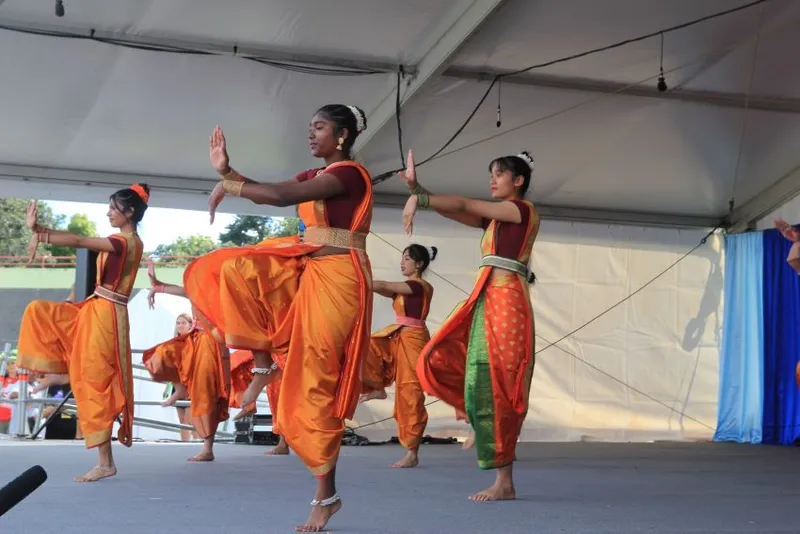
My arrival in New Zealand in 2015 is an echo, a generation later, of a migration that helped form my husband’s family. My father-in-law, Ian, was born and grew up in England, only to travel to New Zealand in his mid-30s because his wife, Alison, was from here. Like Samraj, my husband Michael was born in Wellington a few years after his foreign-born parent emigrated to New Zealand.
As I have followed some of the election-year theatre about immigration in the past few months, and read recent social research, it has occurred to me that some Kiwis might not view me or my son as fully, completely, legitimately New Zealanders. This is bolstered by research that I have been doing with first- and second-generation immigrants around their health since 2023.
The facts of how Samraj and I look, and what our first names are, expose us to being viewed as “others”, “outsiders” or “visitors” who might be encouraged to “go home” if we express the wrong opinions or act in the wrong way. I doubt my husband Michael, or his father Ian, faced corresponding attitudes in the Wellington of the 1980s. The difference, of course, is where we respectively came from.
A recent report, Social Cohesion in New Zealand, by Shamubeel Eaqub and others, underlines that, for some New Zealanders anxious about migration levels, not all immigrants are made equal. In this report, only 6% of respondents self-reported having negative feelings about immigrants from the United Kingdom. The corresponding figure for immigrants from India was 25% – or fully one-quarter of the almost 3,000 New Zealanders surveyed.
This is undoubtedly a confronting finding. Especially so when you consider that Indians have been emigrating to New Zealand for well over a century. Kiwi Indians are not a recent feature of New Zealand society. This suggests that, for some Kiwis, this country and the concept of “New Zealander” carry certain ethnic connotations – which Indians sit outside.
The Social Cohesion in New Zealand report had other, more heartening, findings.
When asked whether new immigrants are “adding to the richness of New Zealand life” or “threatening New Zealand’s unique sense of identity”, a plurality chose the former: 47% versus 32%. An overwhelming majority of New Zealanders – 91% – reported having at least one close friend from a different national, ethnic or religious background. And only 10 percent of respondents said they disagreed with the statement “multiculturalism is good for New Zealand”.
Of course, intolerance between different groups of society exists everywhere. I recall a conversation amongst Indian academics that I was part of in the United States about the prejudice that we faced in American society. One of my Dalit friends (from an oppressed caste in India) observed wryly that many Indian academics were more activated and energised about prejudice in the United States than in India. Indeed, Kiwi Indians who experience prejudice here will, in many cases, come from oppressor caste families who had no problem with perpetuating unfair caste relations in India itself. Therefore, perhaps, alongside holding others accountable for racist attacks and racism – we within the Kiwi Indian community can also do a bit of reflection on how some in our own community carry with them a healthy dose of racism towards others.
Looked at another way, one could say that many Kiwi Indians who have arrived here in recent decades share a similarity with the large waves of would-be New Zealanders who came here from the United Kingdom in the mid-to-late 1800s and early 1900s. These lands have long offered the promise, if not routinely the reality, of a society with less rigid social structures than much older societies in Asia and Europe. The United Kingdom’s class system and India’s caste system are a world away from Aotearoa – at least in our country’s self-perception about everyone being able to have a fair go.
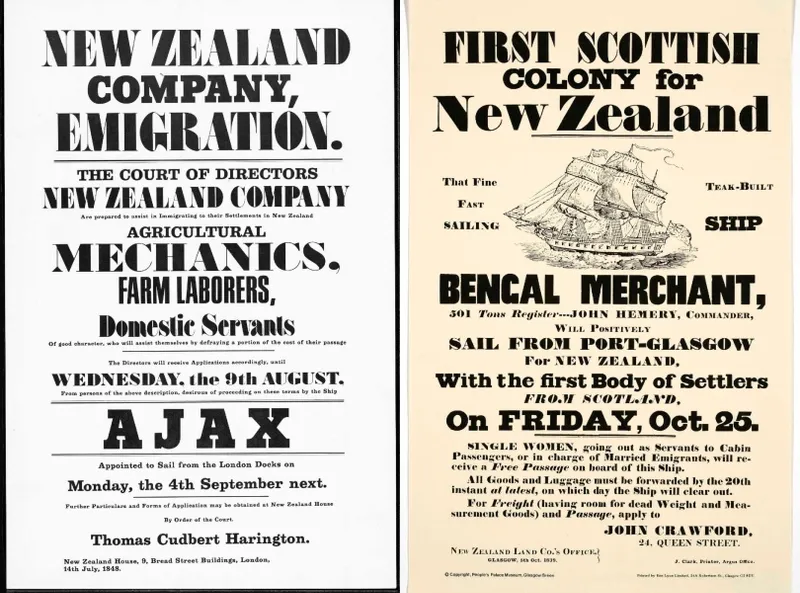
But this inevitably takes us to the often harsh and uncertain economic realities facing New Zealanders all across our country today. It’s a truth the world over that, in economically precarious times, those left behind by and alienated from our political and social structures are more likely to be encouraged into fear of newcomers or perceived outsiders. Indeed, the Social Cohesion report found that New Zealanders struggling economically were much more likely than the prosperous to believe that immigration is too high and to view increasing numbers of new immigrants as threatening New Zealand’s sense of identity.
It is a demographic fact that New Zealand is a country made up of a broad range of interwoven communities: our tangata whenua, our Pasifika peoples with heritage in other parts of Polynesia, Asians like me, European New Zealanders like my husband, and many others besides.
But our success, as a country, will come from continuing to do the hard work of building a society where prosperity is broadly shared and where national identity is diversely and widely conceived. And this has to be done across a broad spectrum of society. For example, Indian migrants have to participate in this vision of a future for Aotearoa, where equity and social justice is extended to them, but also by them towards others.

Nayantara Sheoran Appleton
Dr Nayantara Sheoran Appleton is a senior lecturer in the School of Science in Society at Te Herenga Waka—Victoria University of Wellington.


