The government’s fuel crisis package looks weaker with each passing day

Nicola Willis and Christopher Luxon during a press conference at parliament on March 19, 2026 (Photo: Marty Melville/AFP via Getty Images; additional design The Spinoff)
It’s hard to avoid the impression that a government already making life hard for the lowest earners has decided to double down, leaving those households out of the response to a crisis that affects everyone.
They say two out of three ain’t bad, but Nicola Willis’s fuel crisis package will be doing well to achieve even that.
Of its oft-repeated aim to be “timely, targeted and temporary”, only the first point – a rapid response – has inarguably been achieved. As the Iran war drags on, the chances of its being truly “temporary” look slight. But it is the “targeted” element that is looking especially unsound, as the list of groups excluded grows ever-higher.
The true meaning of the word “targeted”, after all, is not “given to a small group of people” but “given to the right group of people”. And that does not seem to be the case here.
The package delivers an extra $50 a week to the 143,000 households who receive the In-Work Tax Credit (IWTC), a Working for Families payment notionally designed to defray the costs of employment. There’s no longer a requirement to work 20 hours a week to get the IWTC; Labour removed that six years ago. People are, however, still ineligible for the IWTC if they receive a benefit.
Yet many beneficiaries are also workers. On Jobseeker Support, for instance, people can earn $160 a week before their benefit starts getting clawed back, and somewhat more before it is fully “abated”, in the jargon.
The clawback rate, though, is 70c in the dollar, discouraging further effort. Many people are left in an intermediate zone, working but still receiving part of their benefit. They won’t get the IWTC – or, evidently, the extra $50 a week. So the fuel crisis package doesn’t even reach every low-income employee driving to work.
And even if they’re not commuting, people on benefits may still need to fill the tank. Willis’s government has strengthened work obligations, requiring beneficiaries to turn up for more Work and Income appointments and job interviews. Ministers, in short, are asking people to do something that often involves more driving, but will not reimburse them for the extra cost of that driving.
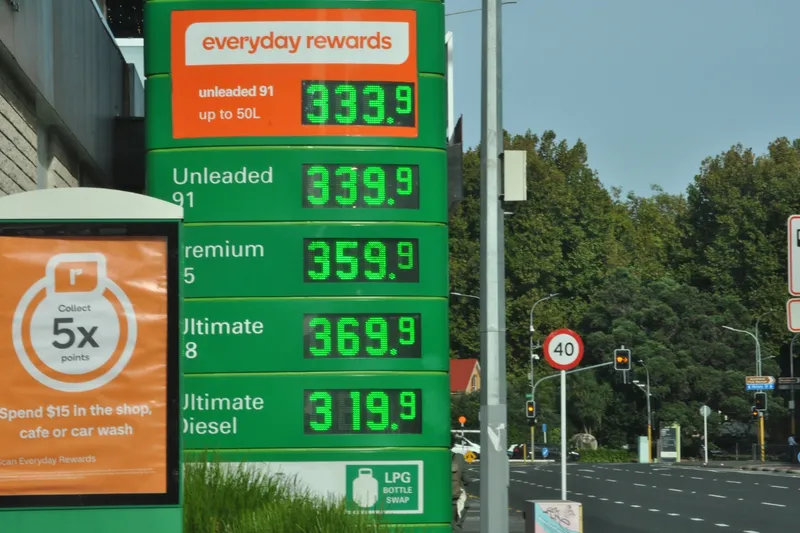
And as the New Zealand Council of Christian Social Services (NZCCSS) pointed out in an open letter to ministers, the fuel crisis doesn’t show up only in the price of fuel. Firms will pass on those costs in the form of higher grocery bills and other charges. And that hits non-workers just as much as workers.
Being part of Working for Families, the IWTC is also available only to parents. Those without children, whether on benefits or off, will miss out. Yet they too drive, whether to work or elsewhere.
The package’s exclusions keep piling up. The government has already admitted that half the children in material hardship – those, that is, living in families routinely going without the basics – will miss out. Again: “targeted” this is not.
The package is also somewhat self-defeating. Two of this government’s chief aims are to lift school attendance and to “encourage” (some would say “force”) beneficiaries into paid work. Yet the failure to help many poor families will leave those households struggling with the fuel bill for school runs and job appointments.
Another disadvantaged group is people with disabilities. As the NZCCSS points out, these households are especially reliant on transport, and often cannot use buses and trains. Rather than making life easier for them, the government is excluding Supported Living Payment recipients from the package – even as it reduces fare subsidies for the disabled community’s Total Mobility scheme.
Finally, the package excludes care workers without children, even though they can rack up huge fuel bills driving around looking after people in their homes. These are also the women denied pay equity by the abrupt cancellation of claims last year.
All up, it is hard to avoid the impression that a government already making life hard for the lowest earners has decided to double down, leaving those households out of the response to a crisis that affects everyone. Nor are ministers convincing when they say beneficiaries are already covered by a 3.1% inflation adjustment coming on April 1.
That is, first off, an adjustment for past inflation, not the current shock. Second, Child Poverty Action Group research shows beneficiaries with children are often $100-200 a week short of the income required to meet basic and social needs. They were underwater even before this crisis. Third, beneficiaries and other low earners typically face worse inflation than others, according to Statistics New Zealand, because staples rice in price more quickly than luxuries.
Extending the government’s package would, of course, cost money, and as we are running a deficit, that money would essentially be borrowed from private investors. That, in turn, risks adding to the annual $9 billion interest bill on government debt.
But not acting also adds costs. Many low-income Kiwis are barely coping, and the failure to support them through this crisis risks tipping them into outright collapse: relationship break-up, addiction, homelessness, other dysfunction. Child poverty already costs the country an estimated $17bn a year in long-term health costs, weaker school results, and lower productivity. The long-run consequences of leaving so many families unsupported could be far greater than any extra costs from borrowing.
The fuel package also reminds us of our repeated failures to build resilience into our social and economic structures. Our reliance on expensive foreign fuel would be lower if we had more EVs on the roads, better public transport, and more renewables. Firms would be less able to pass costs onto the rest of us if they faced more competition in sectors like groceries, energy, banking and insurance.
We didn’t make this crisis, but we left ourselves wide open to it. And, as ever, the costs of that failure will fall hardest on those least able to bear them.

Max Rashbrooke
Max Rashbrooke is a senior research fellow in the School of Government at Victoria University of Wellington. www.maxrashbrooke.net.


