What should we do about New Zealand’s soaring superannuation bill?

Treasury has already warned that superannuation isn’t sustainable in the long run. How do we fix it?
While there’s no quick fix, a few proposals for tackling the rising cost of our universal pension scheme get thrown around regularly. So what’s the best plan of action? The Spinoff asked three experts to weigh in.
Every day, New Zealand spends $39 million to provide a pension for those aged 65 and over. By 2040, that daily cost will triple to $120m. The rapidly rising bill is thanks to an ageing population and a changing demographic makeup: when Robert Muldoon axed Norman Kirk’s short-lived retirement savings scheme in 1975 in favour of a universal pension, the country had eight working people to a single retiree. Fast forward 50 years, and that number has halved. In another 50 years’ time, it’ll halve again.
With fewer young working New Zealanders around and an ageing population to care for, what’s the answer to creating a more fiscally sustainable pension? Is it by doing a line-by-line review of a retiree’s assets? Could it be achieved by raising the age at which they can stop working and receive a pension? Or is there another solution?
The Spinoff asked three experts – Eric Crampton, chief economist at the New Zealand Initiative, Shamubeel Eaqub, chief economist at Simplicity, and author and researcher Max Rashbrooke – for their thoughts on the levers that could be pulled, and what would happen if we did nothing at all.

Raising the retirement age
If there’s any change to superannuation in the coming years, it’ll likely be this. On the surface, raising the retirement age – the age at which every New Zealander is eligible for NZ Super – makes sense. In 2001, when the retirement age was set at 65, life expectancy was lower: New Zealanders are now living about four years longer than they were then, which means longer retirements and more super being paid.
It’s a policy the National Party has campaigned on in previous elections, often eyeing up a rise to 67 by 2040. Prime minister Christopher Luxon has confirmed the party will be campaigning on a similar policy this year, after finance minister Nicola Willis made no secret of her desire for change. Act is similarly keen to see the age lifted, but NZ First is dead set against it. Labour, meanwhile, has pledged to raise the age in the past, but current leader Chris Hipkins favours the status quo, as do the Greens. Te Pāti Māori has proposed lowering the retirement age for Māori to around 55-58, to account for shorter life expectancy and therefore a likely shorter retirement period. (The current life expectancy for Māori is 75.8, compared to 82.8 for Pākehā. It’s 76.9 for Pacific people and 86.3 for Asian people.)
The pros
Crampton: “A one-off increase in the age of eligibility, perhaps to take effect a decade from now so people would have time to plan for it, combined with an automatic ratcheting-up of the age of eligibility as healthy life expectancy increases, would do a lot of good.”
The cons
Eaqub: “It’s grossly unfair; it feels really cruel to say that because you’re brown, because you’re poor, you deserve less rest and security in older age. And we know it’s not because people are brown that they are living less, it’s because they have grown up in poverty, because they’re working in physical jobs.
“If we want to have a higher eligibility age, my main concern is that NZ Super is so much more generous than unemployment or disability benefits. What it says is that because you are physically no longer able to work, somehow you deserve less than somebody else who’s in good health but happens to be 67. Until we fix that inequity in the welfare system, it becomes a real punishment for those who are no longer physically able to work.”

Rashbrooke: “I think [this is] the second-worst option. Raising the retirement age sounds simple in theory, but it’s actually very complex and very inequitable in practice. You’re basically leaving poorer people with quite short retirements; the loss of two to three years will mean more to them than it will to richer people.
“And what about all the people who are physically really broken down at 65, because they’ve been in manual labouring jobs? How can you just say to them, ‘sorry, I know you were hanging out until 65, but you’re gonna have to wait much longer.’ That is very hard to justify, I think. Also, how do you make a system like that work? A precedent of that would be the police early retirement fund, which had to be wound up in the 2000s because police were using it [inappropriately] to get signed off early.”
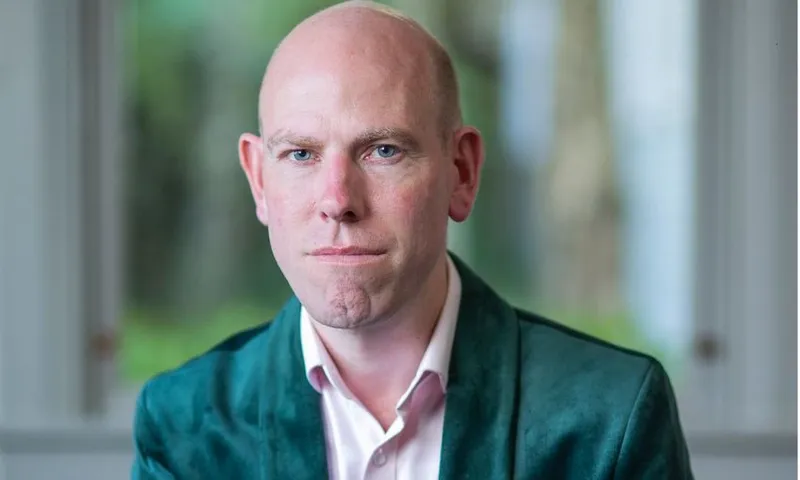
Crampton: “It wouldn’t help us over the next decade, and those costs will be rising considerably over that decade. I’d be happy to do it a lot faster, but I doubt there’d be broad agreement. Any proposals in this space always couple it with some form of disability payments for those turning 65 who are no longer able to work, to cover them through until they’re eligible for NZ Super. A health-tested benefit, rather than means-tested.”
Means testing
Rather than let every senior access the pension when they reach retirement age, we could introduce eligibility criteria to ensure we’re focusing on supporting our most vulnerable. The most popular method of doing this is through means testing (or asset testing), and we need only look across the Tasman to see how this could work in practice.
The flip side is that means testing isn’t the most politically advantageous proposal. From 1985 to the late 90s, New Zealand imposed surcharges on superannuitants for any other income received, before public backlash and pressure from NZ First pushed the National government to scrap the fees in 1998. The idea of evaluating a pensioner’s income before they receive their benefit has been a hard sell for those who believe paying taxes has earned them their right to super.

The pros
Eaqub: “I much, much prefer means testing because there is no reason why rich people should get welfare. Nobody’s saying that with means testing everyone will have to retire independently. What we are saying is, can we create the conditions so that people are able to aspire to, or give them the opportunities to, save enough?
“If they do [save enough], fantastic. If they don’t, we still have a safety net because it’s only fair. That’s what a welfare state is meant to do. It’s not like we don’t do means testing for every other form of welfare. And I think that that’s the lens we should be using, that means testing is absolutely normal – that’s what MSD [the Ministry of Social Development] does day in, day out. There is no reason why this particular welfare – which was never funded, which was never saved for – should be given to everybody.”
Rashbrooke: “If one wanted to reduce the costs of NZ Super, [means testing] would be the best of a bad set of options. It’s very easy to theoretically design a system of income testing.”
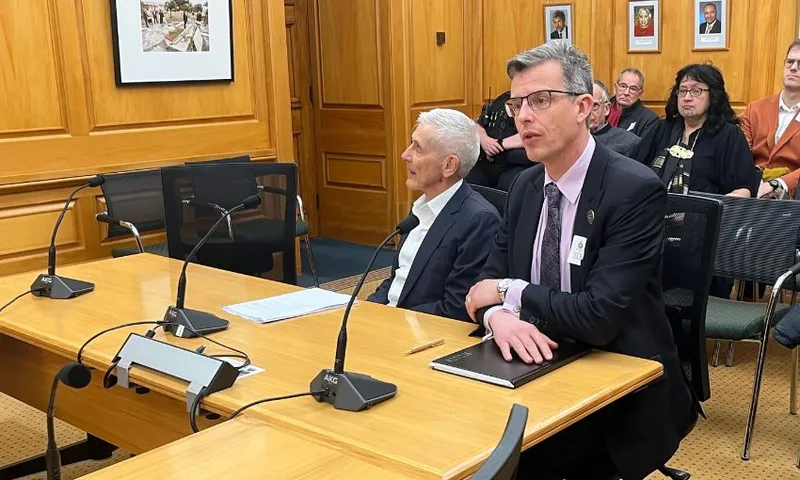
Crampton: “It would reduce government payments on superannuation, and it’s easy to see short-term benefits. Longer term, I would have substantial worries.”
The cons
Eaqub: “It’s not the most popular [option], I think because we’ve been lied to. These are the kinds of pretty little lies we tell ourselves: that we’re a rich country, that we’re a highly taxed country, that we’re a fair country. None of those things are true.
“The biggest issue is the political cowardice that has perpetuated that myth that, somehow, if you have worked through your working ages, you have earned the right to receive NZ Super. Ignorance and stupidity cannot be the reasons why we perpetuate policies that are super expensive and unfair.”
Rashbrooke: “It’s politically very unpopular, but there is a deeper problem. The issue is that if you target people who are quite well-off, you can’t just means test on income. The people you will catch are people still working at conventional salaries, [but] what you won’t catch is people who are extremely wealthy. They’ve got huge assets, they’re in business, they’ve got cash in the bank and wealth, but they have found ways of artificially minimising their income.
“Asset testing is where you’re logically led to. And at that point I would say good luck trying… you’re asking people these, in their view, extremely intrusive questions about everything that they own. I think it’s technically feasible to test on assets, but it’s just the administrative complexity, the perceived intrusiveness into people’s lives, and the absolute political nightmare that it would create.”

Crampton: “Remember that income from NZ Super, for those on high income, is already taxed at 39%. The banker who is still working at 70 will be paying a 39% tax rate on income received through NZ Super. The person whose only income is NZ Super pays a far lower income tax rate.
“Treating NZ Super income as normal income already means it gets taxed at a higher rate for those on higher earnings. And it does so in a way that doesn’t really distort people’s choices about whether to be in work, how many hours to work, or how much to save for retirement. Or, at least, not more than it distorts those choices for someone who is younger.
“If you added surcharges on top, all of a sudden people who are on high earnings in work while collecting super face a very high effective marginal tax rate. Many of them would cut back on hours, or shift fully into retirement earlier. That would reduce government tax revenue from that group. And it would also discourage people from saving for retirement if they know that saving more means lower payments. So it’s tricky. I do not favour means testing because of that mess.”
Indexing super to inflation, not wages
Currently, the superannuation is primarily pegged to wages, meaning that when wages go up, superannuation goes up. But it’s also cross-checked against inflation (measured as the consumer price index, or CPI), so if the CPI rate is higher than wages, the CPI rate is applied. There have been suggestions of shifting the indexation entirely to CPI, which would slow the rate at which super payments increase and generate long-term savings, but runs the risk of worsening relative poverty.
The pros
Crampton: “[Linking superannuation to wages] sounds nice and all, but it also has the unfortunate consequence of making it almost impossible to grow our way out of the superannuation burden. If wages double, superannuation costs double. People who claim that we can make superannuation more affordable by being more productive and increasing economic growth perhaps don’t appreciate the mechanical link from productivity increases to wages, and from wages to superannuation payments.
“The government would collect more in tax as we get more productive; a lot of that just turns into payments to the elderly. If you indexed NZ Super to the CPI, so it increased as the prices of things increase, rather than to wages, there would be next to no effect on current retirees. The difference gets large over time, though – which is a desirable feature in this context.”

The cons
Eaqub: “Essentially, it reduces your earning power. This is what we’ve done with our welfare payments – every other welfare payment had been linked to CPI for a long time, it was briefly linked to wages, and it’s gone back. Essentially, what we have done is created outright poverty amongst our welfare classes. CPI inflation is not enough because whilst some prices are falling, the cost of living and what you consume is rising.”
Rashbrooke: “Shifting the indexation to inflation would be the worst of all possible options. The thing about super is its incredible success is that it ensures we have some of the lowest material hardship rates amongst older people in the world. That success is under strain because NZ Super was premised on the idea that everyone owns their own home, and increasingly, they don’t.
“But that success is, I think, substantially because NZ Super is set at two-thirds of the average wage. It’s deliberately set at a level that does keep nearly all pensioners out of poverty. If you only increase it at the rate of inflation, you will massively damage that achievement.”
Do nothing now, figure it out later
With the perpetual threat of the NZ First handbrake, changing super any time soon seems like a distant dream. So what happens if we do nothing at all, leave it in the too-hard basket for successive governments to tackle? Or what if we took the time to figure out something different?
Eaqub: “Initially, that looks like rationing in things that we want, whether it’s health or education or whatever. Because the cost of super is rising fast and we have this incredible lack of appetite to increase taxes, we’re just going to have to cut everything else. And we’ve seen this already in stressed nurses and doctors, long queues at hospitals – that’s the stuff that gets rationed.

“Within the next 20-30 years, all of the taxes from working will be spent on two line items: NZ Super and health. Can you imagine all the workers sitting there saying, ‘I’m really happy to pay all these taxes on my wages for old people to have the things that they never fixed’? It’s already an intergenerational challenge, but it’s set up to be a much more ugly thing if it leads to a sudden change rather than a gradual change.”
Rashbrooke: “We face some tough choices. Personally, I’m a big fan of citizens’ assemblies and I think we should get a bunch of ordinary New Zealanders, representatives of the country, in a room together and ask them to think about it.
“[Keeping the status quo creates a] New Zealand where people are living longer, and we have achieved a huge public policy achievement, which is that we are giving people security and options later in their life. The cost of that, as per [former NZCTU economist] Bill Rosenberg’s calculations, is actually relatively manageable.”
Crampton: “Superannuation costs rise predictably with an ageing demographic, with substantial high-tail risk if life expectancy increases considerably with medical advances that will flow through over the next few years and will reach NZ a few years after everyone else has them. In that world, spending on the non-elderly has to reduce considerably, the tax burden overall has to increase considerably, or some mix of the two.
“[We could] think about everything a little bit differently … What if NZ allowed a lot more productive 25- to 35-year-olds to move here? On a very rough ballparking, if net migration stayed around 110,000 per year, or about 1.8 net migrants for every person turning 65, you could keep NZ Super affordable for a really long time. It would require not just an increase in immigration, but an ongoing increase in immigration.

“Demographics across Europe are far worse than here. Immigration NZ could run a recruitment campaign in Germany, France and Italy encouraging productive 25- to 35-year-olds to move to NZ for a younger country where less money will be taken from them every year to pay old people, and where they’re less likely to be invaded by Russia… National and Labour both want urban land markets to be able to accommodate more housing. We can build. And a fair few existing problems come down to NZ being too small. This would help. Unfortunately, the folks who tend to oppose other changes to NZ Super also seem to hate migrants. So it could be tough.”

Lyric Waiwiri-Smith
Lyric is an award-nominated politics reporter at The Spinoff. She covers parliament from the press gallery, pens the weekly column One MP, One Pint and is endlessly curious about what makes our decision-makers tick. Off the clock, Lyric loves a live gig, a cold brew, and being a Wellingtonian (on a good day).


