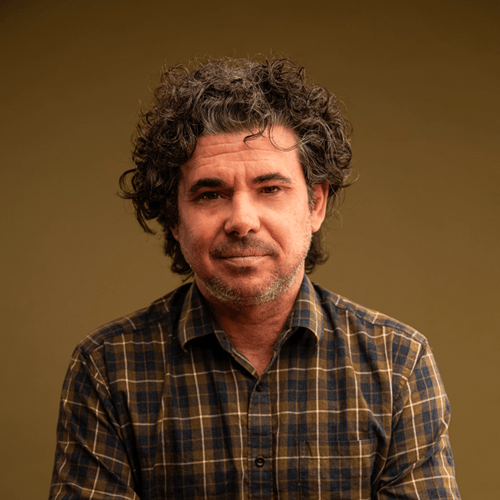



Abuse in care survivor Keith Wiffin has spent two decades trying to hold the government to account over the trauma suffered by hundreds of thousands of state wards. Now, two years on from the government’s royal inquiry into the scale of abuse, Wiffin says not much has changed.
As told to Lyric Waiwiri-Smith. This article addresses abuse against children, which some may find distressing.
For me, the Royal Commission of Inquiry into Abuse in Care – the biggest inquiry in our country’s history, at a fiscal cost approaching $200 million – has almost been a total waste. We haven’t seen any real change at all; since the report came out, it’s mostly been the same as it’s always been. There are survivors who, through this process, have been disbelieved, disrespected and, in some cases, are suicidal. At the end of it, you may well be offered a paltry, pitiful amount of money which does not equate to what you suffered in care. For minister Erica Stanford to talk of a respectful process, I don’t think she quite understands the reality of what’s happening.
It makes me extremely angry. The 3,000 survivors who bravely came forward and retraumatised themselves on the basis that we would have a better future have essentially been betrayed again. So have their families. It’s almost like the royal commission doesn’t exist. It’s like officials in the background are saying, “the royal commission’s had its day, the recommendations are not legally binding, we don’t have to take notice of it”. That’s the culture that exists out there at the moment, by and large.
You can make a direct approach to the Ministry of Social Development for compensation, but it’s probably best to do it through an advocacy group and with legal representation. From my perspective, those systems take advantage of people who are in desperate situations – in the sense that they might just settle for whatever is handed to them because they’re in that situation. The system knows that; they know that if survivors accept a small claim now, they’re cut off from ever receiving the substantial claim. It’s totally unjust, and it does not reflect the severity of what’s happened to them over the years and the impact it has had.

I think what lies at the heart of this is the government being influenced by a group of officials who have been around the subject for decades. They’re still there in positions of power, and they still oppose us – they fight us tooth and nail in court, and the redress process itself can take five to 10 years. Many survivors have died waiting for compensation.
The other big thing is that redress shouldn’t always be boiled down to a money issue. The royal commission’s proposal for an independent redress system, had it been implemented, would have produced supports independent of monetary restitution. These would have included support services for healthcare, education, housing and counselling, which you wouldn’t have had to pay for out of your own pocket. For example, I have major issues with dental care, as do other former state wards, and that’s because neglect in state care has played a huge role in people’s health issues later in life. In all my time in state care, I never once saw a dentist.
What the inquiry did is look at redress through a holistic, well-being lens, where monetary restitution is but one component of it. But what we’ve got at the moment is just acquiescing back to the same old systems which offer paltry sums. It’s pitiful and insulting, especially to people in desperate situations who cannot afford to turn it down.
When you leave care, you’re basically left to your own devices. The state essentially abandons you, and in most cases, you are undereducated or not educated at all. You have no skills. You are unable to get a job. And you’re dealing with the trauma of those seven years in state care, feeling deserted and alienated by society.
We have a moral obligation to address it, and it’s too costly not to address it, both economically and socially. There’s immense savings to be made by doing the right thing. Experiencing abuse in those institutions, and then being cast adrift, is why we have our prison and gang populations – 80-90% of these people have been in state care. There is a direct pipeline between that abuse and ending up in prison or in a gang.
This government is all about crime and punishment, rather than dealing with the root cause of why so many go into care in the first place. How you nurture and look after people in their formative years matters. If you get it wrong, you’re going to pay a price.
I’d been through the redress process before the royal commission’s existence. In 2000, police asked me whether I’d be a witness in a criminal prosecution of Alan Moncreif-Wright, who abused me and many other boys in Epuni Boys’ Home. It was an extremely abusive and dangerous place to find yourself in. I suffered that abuse on my first day, and it set the tone for the next seven years of my life, which was how long I was in state and residential care.
In my opinion, the police at the time did a really good job and eventually got Moncreif-Wright to court. I think he was convicted on a total of nine charges, but because we accepted an offer of a small amount of restitution and a restorative justice meeting, some of the more serious charges were dropped. I was opposed to that, but acquiesced to the view of the other two survivors who were involved as witnesses. I can’t blame them for that, because survivors often find themselves in desperate situations. Any money at all is hard to turn down.
His sentence, in my view, was extremely lenient. This person was a prolific offender, and the authorities of the day protected him. When I met him again in our restorative justice meeting, he told me he was caught offending at a party and actually went to court for it – one of the few who did so back in the 70s. I said to him, “What was the attitude of the management of the day towards you being caught?” He told me he was taken down to the district superintendent’s office, signed a resignation letter so his sacking wouldn’t be on his work records, and that enabled him to go off and continue offending. Before he even got to Epuni Boys’ Home, he had already left a trail of abuse at the Hamilton Boys’ Home.

When I first entered state care as an 11-year-old, my file with the Department of Social Welfare called me my family’s “sacrificial lamb”. I was at the Epuni Boys’ Home twice; the first time for eight months, the second time for just over four months. In the intervening period, I spent five years in a state-run family home in Titahi Bay. Those institutions aren’t a hell of a lot better than the residential care centres.
I didn’t speak up until I was in my 40s. I was also an oddity in the sense that I was one of the few survivors from Epuni Boys’ Home that didn’t go on to prison incarceration. I suppose I was lucky that I got a menial job. It introduced me to unions and the realisation that in my late 20s, I didn’t even have a vocabulary. When I thought I should start advocating, I went to the local library and read the dictionary. Learning how to read saved me from going down the same route as many other survivors, which is one of two things: prison incarceration or death.
The only thing this government has shown for itself after two years is that it doesn’t have the understanding of what needs to be put in place to bring about a better future. It’s been overly influenced by officials who say they know how to get it done, but don’t. The road forward has to include direct collaboration with survivors.
Apologies are only worth their weight if they come with deeds. I don’t see meaningful compensation ever being made with this government, but that doesn’t mean to say that it can’t happen in the future. We’ll all keep knocking on the door about that until it’s done.
Helplines
Safe To Talk – 0800 044 334 or text 4334. Sexual harm helpline. 24/7
National Rape & Sexual Abuse Crisis Line – 0800 883 300. Support after rape or sexual assault. 24/7
24/7 HELPline – 0800 623 1700 or txt 8236. Support for sexual abuse survivors. 24/7
Lifeline – 0800 543 354 (0800 LIFELINE) or free text 4357 (HELP). Here to listen and help.
Need to talk? Free call or text 1737 any time for support from a trained counsellor.