
When the storyboards were first shared with Muldoon, there was something missing.
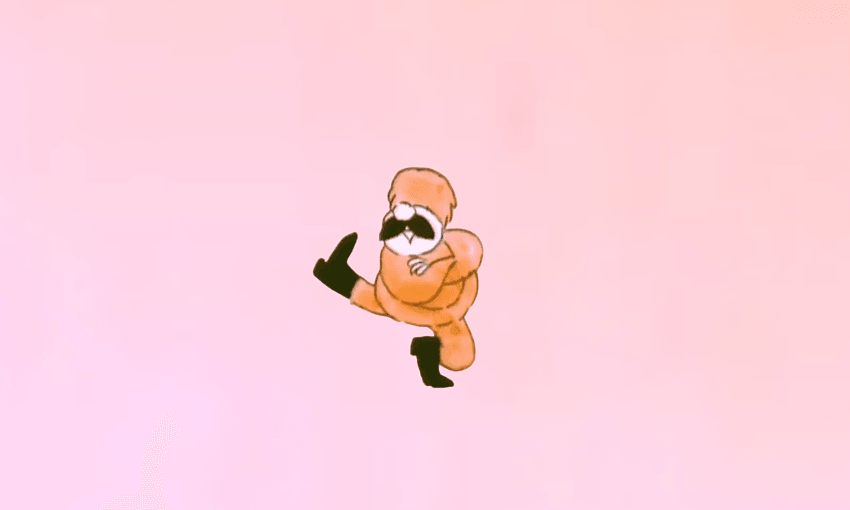
There were cartoons on the six o’clock news last Sunday. TVNZ and Three both festooned their bulletins with the Dancing Cossacks, stars of a notorious 1975 National Party election ad which decried the then Labour government’s “dangerous” compulsory superannuation scheme, warning that it portended a ghastly plan to nationalise everything. “And you know what that’s called, don’t you?” went the voiceover, as a procession of animated cossacks kicked their way across the frame, communistically.
The cossacks were wheeled out on Sunday evening because a few hours earlier the National Party of 2026 had pledged to make KiwiSaver compulsory. The policy, which got a standing ovation at the party conference in Lower Hutt, prompted numerous commentators to recall those cossacks. The Act Party nodded to them in a message to members. Even Winston Peters got into the groove, with a bit in parliament suggesting the Greens’ attitude to public ownership of land made them “dancing tussocks”.
In that party political broadcast of 51 years ago, Muldoon, then leader of the opposition, sits solemnly at a giant desk in a sepia office. “On becoming the government, National will immediately abolish the Labour superannuation scheme,” he says, as the camera tracks urgently out. And so he did.
The law he chucked out, which lasted just one year, had largely been designed by an MP called Roger Douglas, who would later become a polarising finance minister. Had it remained in place, Douglas told me last year, “it would [today] be worth hundreds of billions of dollars of savings – we’d be like Aussie or Singapore”. In 2007, Brian Gaynor judged that Muldoon had made “the worst economic decision by any New Zealand government in the past 50 years”.
But Muldoon had delivered on a promise after winning in a landslide, aided by a Labour government still reeling from the death in office of Norman Kirk and fired up by a campaign that combined the venomous counterpunch of Muldoon with the Hollywood sparkle of the studio behind The Flintstones and Scooby-Doo.
The dance of the cossacks
The Cossacks commercial, leaning into cold war anxieties, was one of a series of seven dreamed up by Michael Wall, founder of the bolshy young advertising agency Colenso, to take advantage of an exciting new technology that was sweeping the country: colour television. The Sydney office of Hanna-Barbera, the animation studio famed for their burgeoning cartoon empire, had been in touch with the agency suggesting they work together. They were swiftly enlisted to add a bit of sizzle to scripts Wall had already written to accompanying footage of Muldoon bestriding the country.
George Chapman, party president at the time, later wrote that it was clear they were on to something. “As soon as I saw the material, I knew Colenso had struck oil. Mike Wall’s proposal was that each three-minute television broadcast would start with one minute of cartoons identifying the weaknesses in Labour’s policies, with the rest of the time being spent on putting our case over … The concept was perfect for our purposes. We could literally laugh the Labour Party out of office!”
For the ad taking aim at Labour’s retirement saving scheme, Wall sketched out scenes that included caricatures of the Labour Party, woebegone housewives and the New Zealand landscape lathered in dastardly red. But when presented to Muldoon, the storyboards for what would become the most famous TV commercial in New Zealand political history, the Dancing Cossacks, were missing one thing: dancing cossacks.
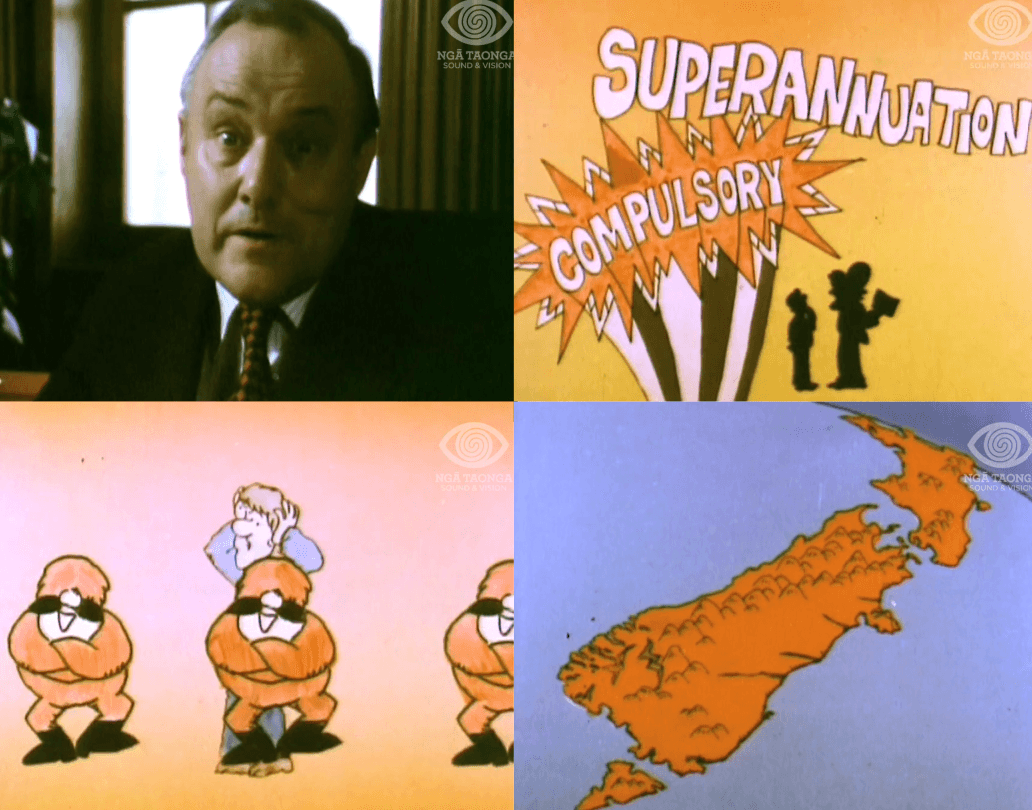
Wall and his colleagues had thrown the idea around but didn’t think it would fly. “We thought nobody would let us put them in,” said Wall, in an interview last year for the second season of the Juggernaut podcast. Muldoon signed off the cossack-less version, and then, “as I was leaving his office, I said to him, ‘You know, we had thought we might put some dancing cossacks in there’. And he said, ‘Put them back in, lad, put them back in.’”
The broadcast, along with another that deployed anti-immigration stereotypes, was denounced by Labour. But its campaign attracted criticism, too, for a volley of personal criticism of Muldoon under the “Citizens for Rowling” banner and a TV commercial with a background lyric “Don’t want a dictator” and footage of a child holding a pig, in apparent reference to Muldoon’s nickname.
It is the cossacks that kept dancing through the ages, however. They were still dancing in 1997, when a referendum on compulsory superannuation was held at the behest of Winston Peters. It was rejected by 91.8% of voters.
And yet, in 1975, the cartoon only aired a couple of times on each channel. “So you’re talking, probably, about six or seven seconds of dancing cossacks,” said Wall.
They did take on a life beyond their broadcast, he acknowledged. “Of course, they were picked up and covered on news programmes.” But in the years since, “their influence became greatly overstated”, he said. “In fact I think the influence of the whole television campaign was overstated. Muldoon was going to win anyway.”
More impactful at the time, Wall said, was the slogan, which appears at the end of the Dancing Cossacks message and featured across the campaign. “New Zealand – the way you want it.” “It was something Muldoon had said in passing,” said Wall, which an assistant at Colenso had jotted down. They put it to the party leader and he agreed to it on the condition that the “you” was underlined.
Riding with Muldoon
Ahead of the 1972 election, Colenso – then just a few years old – had pitched for National Party work, but was unsuccessful. Co-founder Wall was keen on political work, however, having first had a taste of it on the 1966 California campaign for Pat Brown, who was unsuccessful in his attempt to retain the governorship against Ronald Reagan.
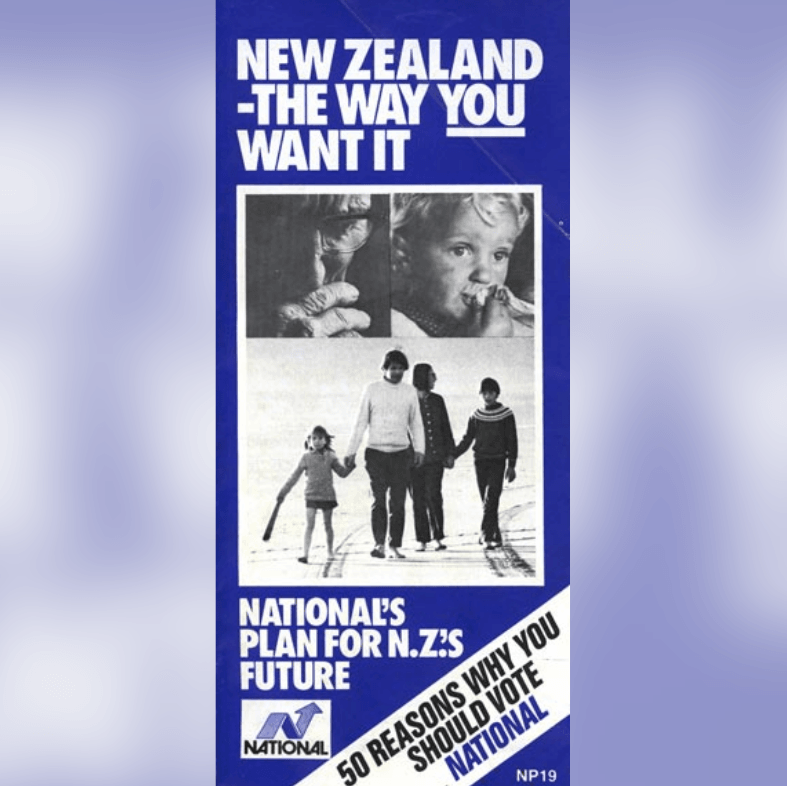
In 1974, Colenso got the nod from the Nats. One of the agency’s task was a redesign of the party logo, but “our first job was to ensure that Jack Marshall remained the leader. And we did this campaign for the party, which said ‘We Back Jack’, and then about three days before the big conference in Auckland, we were called and told that, well, they didn’t back Jack after all. And that’s when Muldoon came into the position.”
Wall would later become an important player in the Jim Bolger years. At a pre-election caucus camp in Queenstorwn he delivered a slide show that proved pivotal in persuading the party to to come into line with Labour’s anti-nuclear policy. He went on to become Bolger’s press secretary.
But that first engagement with National in the 1970s had not been motivated by any philosophical attachment to the party or Muldoon, said Wall. It was about business. “We just wanted to make a name for ourselves, and this was the way to do it. Riding with Muldoon was always going to be near the headlines.”