Health? Yes. Harmony? No. Politicians trade ideas on health and harm prevention

MPs from Act, the Greens, Labour and Te Pāti Māori offered their pitches for better health prevention.
Sugar levies and smokefree policies were tossed around as parties agreed to disagree on what could improve our health prevention.
Healthcare and hospitals might be the second most pressing concern for voters, according to the Ipsos Issues Monitor, but if you hoped political parties could agree on exactly what should be done to address those concerns, you need to see a doctor.
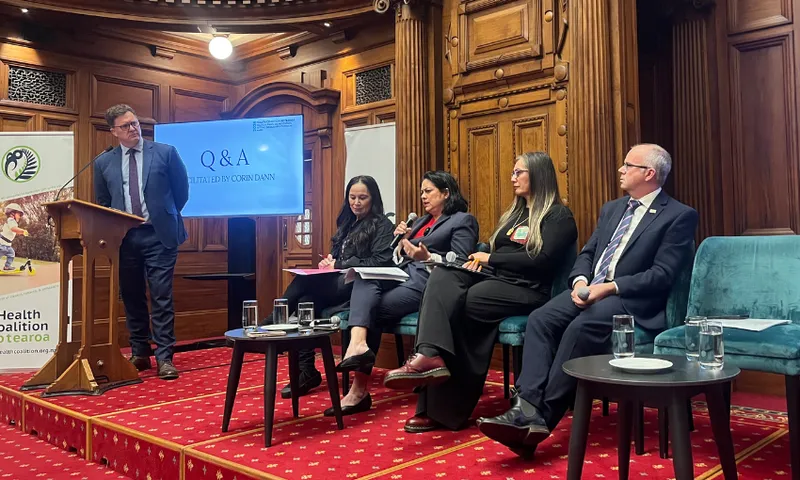
That was clear at a political panel yesterday organised by Health Coalition Aotearoa to discuss health and harm prevention, particularly around tobacco, alcohol, unhealthy food and lobbying. Health spokespeople, including Act MP Todd Stephenson, Labour MP Ayesha Verrall, Green MP Hūhanna Lyndon and Te Pāti Māori co-leader Debbie Ngarewa-Packer, all wanted to improve outcomes but saw different ways to get there.
A sugar levy, a return to the smokefree generation policy and addressing the medicines gap with Australia were among the range of ideas politicians threw up, but who argued for what and could they agree at all?
Tobacco
While Labour wants to bring back its Smokefree Generation policy, it wouldn’t be in its original form. The party is backing away from the denicotinisation (reducing the level of nicotine in a smoked tobacco product) included in the 2022 legislation, with Verrall citing that “expert views on the matter have changed”.
“We have watched very stringent tobacco controls in Australia coincide with growth in an illicit market,” Verrall said. Labour needed “to learn from that experience” and take an “evidence-based approach”.
The Greens, however, had heard a “very loud” case for denicotinisation in parts of the health sector. But Lyndon said she recognised the need for broad agreement “across the board”. “We do support what Labour is driving for, and the reality is, we need to be able to make it happen straight away.”
The left-bloc was united on the suggestion of a licensing scheme for approving tobacco sellers. Verrall vowed to introduce a “common licensing regime” for tobacco and vaping products, with “strong conditions and proper oversight”. Across the aisle, Stepehnson said the Act Party would be open to “considering” a licensing regime.
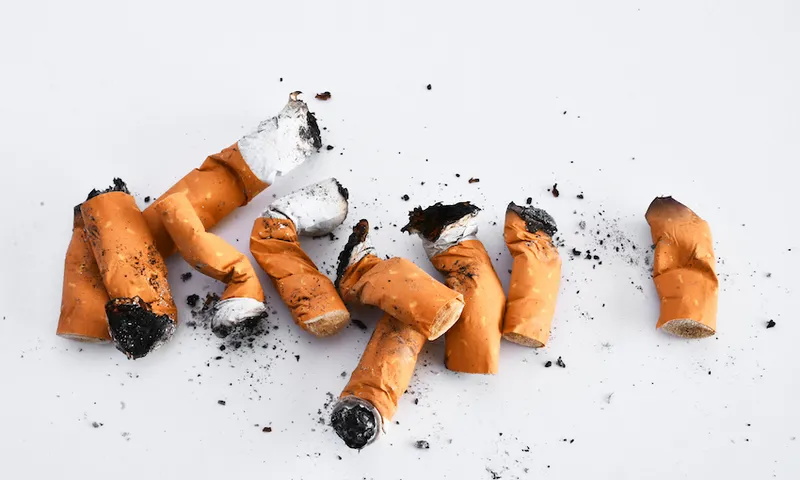
NZ First declined to send a spokesperson to the panel, but afterwards its MP Casey Costello said her party was committed to keeping current tobacco legislation. “You need to look at Australia in terms of policies that have failed to deliver,” Costello said. “They’ve got increased smoking rates, massive excise and a problem with the illicit tobacco market.”
NZ First is also considering a nicotine licensing scheme. “We’re looking at a regulatory framework around how these products are retailed,” Costello said. “I’ve signalled that on a number of occasions.”
Unhealthy foods
Asked whether Aotearoa should adopt similar measures to the UK’s ban on junk food advertising, opinions diverged. It was a hard “no” from Stephenson, who said Act opposed overregulation.
Ngarewa-Packer said it was more important to address why working families still struggle to afford healthy foods. “We’re not opposed to regulating it,” she said. “We’re just more focussed on how we get our whānau to have a better option of affordable kai.”
Lyndon suggested that educators had already set a regulatory precedent by introducing water-only rules on school grounds. But Verrall said she didn’t agree with the “complex” advertising ban in the UK, and was open to further discussions as to how to make the regulations work. But, “it is not a proposal that Labour is taking forward”.
On the possibility of a sugar levy on unhealthy foods, Lyndon said it was an issue the Greens were keen to investigate. However, Verrall said Labour had no plans to “take it forward in our policy platform for this election”.
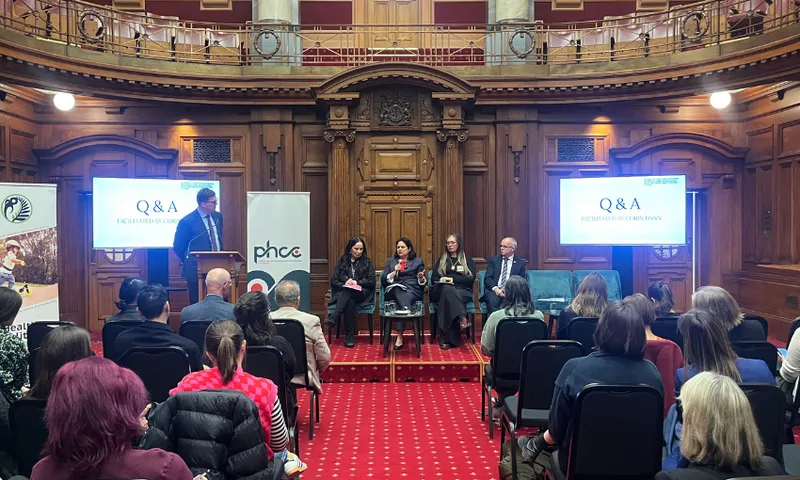
Emcee Corin Dann asked whether current messaging from the government had put Labour off proposing any new taxes. “Are we stuck in a political environment where there is so much fear about any policy that might rock the boat, that nobody wants to raise it?” Verrall demurred: “Absolutely not. Despite having lost two elections previously on a capital gains tax, we are campaigning on it.”
Instead, Verrall offered Labour’s promise to restore the Ka Ora, Ka Ako free school lunch programme to its original model as a means of tackling the issue. Last week, the Greens also made a pledge to restore the school lunch programme.
Stephenson told his fellow pannellists he looked forward to their parties supporting the Resource Management Act reforms currently in parliament, which would require fewer consents for farming and horticultural activities. That remark earned him a side-eye from Lyndon.
Alcohol
It’s New Zealand’s most harmful drug and costs $9bn a year to address its detriments, and the panellists presented a few ideas on how to fix the problem.
Ngarewa-Packer said she was keen to have further regulations in place to curb the number of liquor stores in Māori communities. “We absolutely oppose the continuing exploitation of communities,” she said.
Both Labour and the Greens would like to “scale up considerably” the rules around alcohol advertising and sponsorship with sports. Lyndon, a member of the health select committee, told the crowd she had heard a number of concerns around access to alcohol online and through services such as Uber.
Stephenson, whose caucus colleague Nicole McKee has been leading the charge on reforms to the Sale and Supply of Alcohol Act 2012, said his party wasn’t looking at any further changes. He pointed to a bill introduced by McKee in March, which will require all delivery services to ensure they are not supplying alcohol to a minor.
There was a resounding “no” from all parties when asked whether they’d shift the drinking age back up to 20.
Lyndon was the only MP to show interest in raising the alcohol excise tax.
Lobbying
Perhaps the greatest attempt at bettering preventative health could be made by more closely monitoring the advocates who get themselves in front of the government. Lyndon said the Greens would “hard out” support further transparency around lobbying, including a “cooling off” period to stop former ministers and government officials from immediately turning to lobbying. Ngarewa-Packer said her caucus would also likely support a cooling off clause.
Stephenson said Act was “very in favour” of transparency, but the party needed “very clear” details on how that would work. He also highlighted that Aotearoa “is a small country”, and imposing regulations on lobbying could “limit opportunities”.Verrall made sure to mention she was the only MP with a member’s bill in the ballot dedicated to tackling lobbying – her Tobacco Transparency Bill would stop governments from endorsing the tobacco industry’s interests.
Lyndon and Ngarewa-Packer were aligned on capping political donations, but Stephenson disagreed, and Verrall revealed Labour would be releasing a policy on the issue. “This group will be well aware of the influence of third-party promoters at the last election in supporting some impacts on tobacco control,” Verrall said.

Lyric Waiwiri-Smith
Lyric is an award-nominated politics reporter at The Spinoff. She covers parliament from the press gallery, pens the weekly column One MP, One Pint and is endlessly curious about what makes our decision-makers tick. Off the clock, Lyric loves a live gig, a cold brew, and being a Wellingtonian (on a good day).


