Why regional councils will cease to exist, and what comes next

Chris Bishop (Photo by Hagen Hopkins/Getty Images/Treatment by The Spinoff)
Mayors are set to gain more power as the government proposes to abolish regional councils – but what will take their place is a work in progress.
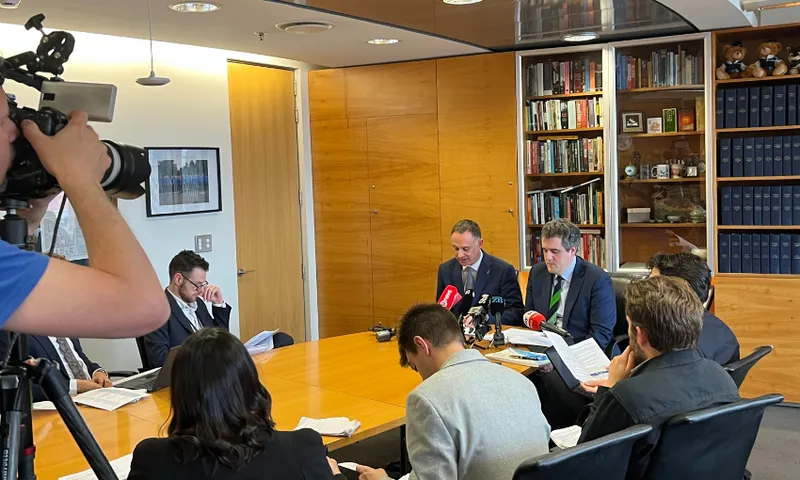
A local government “reset” will see regional councils on the chopping block, as minister Chris Bishop says sticking with the status quo is “not acceptable and not an option”. But what their future will look like exactly remains unclear, with the government calling for public consultation on how much power the Crown should have in the new system, and whether unitary councils could be formed.
The two-stage proposal would see regional councils replaced with “combined territories boards” (CTBs) consisting of city and district council mayors. CTBs would be tasked with developing a “regional reorganisation plan” to assess how councils within a region would deliver their functions. There are currently 11 regional councils across the motu, alongside 12 city councils, 54 district councils and six unitary authorities, the latter of which combine the functions of a city/district council and a regional council.
The announcement comes a few weeks ahead of the minister’s Resource Management Act (RMA) reforms making their way to parliament. Bishop said the reforms in the RMA and local government had been “designed as a package” to be an “attractive and compelling proposition to New Zealanders”. The government hopes the legislation will pass by 2027.
Compelling? Maybe. Confusing? Almost definitely. Here are the key details you need to know about the changes to regional councils.
Wait, what even are regional councils?
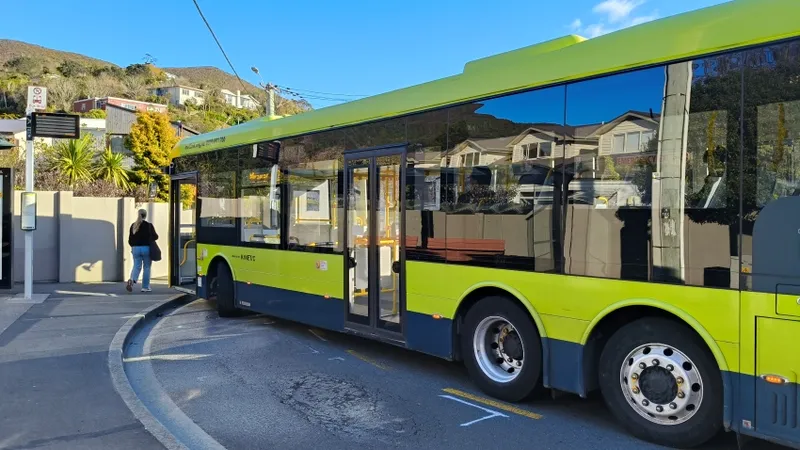
Created in 1989 as part of a sweeping local government overhaul, regional councils’ original purpose was to manage land, water and air resources under the then-new RMA. These days, their responsibilities include environmental monitoring, flood control, biodiversity, biosecurity, public transport and natural hazard planning.
Didn’t I just vote for these people?
If you live anywhere other than Auckland, Gisborne, Marlborough, Nelson, Tasman or the Chatham Islands (AKA the unitary authority regions), then yeah, you probably did. That was over a month ago, and as the saying goes, even a week is a long time in politics – and this is apparently applicable at the local level.
Anyway, as these proposals are set to slash the elected layer of regional councils, whoever you recently voted for to represent you might not actually see out their full three-year term. Public consultation will decide whether these councillors (of which there are 132 nationwide) serve until 2028, or whether their roles are abolished once the CTBs are formed.
OK, so what exactly will these CTBs … do?
Basically, they’ll act like regional councils in the sense that they will have all the responsibilities of one. This includes governance over the environment, transport and emergency planning, assets, resource management and implementing Treaty settlement commitments. However, Bishop has also hinted that the upcoming RMA reforms will take environmental enforcement and monitoring powers away from the regional-councils-turned-CTBs, and give this to a central government body.
CTBs will meet regularly, like your regular council, and will be tasked with creating a regional reorganisation plan within the first two years of their establishment, and marked against a set of criteria assessed by the Local Government Commission and local government minister – think of it as a bit like Local Water Done Well, where councils had to figure out whether to join with neighbouring councils and submit water service delivery plans to the government for approval.
Boards made up of mayors is the government’s preference, but feedback is also being sought on whether CTBs could include a Crown commissioner to either act as an observer, have veto power or the power of a majority vote. There could even be a Crown commissioner instead of a CTBs, if consultation calls for it.
Bishop has also confirmed there will be no mandatory iwi representation on the boards. Any Māori constituencies of regional councils will also be abolished under these proposals.
How will all these mayors on a board make decisions?
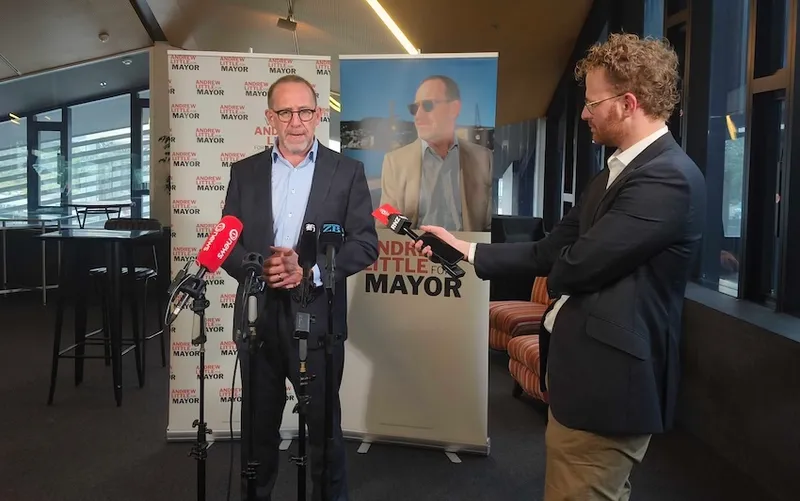
Dear reader, this is where you come in (again). The government is eyeing up two options: either every mayor on a CTB gets one vote, or their vote is weighted by population. There are pros and cons to both options, with the first being that mayors of smaller communities may be able to overrule those looking after larger populations. However, if the latter option was chosen, it would give Wellington mayor Andrew Little “more power than almost every other council combined” on the CTB, Bishop said, because of how much bigger the Wellington City Council population is than, for example, that of South Wairarapa District Council.
So, what the heck is going to be in the regional plans?
CTBs will need to assess, cross-council, the functions in their regions and whether they could work better together. They’ll need to “set out options for future delivery”, which could include sharing services out of a single council office, creating joint council-owned organisations, forming unitary councils and creating new methods for community input. These options will also need to consider costs and Treaty settlement obligations, and would need to be consulted on with the public, local iwi and regional stakeholders.
Is anyone even, like, asking for this to happen?
If you ask Bishop, yes. “I have had local councillors and mayors say to me, ‘you’ve just got to make us do this, it will never happen from the bottom up, no matter how crazy we think the current system is,’” Bishop said. “It’s just too hard for local government to get it over the line themselves.”
Bishop argues that the changes will put downward pressure on rates by removing layers of duplication and bureaucracy – pair that with fewer consents coming in the RMA reforms, and you’ve ideally got fewer costs. There’s also an argument that the changes could strengthen faith in local democracy, but that remains to be seen – Auckland, already a unitary authority, had the worst voter turnout in the 2025 local elections.
Where else is this leading to?
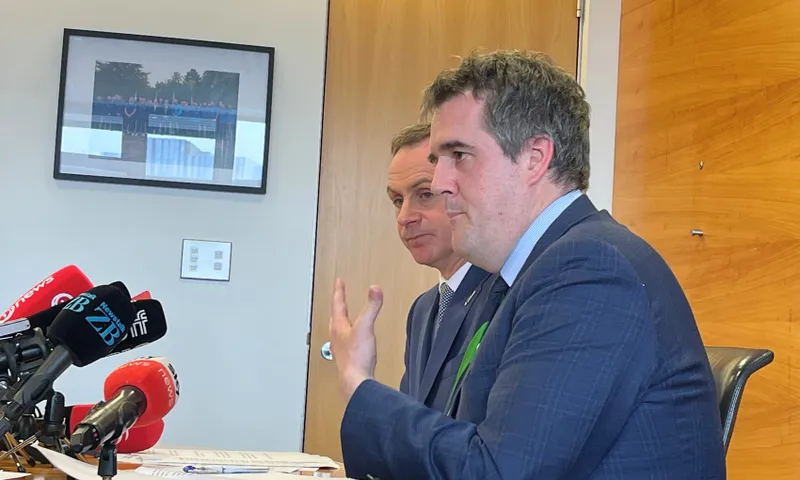
More supercities like Auckland could be on the cards. “Speaking with my Wellington MP hat on”, Bishop said he was “interested” by referendum results held in Porirua and Hutt City councils at the local elections, which favoured an amalgamation with Wellington City Council.
“The feedback I get from Wellington councillors and mayors and, frankly, Wellington ratepayers is that having Lower Hutt, Upper Hutt, Porirua and Wellington City is pretty nuts,” Bishop said. “So if these proposals go through, Wellington will get the chance to do what they have not done for quite a long time and seize the opportunity for growth. I look forward to that happening, but I’m not holding my breath.”
What’s the response been to this proposed shake-up?
Labour local government spokesperson Tangi Utikere said the changes would “strip away a key layer of local decision-making”, while his Greens counterpart Celia Wade-Brown said the proposal “creates more uncertainty, risks downgrading environmental protection and erodes the agency of local communities”.
Deon Swiggs, chair of Canterbury Regional Council (Environment Canterbury), speaking on behalf of the regional councils collective Te Uru Kahika, said he was concerned the current proposal woul destabilise local government rather than strengthen it. “There must be democratic accountability for regional decision-making that affects people’s lives and livelihoods, combined with expertise, appropriate resourcing and local knowledge.”

Lyric Waiwiri-Smith
Lyric is an award-nominated politics reporter at The Spinoff. She covers parliament from the press gallery, pens the weekly column One MP, One Pint and is endlessly curious about what makes our decision-makers tick. Off the clock, Lyric loves a live gig, a cold brew, and being a Wellingtonian (on a good day).


