Has Labour learned the wrong lessons from Zohran Mamdani?

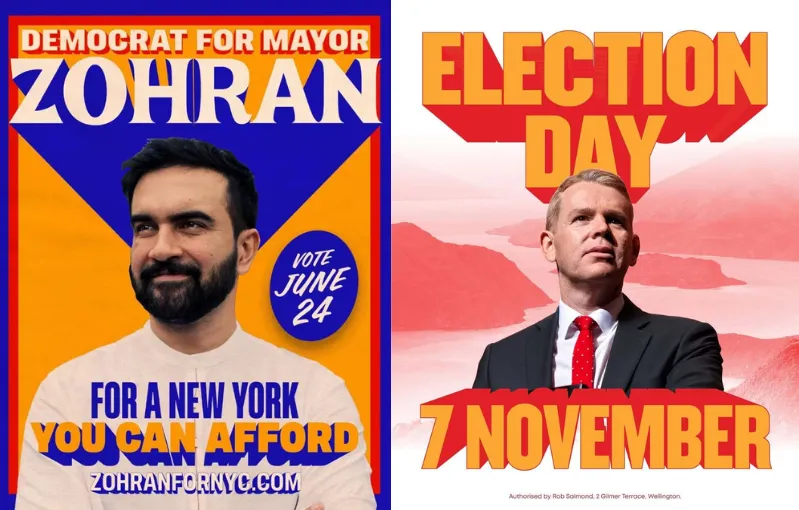
Chris Hipkins has adopted some of Zohran Mamdani’s style and art design.
Chris Hipkins is taking cues from the New York mayor’s campaign style. But will it work in New Zealand?
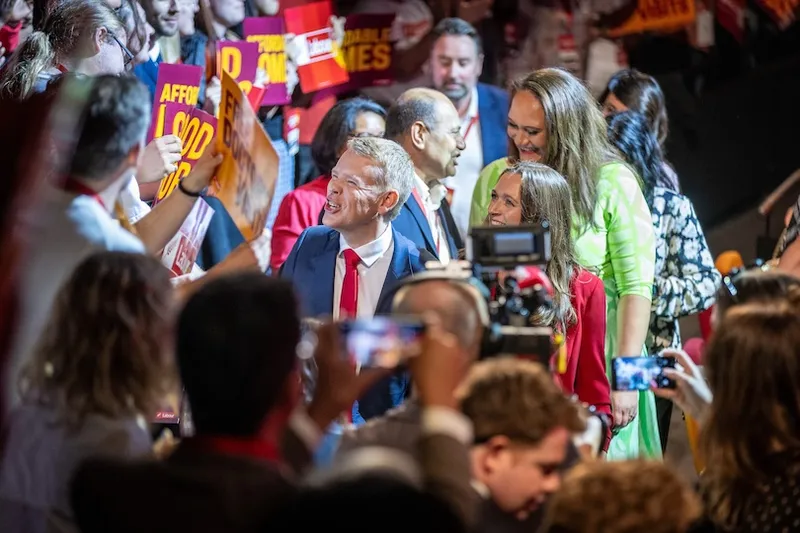
At Labour’s first campaign rally of the year, where Chris Hipkins spoke to about 100 fans at a venue in downtown Auckland, the crowd waved placards with three simple messages: Affordable Homes, Good Jobs, Free Doctor’s Visits.
The signs, as many observers noticed, looked different to those Labour had used before. A darker, suave colour scheme, with an orange shadow running off each letter. They bore a strong resemblance to the style recently used by Zohran Mamdani in his successful New York mayoral campaign. Many of Labour’s recent social media posts seem to have drawn the same inspiration.
Labour MPs and staff were part of the world of political nerds who formed a minor obsession with the 2025 New York mayoral race and the rise of Mamdani.
But does Labour actually understand what made Mamdani’s campaign successful, or are they adopting the aesthetics without understanding the underlying reasons, like Melanesian cultists who once mimicked British military procedures in the hopes it would bring more cargo ships to their shores? And how much can the lessons of a New York campaign actually be applied to New Zealand?
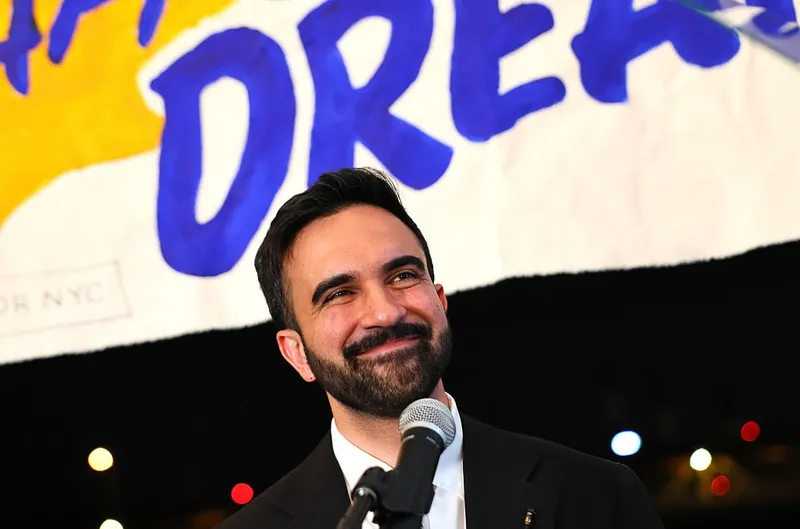
Zohran Mamdani is unlike any other politician. He’s a 34-year-old Ugandan-Indian Muslim democratic socialist who briefly attempted a rap career. He demonstrated a mastery of modern social media as a campaign tool and combined it with the largest volunteer operation in the city’s history. He’s been lauded as one of the Democratic Party’s best communicators since Barack Obama. That’s a rare kind of talent that isn’t easily emulated.
However, it should be noted that a Democrat winning in New York is like a Labour candidate winning Mt Albert: it’s supposed to happen. The last Republican to win the mayoralty was Michael Bloomberg, who later ran for president as a Democrat.
And his opponents were notably flawed: incumbent mayor Eric Adams was under federal investigation for fraud and former New York governor Andrew Cuomo was accused of sexual harassment by 13 women. The Republican candidate, Curtis Sliwa, was a non-entity.
The story of Mamdani’s success is really that of a war within the Democratic Party – victory for the young, leftist social democrats who disagree with the party’s older gatekeepers on issues ranging from economic policy to Israel/Palestine. In that context, the Mamdani style would seem more appropriate for a Green campaign against Labour in a city centre electorate than a Labour campaign against National in a moderate area.
Mamdani doesn’t appear to have any special ability to get through to swing voters. According to an analysis by The Economist, he lost the areas of New York that are most demographically similar to the rest of the US. Commentators pointed out that more moderate Democrats, such as Virgnia governor Abigail Spanberger, won more important elections without anywhere near as much fanfare.
However, there are some aspects of the Mamdani formula that make it incredibly relevant for Labour.
The first is the focus on affordability. This is the most salient political issue of our time and Mamdani is hardly the only politician to use it. But his campaign was particularly good at making it a populist issue – keeping the focus on his major campaign pledges of free buses, price controls on rent, fully state-funded childcare.
Mamdani’s communications director Andrew Epstein, in an interview with Jacobin, described how they discussed affordability in the modern attention economy: “You have to get to the meat of it pretty quickly, or you’re going to lose people. Also, all of these things are nonreformist reforms – things that are achievable. They’re not predicated on a complete overturning of the society.”
Labour hopes to make the 2026 election about affordability, and that shows in the signs the fans were waving: Affordable Homes, Good Jobs, Free Doctor’s Visits. Some of the policies to back up those statements are yet to come, but they’re a signal of three clear areas of focus.
The most important reason for Labour to mimic Mamdani is his method of victory: a massive increase in turnout, especially among young and first-time voters. Driving voter turnout isn’t easy, and it will only have become harder since the government’s changes to voter registration rules.
Labour’s fall from grace between the 2020 election (50% of party vote) to 2023 (26.9%) wasn’t just driven by voters switching allegiances. Many of Labour’s strongest supporters simply stayed home – especially in the Pacific electorates of South Auckland. In Māngere, National and the Greens’ total vote stayed steady while Labour’s dropped by 12,000. Panmure-Ōtāhuhu saw a nearly identical drop.
To win back the Beehive, Labour needs to create a sense of excitement and urgency. It needs its voters to go back to the polls not out of duty but out of passion. Clearly, Hipkins thinks taking cues from Mamdani’s campaign can help him to do that.
But recent history shows the risk in that too: in the 2010s, Labour was obsessed with the idea of the “missing million”; the hordes of non-voters who the left was sure would vote for them if only they could be inspired. Try as they might though, none of Labour’s campaign tactics broke through. The only thing that got those non-voters to the polls was an exciting new leader: Jacinda Ardern. Sometimes, charisma just can’t be copied.

Joel MacManus
Joel MacManus is a senior writer for The Spinoff. He previously worked at RNZ and Stuff, and began his career at Critic Te Ārohi. His writing explores the political, economic and cultural systems that underpin modern New Zealand. He won the 2025 Voyager Media Award for Best Columnist, Opinion or Critique.


