The bold proposal to save a legendary art couple’s home

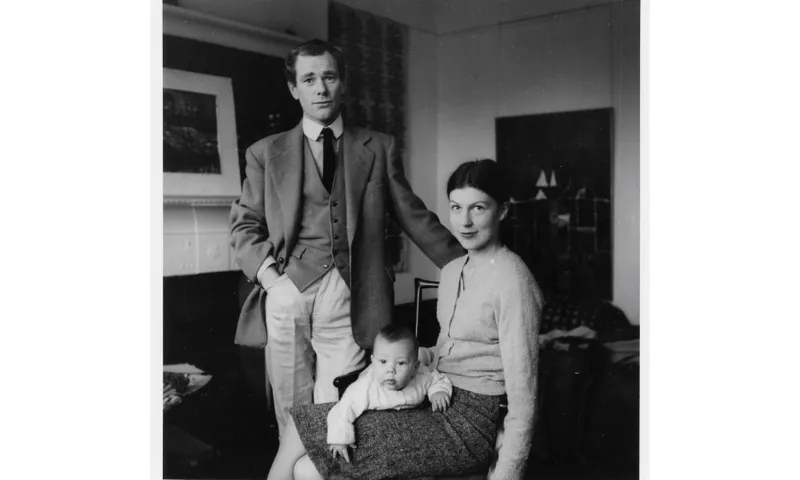
The Hanly house in Mt Eden. Inset: Pat, Gil and Ben Hanly
For 30 years, two cultural icons of Aotearoa, Pat and Gil Hanly, lived and worked from their home in Mt Eden. Now the family wants to convert the property into an artist residency and museum.
Pat Hanly was one of New Zealand’s great contemporary artists. His figurative and abstract paintings were celebrated for their vibrancy, joy and activism. His work made “almost everything else on the walls look tired”.
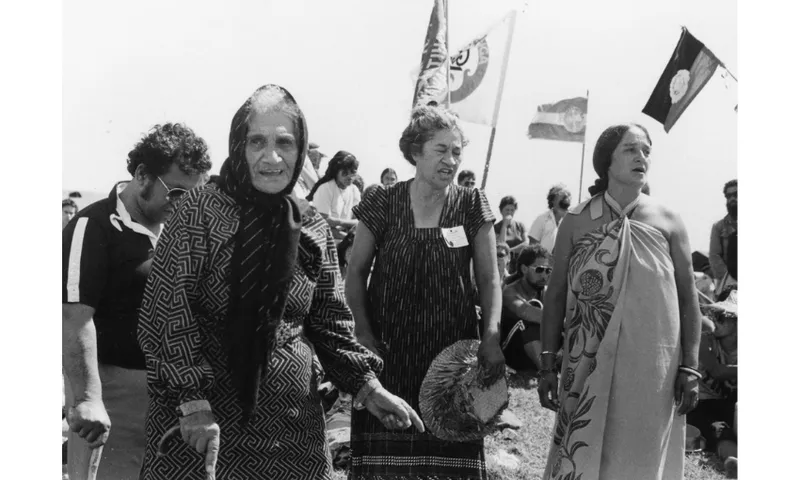
Gil Hanly is one of Aotearoa’s most important documentary photographers. She captured Dame Whina Cooper, the Springbok tour, Takaparawhā (Bastion Point) and the bombing of the Rainbow Warrior.
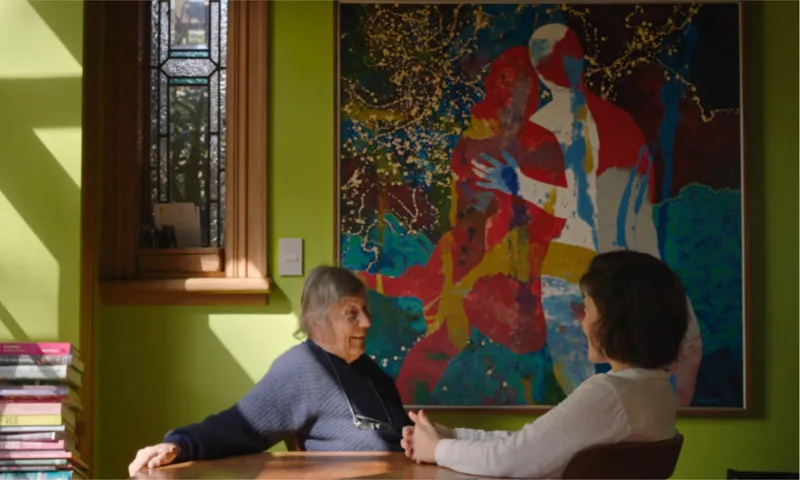
Hidden behind a green fence and a canopy of trees on a Mt Eden back street is the home where Pat and Gil lived. It’s where Pat closed his painting career and where Gil’s photography flourished. It’s where Pat died in 2004. Until a year ago, Gil still lived in the home, but dementia means she can’t live independently any longer.
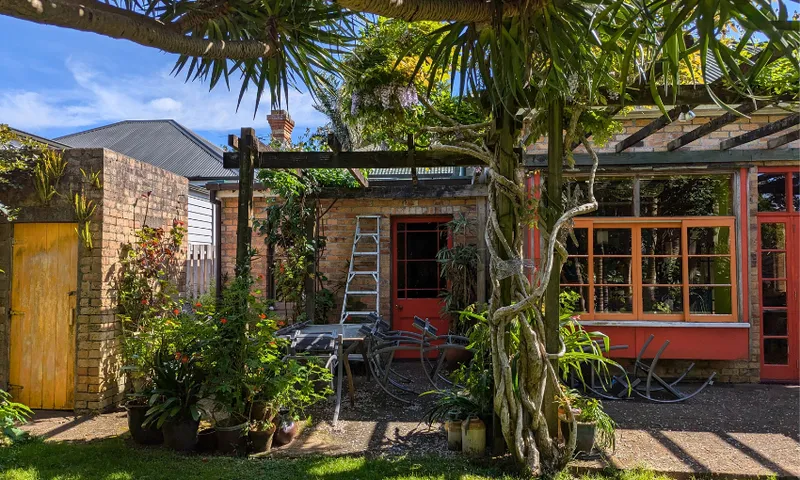
Built in 1910, and purchased by Gil and Pat in 1991, the Mt Eden property has been a focal point and refuge for Aotearoa’s artistic community for three decades. There was a constant stream of artists and activists through the home, many taking up temporary residency.
It has nurtured three generations of the family. Pat and Gil’s children raised their own families short distances away and every Sunday the extended family would gather at Pat and Gil’s for breakfast.
As you walk up the driveway, the home has a palpable energy and the property is a vision into the couple’s artistic minds. Red and orange door and window frames break up the brick exterior. The kitchen is bright blue, and the lounge forest green. Books line the hallways from floor to ceiling, art covers the walls, and treasures from the couple’s adventures around the world fill any leftover space.
It was Gil, famously with very little help from Pat, who created the property’s luscious, tropical garden. And alongside her journalism, photographing gardens was her other great artistic practice.
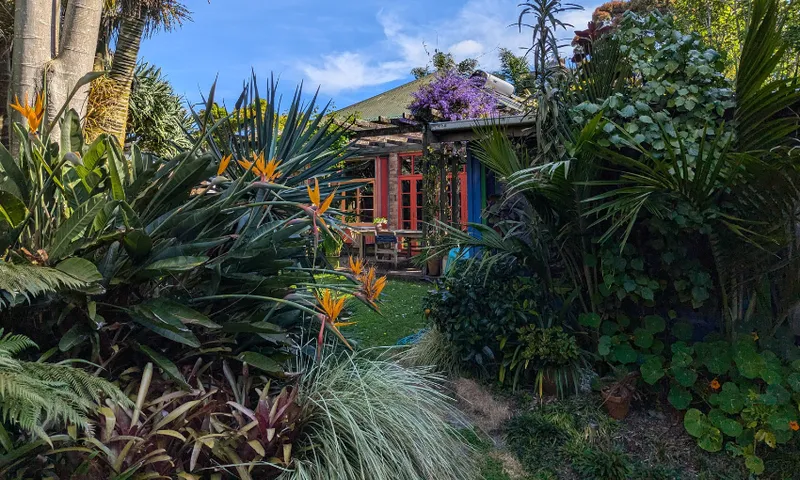
The garden has its own story to tell. Every January artists, writers, filmmakers and actors would descend on the home for the famous Hanly Garden Party. Starting in the early afternoon, the 200-odd guests would continue long into the next morning.
And it’s at the Mt Eden home that the family first learned about Huntington’s disease. Pat was diagnosed with the hereditary neurodegenerative disorder in 1995. A child of a parent with Huntington’s has a 50% chance of inheriting the gene change that causes the disorder.
Pat has three children. Ben and Tamsin have Huntington’s. Amber has not been tested for the gene, but is currently showing no symptoms. Several of Pat’s grandchildren have also tested positive for Huntington’s.
Huntington’s disease starts with a mutation of a gene we all carry. The disease causes a gradual erosion of memory, concentration and judgement. It can cause depression and personality changes. Physically, it causes involuntary movements, poor balance and affects walking. As the disease progresses, it can lead to difficulty speaking, swallowing and eating.
It progressively causes you to lose control of your body and your understanding of who you are. Ultimately, it requires full-time care.
After Gil’s dementia meant she had to move out of the home last year and with the progressive impacts of Huntington’s and the costs associated with the care, the Hanly family are at an important moment for the legacy of the home. As Auckland’s zoning laws change and Mt Eden becomes available for greater intensification, the Hanly family wants to ensure the protection of the property as a legacy of Gil and Pat’s work and as a creative space. They want to convert it into an artist’s residency and studio, alongside a gallery and museum.
This conversion has become urgent as parts of the family rely on on the financial inheritance the property represents to help fund the care Huntington’s requires.
The family is seeking donors to fund the purchase of the house and facilitate the creation of a residency and museum, transferring the ownership to the Hanly House Trust. The family initially needs $1.8m in donations – 53% of the value of the property – by the end of the year to begin the transfer of the home into the project’s trust. A further $1.6m would need to be secured to complete the transfer of ownership.
“[Pat and Gil’s] combined work had such a broad reach across the spectrum politically, and they touch so many different facets of life and people, they should be recognised for what they brought to the art world and the political world and the activism world, because it was valuable, and it still is,” Pat’s daughter, Amber Rhodes, says.
“Because we have the pressure of the Huntington’s and what care looks like for a number of people in the family, that’s the driver. It would be really great to be able to donate it for all the people of New Zealand, but the reality is different,” Amber says.
Last month, on the first sunny Sunday of spring, the garden at the Hanly home was once again full of artists, writers, filmmakers (and this time, politicians) to hear the family’s vision for the future of the property.
John Campbell MC’d the afternoon, explaining the pathway to turn the home into a legacy project that celebrates Pat and Gil’s work, preserves their special connection with the property and creates a space for emerging artists to thrive. “Believe in the possibility of raising enough money to keep this as a place where art comes from,” Campbell told the audience gathered in the garden.
The family has engaged the support of Diane Blomfield, who has decades of experience in the arts, including running the McCahon House Museum in Titirangi, to help design the structure and help secure the funding. She’s researched house museums and artist residencies locally and around the world. She believes the Hanly house can succeed because of its inner-city location, unique property and garden, and special connection to two of Aotearoa’s most important artists.
“I feel like it’s definitely feasible. And I think if we can get the right people on board who really do care, who have the wealth, and who have the vision and really believe in it. I think we can absolutely make it happen,” Blomfield says.
The artist’s residency will provide time, funding and space for artists to work, informed by the success of spaces like the Colin McCahon House, the Michael King Writers Centre and Katherine Mansfield House. To have a meaningful financial impact on the artists, they hope to have long-term residencies that run for years rather than months. The extended stay also helps reduce the costs of managing the residency.
The home will be turned into a gallery and museum. There’s a hope the gardens would become a public pocket park. The property would include an events function, and the hope it could help serve Huntington’s research and fundraising.
This plan would be a progressive as the Hanly House becomes established. The future funding to cover overheads and development would be provided through ongoing fundraising including the revival of the garden parties, and limited edition sales of prints of Pat’s paintings, Gil’s photography and work by the resident artist. This will be supplemented by a mix of grants.
The Hanly House will be overseen by a board. The founding members are arts writer John Daly-Peoples, architect Neil Martin and Amber Rhodes on behalf of the family. Blomfield will continue as project manager until the Hanly House is established when a role will be created to manage the programme.
The project provides a stark insight into the way the arts community is increasingly reliant on the generosity of private individuals and corporate partnerships to flourish, in an environment where public funds are shrinking. Last year, the minister for arts, culture and heritage, Paul Goldsmith, signalled that philanthropy and commercial investors need to have a much more significant role in funding the arts sector.
And it can work. This year, the NZ Arts Foundation Te Tumu Toi – a charity that facilitates private funding of artists – celebrated 25 years of contribution to the sector. The organisation is 100% funded by individuals and businesses and provides funding through its annual Laureate awards, Icon awards and Springboard grants. It also provides artist residencies and created the Boosted platform to facilitate crowdfunding of artistic projects. It’s an influential insight into the potential of a resourced and organised strategy to access philanthropic funding.
And Blomfield hopes that it can provide a more collaborative way to fund this project, which alleviates the need to fight for a tiny pool of government funding. “The competitive nature of trying to get (government funding), all pitching against each other for the same pool of funds. We’ve got to build some more partnerships and just seeing everyone who came to this event, that’s really possible,” she says.
But relying entirely on private good still leaves the arts precariously dependent on a limited number of wealthy donors – an especially small pool in Aotearoa. And Blomfield wants central and local government to support the project too.
Goldsmith attended the launch event at the Hanly House, and Blomfield believes it could be a project that defines his legacy in the arts portfolio. “This could be the arts and culture thing that the minister could be proud of,” she says.
The family is committed to ensuring the home’s special connection to the work of Pat and Gil is not lost. It’s something Gil has shared her desire for and Amber believes Pat would endorse the creation of a space for artists to flourish and where art can be experienced by everyone.
“He was all about accessibility and the legitimacy of being an artist, that was his real big drive. His whole motivation and his drive and ambition was to be a legitimate painter and make that something that you could do as a justifiable way of making a living,” Amber says.
“He publicly spoke about how art should be accessible to everybody, and that it shouldn’t be something that the elites gatekept.”
Now the family just needs someone to open the gates of their bank account to make it happen.


