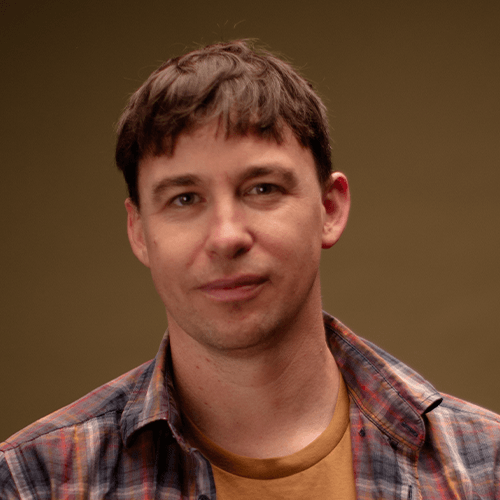
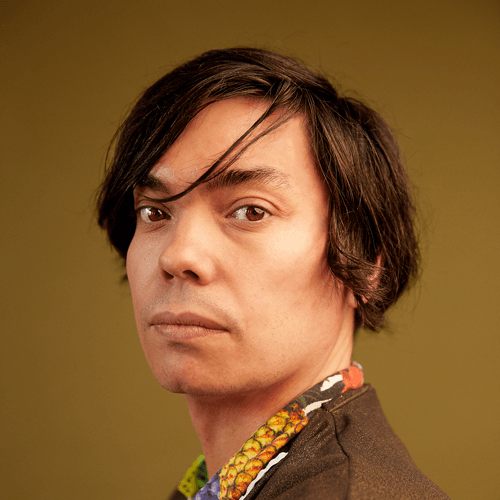


The writer and director of one of New Zealand’s most impactful plays reflects on its success and continued relevance ahead of its stage revival.
When the Aotearoa Festival of the Arts approached Hone Kouka to commission a play in 1995, shortly after his dad passed away, Kouka knew he wanted to write about the loss in some form. “It was my way to grieve my dad – warts and all,” he remembers now.
The result was Waiora Te Ukāipō – The Homeland, known more commonly as just Waiora, which premiered at the 2006 festival and this year celebrates a 30-year legacy.
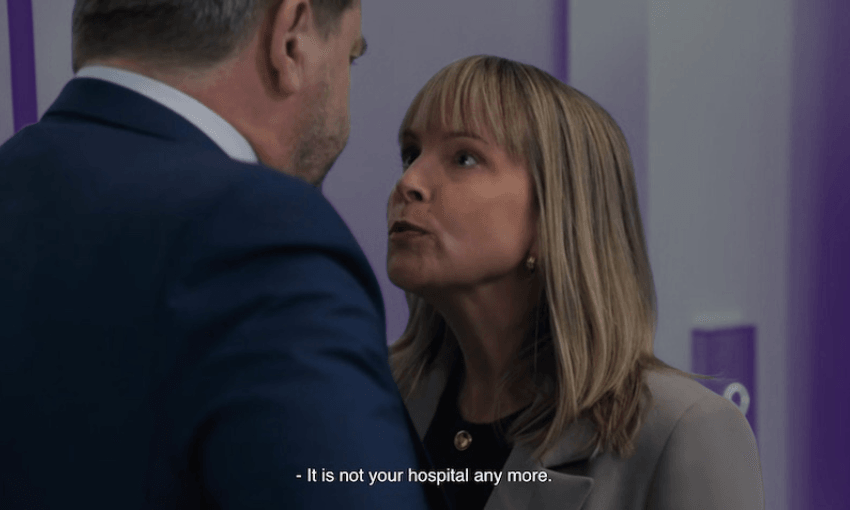
Waiora follows a Māori family living in the South Island in 1965, having recently moved there from the east coast so the family’s patriarch, Hone (like the playwright, the character is named after Kouka’s father), can work in the timber mill. What unfolds, as the wāanau’s tupuna look on, is a powerful family, and social, drama.

It’s a very personal story for Kouka. The story of the whānau in the play is the same as his own – leaving the east coast, going to the “deep, deep south” and ending up in North Canterbury.
“Ultimately, it’s an immigrant story. We as tangata whenua were immigrants in our own country.” There were more and more signs that “kept coming towards” him, and finally Kouka relented. “The universe was telling me, let’s get into this thing. It just felt so right.”
The play is deeply personal and was written exactly for that moment in Kouka’s life, no earlier. “I remember the opening night at the Hannah Playhouse, and my eldest sister, she grabbed me and went, ‘Little brother, you wouldn’t have put this on when he was alive!’ And that’s the point exactly!”

After that successful premiere, the show had a successful national tour, and ended up at the Brighton Festival in the UK in 1997.
Kouka was sitting under the seating block with Murray Lynch, the play’s original director. They were confident of the play’s quality, but there was silence all the way through – a potential death knell for a play.
Then the play finished, the curtain dropped, and the audience gave them a 15-minute standing ovation. “That happened every night,” Kouka recalls. “Every single night.”
When he talked to people afterwards, he understood the reason for the silence. The audiences didn’t quite understand the New Zealand accent, so they had to really listen, which meant they were, in turn, really listening to what the play was saying.
Kouka recalls it as a moment of triumph – bringing a play about colonisation to the colonisers.
In its 30 years, Waiora has toured internationally and had a massive revival at Christchurch’s Court Theatre in 2016, which Kouka directed. He thinks he left “about 25%” of the play’s potential on the floor back then. (“Dude, you didn’t even understand your own play,” he jokes.)
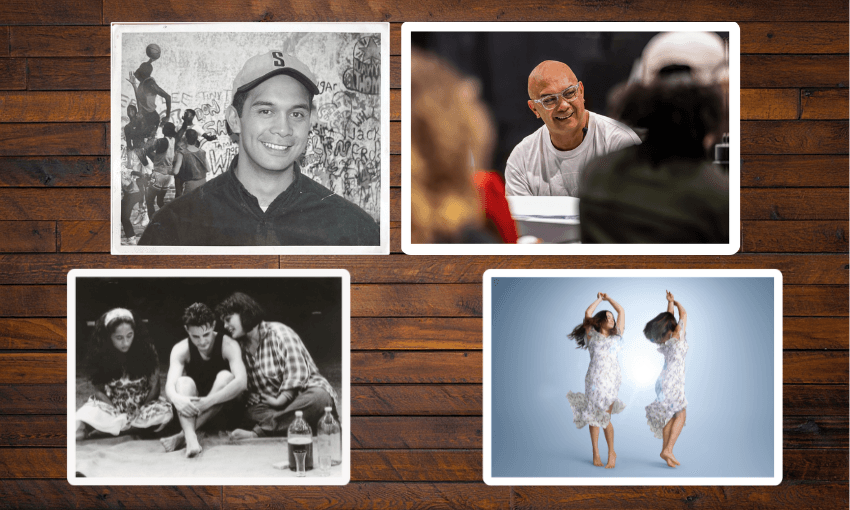
In that time, Kouka’s career has flourished. He is the co-founder of Tawata Productions and Kia Mau Festival, New Zealand’s largest indigenous arts festival, is a member of the New Zealand Order of Merit for his services to Māori theatre, and in 2022 was made an Arts Foundation Laureate in recognition for his “his leadership, his commitment to supporting and upskilling emerging artists, and his own fearless and inventive creative approach.” Alongside Waiora, his work includes award-winning plays Nga Tangata Toa, The Prophet, and Tu.
And now, three decades on from its premiere, Waiora is set to be revived by Kouka’s own Tawata Productions at both Aotearoa Festival of the Arts and Auckland Arts Festival, in collaboration with Auckland Theatre Company.
Theatre is a bizarrely ephemeral artform. There’s a very good reason why most plays don’t get more than one production – they’re most relevant to the place and time that they were written in. The themes of Waiora – urban displacement, tangata whenua’s connection to the land, and frankly, racism – are bleakly as relevant now as they were in 1996.
Kouka is blunt about the racism depicted in the play, and the racism of the current era that this production exists in. “The racism has shifted from being more direct,” he says. “You know racism is part of the systemic fabric of Aotearoa. Just look at the government’s actions – removing te Reo, pushing back at Māori initiatives.
“Some of the racism in the play is overt and very much of that time. Unfortunately now due to the political climate everywhere it has become more overt again. Basically it will always exist – it will just morph into new forms and ways.”

The landscape for te reo Māori is also different. This is evident even in the cast; when the show premiered, there were only two in the cast who could kōrero Māori, but in this year’s cast, there are seven who are fluent. “That’s a big political shift,” Kouka says. “The evolution of us as Māori and Māori artists. It resonates in a really recent and relevant way. That’s really different for me.”
It’s also going to be reflected in the audiences. Phrases in te reo that might not have been understood by the “general public” when the show premiered are now part of the bilingual lexicon, and the untranslated haka and waiata will likely be comprehended by more people than ever before.
Waiora is a rare work of scale – a genuine rarity in the modern theatre landscape – which is part of the reason Kouka was drawn back to it. He points to last year’s production of Woman Far Walking, an epic undertaking, even with only two cast members. “That’s the type of Māori theatre I’m used to. That was normal for a long time, and it’s the exception now. It made me want to make a work again, of scale. So if we’re doing Waiora, it’s a work of scale.”

While so many people have claimed ownership of the play over the years – cast, crew, students, audiences – there’s one moment that Kouka claims as his, as the person who has lived Waiora as a child, then as a playwright, and now as a director picking it up again. It’s a line that Kouka’s brother said to his dad in real life, recreated onstage. “What my brother said is, ‘The only time you touch me is when you hit me.’ My dad’s instinct, straight away, was to grab my brother and hug him. I remember years later thinking, ‘You broke the cycle.’ He broke that with my brother.
“That line is very public. But it’s in the hug. I know that hug. I know that aroha, I know that love.”
Waiora Te Ūkaipō – The Homeland runs as part of Aotearoa New Zealand Festival of Arts from February 27 and Auckland Arts Festival from March 6.