And just like that, the Sex and the City spinoff has done the unimaginable

I don’t care about any of these people except Wojak (Image: Anna Rawhiti-Connell)
It’s gone and killed the hate watch.
The woman sat on her couch and steeled herself. Eager to shut out the city and ignore her rotting garden, she lowered the blinds. She sank into her polar fleece dressing gown, picked up the remote and listened for the distinctive static that whispers “Babe, it’s 4pm, time to watch And Just Like That”.
Anyone still clinging to the wreckage of the Sex and the City franchise knows about “the woman”. She is the character Carrie Bradshaw (Sarah Jessica Parker) is writing in her new turn as a historical fiction writer in the third season of And Just Like That. She is the return of the once-iconic voiceover from Sex and the City. She has no plot. She has no joy. She has no fun. She is wafting about her inexplicably unfurnished Gramercy Park townhouse like the Grey Lady of Hampton Court, moaning and insufferable. She is an avatar for Carrie.
When Just Like That first debuted in 2021, it was not welcomed with open arms. Its predecessor, Sex and the City, the flawed yet ground-breaking show about four women in New York dating and having a lot of sex, ended in 2004. Fans of the show were excited to see their favourite characters (minus Kim Cattrall as Samantha) back after the two-hour and 27-minute-long advertisement for Abu Dhabi that was the second Sex and the City movie. Fans were also wary. Aware of the entertainment industry’s penchant for resurrecting and profiting from intellectual property, sequels, prequels and spinoffs often arrive with the baked-in challenge of overcoming a fan base’s justifiable cynicism.
Sex and the City was also derided when it first aired in 1999, and has been the subject of derision since. In 2013, Brett Martin wrote, “It might as well have been a tourism campaign for a post-Rudolph Giuliani, de-ethnicized Gotham awash in money. Its characters were types as familiar as those in ‘The Golden Girls’: the Slut, the Prude, the Career Woman, the Heroine. But they talked more explicitly, certainly about their bodies, but also about their desires and discontents outside the bedroom, than women on TV ever had before.”
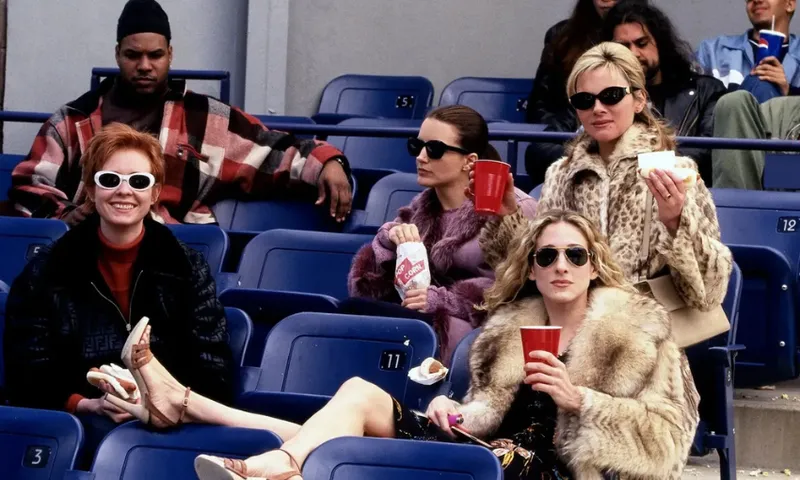
Sex and the City was a product of its pre-woke time. Its early seasons were raw, politically incorrect, and outrageously unrealistic. It was also the first show to be unapologetic about women’s sexuality, discussing “taboo” topics like masturbation, bisexuality and women having casual sex. It helped transform HBO from a boxing and late-night soft porn channel into a prestige television juggernaut. Sex and the City walked so that Lena Dunham’s Girls could run. It became a touchstone and a bona fide cultural phenomenon. It has also enjoyed some of the same revisionist treatment that Dunham’s Girls has, as new generations discover it via streaming services and time grants it a more nuanced assessment and deserved canonical status.
The first season of And Just Like That presented the women as they grappled with the challenges of middle age. I gave it a wide berth. I am middle-aged. I defended the show to friends and perplexed younger people, saying it was good to see women of that age on screen having sex, dealing with grief and midlife career change. The characters still trotted about in fabulous fashion, and it was a relief to see the show’s “fifth lady”, New York City, still standing after the ravages of the pandemic. It was no high art, but like its predecessor, it was meant to be escapist; a night in with old friends.
The first season was awkward and, like many television shows debuting during and right after the pandemic, struggled with how to address it without becoming a “post-pandemic show”. It worked too hard to right the sins of its father. One of the main criticisms of Sex and the City was its lack of characters who weren’t white and wealthy. And Just Like That overcorrected, leaning into storylines and characters that were meant to widen the view, but ultimately reduced new characters to near-empty shells of tokenistic representation. It also neutered the show. Early signs of a greater prudishness around the way sex was presented were creeping in. The dialogue lacked zingers, and the characters seemed afraid to say the wrong thing. There were too many side characters introduced and too many children I couldn’t care less about, who were sucking up precious airtime. I love plenty of shows about family dynamics, but the children of Sex and the City are irredeemably boring. Steve was reduced to a bumbling fool instead of the strangely attractive working-class man he’d been, and Che Diaz, Miranda’s love interest, divided fans. Ultimately, Carrie’s grief plot line saved it. That is to say, having a plot line, something usually considered vital yet which would soon vanish from the show, saved the first season.
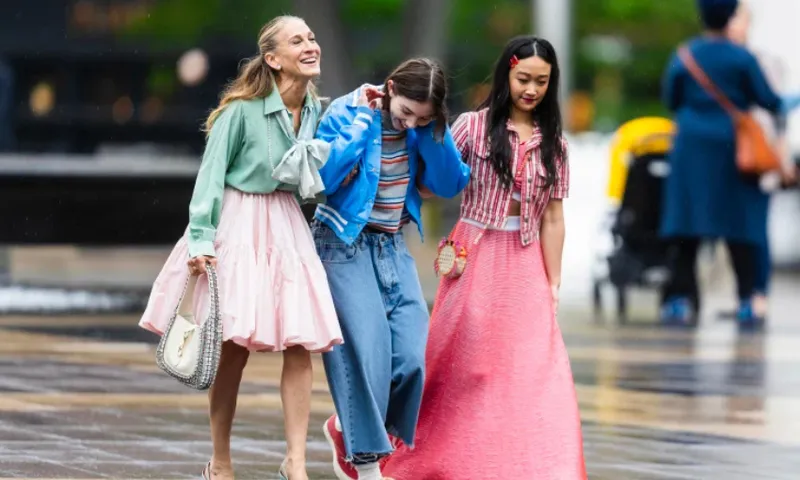
When season two rolled around, I stuck with it, but was becoming increasingly irritated by how little it was doing or saying. Aidan was back, and following the real-life cancellation of Chris Noth, Mr Big – the so-called love of Carrie’s life – was erased. The season ended with the ridiculous suspension of Carrie and Aidan’s rekindled relationship for five years so Aidan could deal with yet another child I do not care about. Still, I had hope, drawn to the possibility of the next season exploring the very real wisdom of age, unconventional relationships and the letting go of expectation.
Season three has been a train wreck. It’s hard to put your finger on what this show is now. At times, it feels like a sitcom, with Charlotte (Kristin Davis) and LTW (Nicole Ari Parker) enduring scripts and set-ups where the Benny Hill theme wouldn’t feel out of place. At other times, it’s a poorly scripted and oddly paced drama. When Aidan reveals something that should shake his relationship with Carrie to the core, or at least push along an interesting storyline about unconventional relationships and expectations, it dies quickly. Carrie does not discuss it with her friends. Instead, she continues wafting about her townhouse, having no fun, going nowhere and patting her pussy (a literal cat – this show has left the sex behind). Budgets have clearly shrunk as we get far less of the fifth lady, its nightlife or its hum. The writers can’t be bothered to fill plot holes or avoid plot clangers altogether. There are editing and continuity issues. It feels like no one gives a shit.
As a woman approaching her 50s, I no longer want to defend the show based on its representation of women my age or older. I feel like I have less in common with these muddled characters than when I was at least 10 years younger than them, lighting durries off the toaster, and huddling under three sleeping bags in a shitty flat in Dunedin to watch Sex and the City.
Precious minutes of screen time are devoted to exposition on plot lines that go nowhere. LTW’s son, whom we know precisely nothing about, inexplicably sings three songs at a karaoke birthday party for Charlotte. It does nothing except highlight the squandering of having Patti LuPone (Giuseppe’s mother) and Christopher Jackson (LTW’s husband, Herbert) in the room at the same time. Both are Broadway stars, and yet they sing nothing. The son sings Fantine’s ‘I Dreamed a Dream’ from Les Mis, and while I don’t expect LuPone to drag her cancelled arse up for a reprise, it’s a wink and a nod that feels entirely wasted.
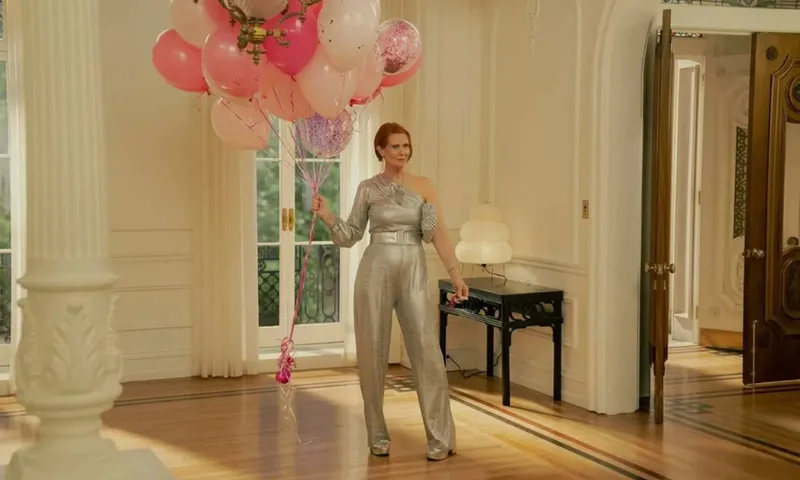
Miranda (Cynthia Nixon), once sharp, messy and incredibly funny, has been given the Steve treatment, turning up at last week’s birthday party as an overly enthusiastic clown. Davis is doing the most comedically and emotionally, but is saddled with her boring kids. The Samantha stand-in, Seema Patel (Sarita Choudhury), is stuck in the same gear as a woman for whom no one is good enough. I don’t know what LTW is for, other than wearing insanely large necklaces and couture at work.
The greatest crime is the reduction of Carrie Bradshaw into a feeble, humourless, mean and utterly joyless character. Yet again, she is twisting herself into whatever shape is most convenient for the man she loves. Despite success, wealth, age and wisdom, she is regressing. She is awful to her friends and defensive about her relationship.
There is a whisper of a possible new love interest with a famed biographer (a gimp room occupant of her townhouse not mentioned when she bought the townhouse in season two). Duncan Reeve, a character name that prompts a jump scare for anyone at The Spinoff, thinks her new book is brilliant, despite it sounding like something I could whip up in ChatGPT in two minutes, and having no plot that we know of. That’s especially insulting when you consider Parker herself is a big-time lover of literary fiction, carrying a copy of Becky Manawatu’s Āue under her arm in season two, and a recent Booker Prize judge. Perhaps this is all leading to something, maybe it isn’t. At this point, I no longer care and have only persisted in watching this season so I could listen to two hours of lively recaps and viciously funny dissection on the Every Outfit podcast.
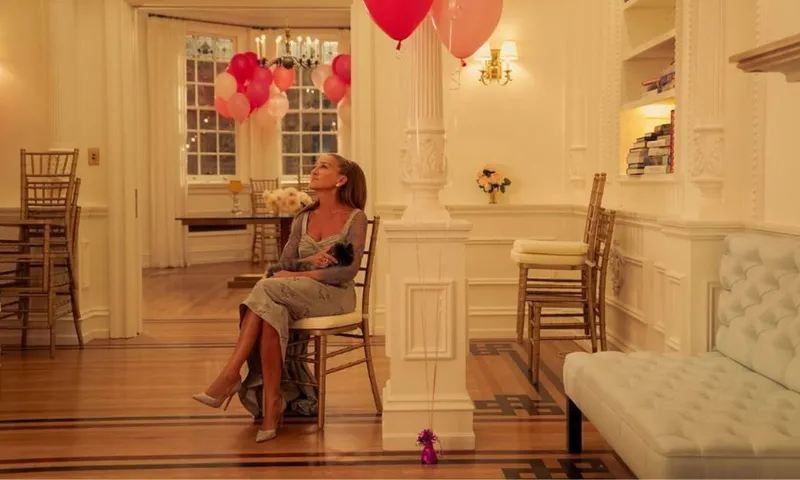
This season, the show has earned the dubious honour of being labelled a hate watch. The act of watching something that you find terrible because you enjoy criticising and mocking it is a phenomenon that social media has turbocharged.
My hate watches have fallen into a few different categories in the past. There are the smooth-brained vehicles for Nicole Kidman and her family of wigs. It’s passable television, with enough intrigue to keep you going, but not very nutritious. I remember nothing about them except being profoundly irritated by plot holes and bad blonde bobs. There are shows like The Kardashians where the spectacle of living through an era where vulgarity is not just accepted but celebrated is seemingly impossible to turn away from. Each new episode spawns a million memes and a million moans. It’s funny until it suddenly starts feeling empty and soulless. You know you’re participating in the prolonging of the life of a franchise that’s being rinsed for every dollar. What felt like perverse joy is now just grimly perverse. What was meant to glide over you, providing comforting escapism, is rotting your brain.
And Just Like That is now so bad, it’s car crash television, but I can’t keep watching it on that basis. There is enough to be distracted by and plenty of reasons to be cynical about so much in life right now. I don’t need it stoked by the corpse of a show that gave me so much joy and was genuinely foundational for women on screen. I have too much to do to spend another minute of my life pretending that the short-lived gratification that comes from communally hating something is a substitute for doing literally anything else with other people. And just like that, I am done with the hate watch.
Thirty-two minutes later, the woman wondered… did Mr Big, killed by a Peloton bike in episode one, have the luckiest character arc of all, and would death by Peloton bike be better than watching one more minute of this godforsaken show?

Anna Rawhiti-Connell
Anna Rawhiti-Connell is a former head of audience, senior writer and editor of The Bulletin at The Spinoff.


