

One of New Zealand’s most celebrated actors gives her take on the state of the world.
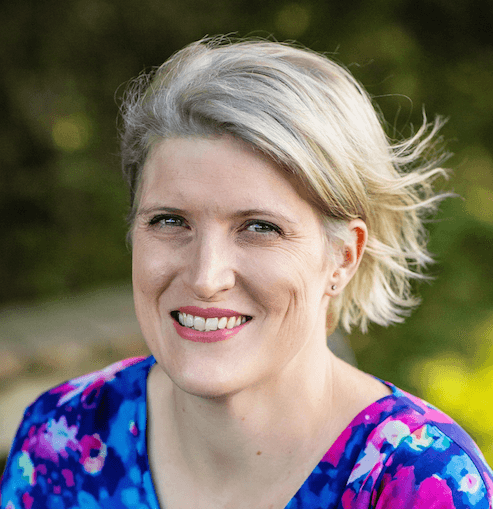
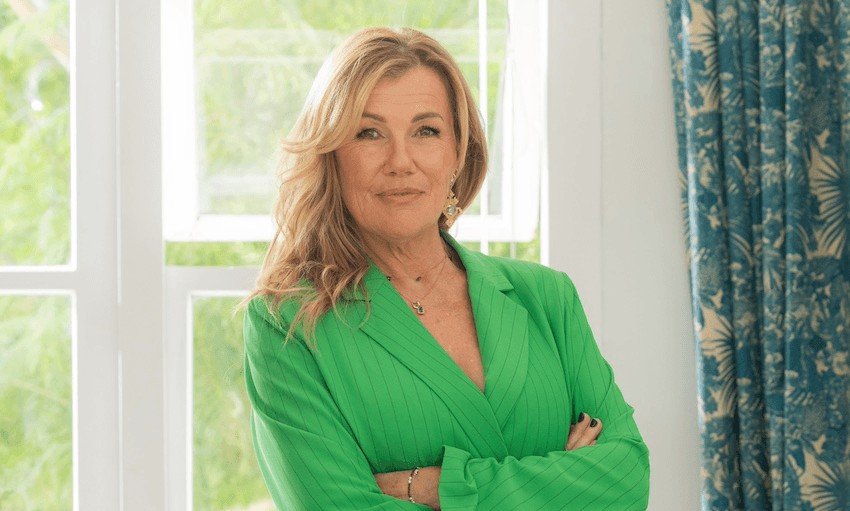
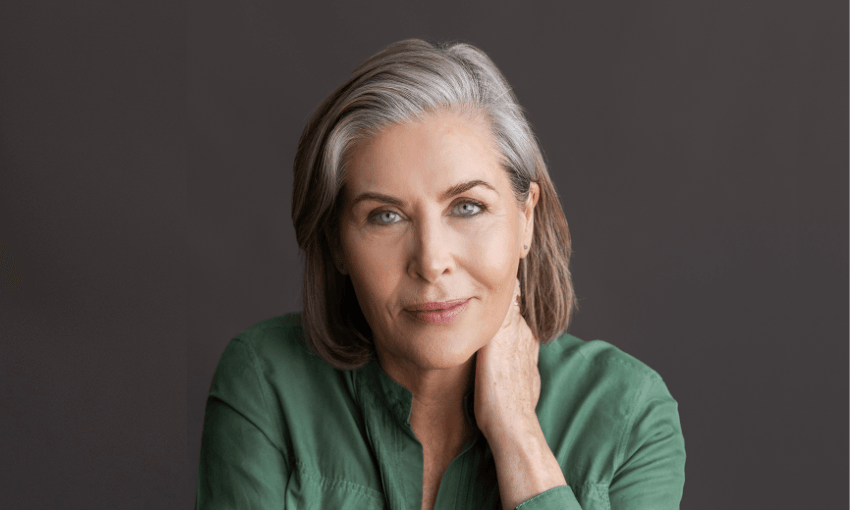
Few New Zealand actors have the power to sell out a theatre show simply by being in it, but Jennifer Ward-Lealand is one of them. An actor with a career spanning five decades (her first screen appearance was aged nine), Ward-Lealand has appeared in every medium, but it’s the stage where she’s most at home, with more than 120 shows and counting. Ward-Lealand is considered so synonymous with New Zealand theatre that in 2017, when Sir Tīmoti Kāretu and the late professor Te Wharehuia Milroy gifted her a name in recognition of her advocacy for te reo Māori, they chose Te Atamira, The Stage. Ward-Lealand is Pākehā and a fluent reo Māori speaker, having begun studying the language in 2008.
But despite still selling out shows – she most recently played Helen Clark in the hugely successful Helen Clark in Six Outfits for Auckland Theatre Company – Ward-Lealand is as active off the stage as she is on it. In the early 2010s, she was president of New Zealand Actors’ Equity and, alongside fellow actor Robyn Malcolm, became the face of local actors’ interests in the infamous Hobbit Law saga.
Ward-Lealand was on of New Zealand’s first registered intimacy co-ordinators, ensuring safety in productions with intimate scenes. She quickly became the go-to for local shows both on screen and stage and has worked on over 90 productions. And as if all of that wasn’t enough to keep her busy, she’s directing All That Glitters, the opening gala night of the 2026 Auckland Live Cabaret Festival on June 24. It won’t be her first taste of Cabaret. One of her most celebrated roles was as the iconic actor and singer Marlene Diedrich in Falling In Love Again, a one-woman cabaret show that was staged first in 2003 and that Ward-Lealand has resurrected a number of times in the subsequent 22 years.
She shares her life advice and strong opinions with The Spinoff below.
What bothers you most about the world right now?
The political attacks on Māori and te reo that have infected our society in Aotearoa. The rise of far right politics and the international funding of these groups. The rise of oligarchies. The shutting down of women’s voices – particularly in politics where the blowback is gobsmackingly vile.
Policy being woefully inadequate for the climate crisis. The scraping of people’s image, voice and written words by AI. I mean, where do you stop?
What sort of people do you avoid?
I don’t actively avoid anybody except clearly agitated and violent people. I generally really enjoy talking to people.
What gets you up in the morning?
The cat. She’s 18 and although the vet said years ago that she’s had “the elixir of youth” and looks a million dollars, we suspect she’s developing a little bit of dementia. With this comes a very loud and plangent meowing in the middle of the night or early morning. Also whatever creative project I’m currently working on. My day could start at 5am or 9am or 7pm depending on the job.
How do you hold onto hope in these crazy times?
For me, hope isn’t a passive feeling; it’s a practice. I hold onto it by focusing on what I can influence. Usually, it’s my work, my community, the kaupapa I’m involved in and being decent to the people around me. Action is the only antidote to the crazy.
What is the single best quality a human can have?
Empathy. It’s the thing we need most in the world right now, and theatre is one of the absolute best places to experience it.
What’s over-rated?
Resorts. Oysters. Gnocchi.
What’s under-rated?
In this country, the arts. They aren’t a luxury or a hobby – they are a powerful, wildly underestimated national resource. When a country values its arts, it is investing in its own collective potential. The returns are everywhere: they drive better educational outcomes, improve public health, and fuel a massive economic engine. The arts don’t just reflect our culture; they build it.
If you could have a do-over, what would you change?
Nothing. I am my experiences – both good and bad.
What brings you joy?
Performing to an audience convulsed with laughter or gripped by the story-telling. Watching great theatre. Seeing my children doing things they love. Being with my extended whānau. Touring Aotearoa in a great show. Singing in a choir. Speaking te reo Māori.
What’s the best advice you’ve ever been given?
I travel a lot so it has to be this from my dad about packing a suitcase: “Take out half, then take out half again – that’s what you’ll end up wearing.” I’m slowly getting there.
An actor friend of mine in Australia once reframed the idea of the actor saying they were “out of work” to being “available” which feels a bit more empowering in what is a notoriously precarious industry. Productions often get green lit suddenly and producers need availability from performers in order to cast their show.
What advice do you wish you’d never followed?
About 30 years ago we were advised to invest what was then a significant sum to two actors in a company that went into receivership. Although it wasn’t related to our loss, the ‘trusted and professional’ advisor ended up being charged with financial crimes a few years later and going to prison.
Tell us about a controversial opinion you hold.
Don’t get me wrong, I love a group chat but I think social media has seriously degraded our capacity for empathy. By replacing actual human presence with flat text, it strips away tone, nuance, and body language. Without those, we’ve become primed to assume the worst—reading malice into typos and treating a simple disagreement like it’s hatred. I genuinely think society would be so much healthier if we defaulted back to phone calls or face-to-face chats for anything remotely important. Empathy requires a real connection, and text boxes just aren’t built for it.
When you’re feeling low, what helps?
The cat. Theatre. Family. Singing. Te reo Māori. Chocolate. Exercise.
In what ways is public-facing Jennifer Te Atamira Ward-Lealand different from private Jennifer Te Atamira Ward-Lealand?
Pretty much the same except I don’t wear gowns at home.
Give us some life advice.
Don’t bury your head in the sand. Problems don’t disappear just because you ignore them – they simply compound in the dark. Whether it’s avoiding a difficult conversation, ignoring a financial issue or bill, or refusing to admit a mistake, hiding from reality is a trap. Ignorance isn’t bliss; it is just a delayed disaster. The moment you feel the urge to look away is exactly when you need to lean into the discomfort and face things head-on. Ultimately, you can only fix what you are willing to confront.
Auckland Live Cabaret Festival takes place from 24 June to 5 July 2026. Tickets for all shows on sale now from aucklandlive.co.nz.