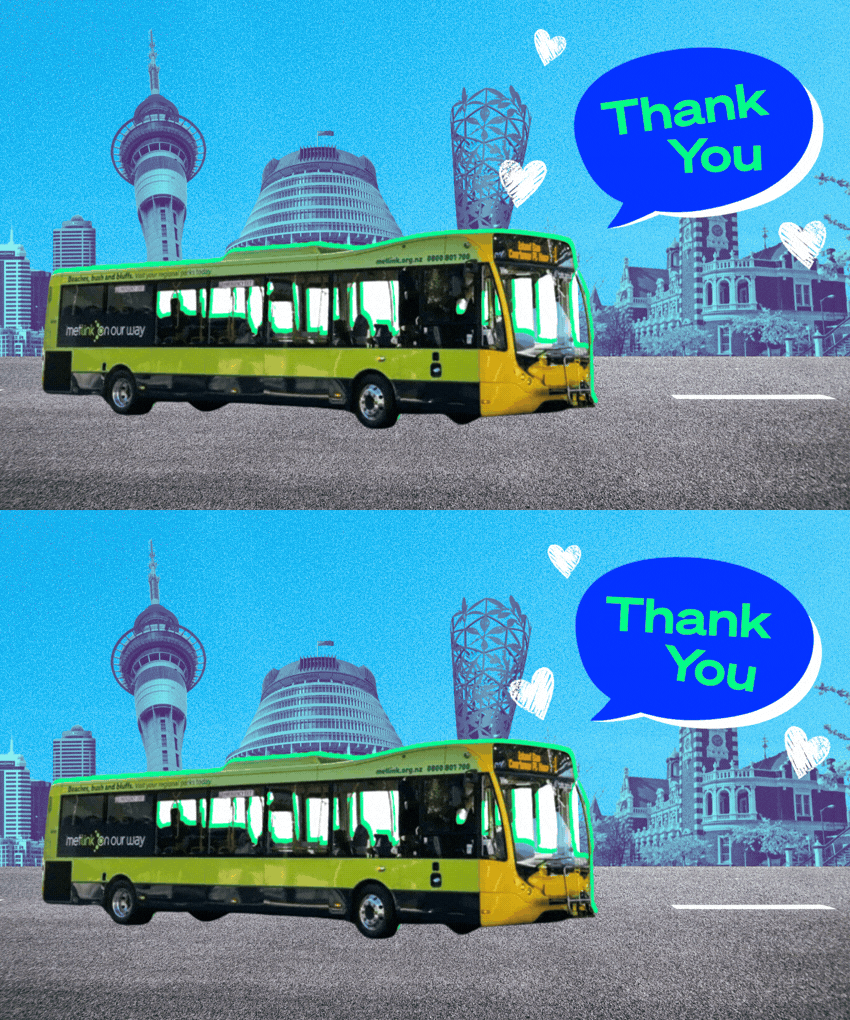



Over the past week, The Spinoff writers have been stealthily logging thanks yous uttered on buses across the motu. Today, we present our findings.
There’s a video doing the rounds on social media at the moment capturing different international cricket teams alighting buses during a recent competition. For the first half of the video, the bus drivers are largely ignored by players, who swing their gear busily and avoid eye contact. It’s a soul-crushing watch until the Black Caps enter stage right, with each player stopping to acknowledge the driver with a cheery nod and a “thank you,sir” before they leave.
Saying thank you to the bus driver is the New Zealand way, and something a lot of people don’t realise is unique until they go overseas. Novelist Rebecca K Reilly, an astute observer of local quirks, says that “thank you, driver” sits alongside our other secret etiquette rules including “waving at cars that stop at crossings, not sitting down anywhere where there might not be enough seats for everyone, and leaving the last item on every shared plate of food”.
“One of my favourite things about New Zealand is that people generally act with an awareness that they’re in a community,” she tells The Spinoff. “They will say thank you and apologise to people, help people who’ve dropped something, hold doors and stop to ask people if they’re OK.”

That said, there are growing concerns that saying thank you to the bus driver might be going the way of Tangy Fruits, Fair Go, and other cultural institutions now lost to the ravages of time. Over the last few years, multiple Reddit posts have queried the decline, and Reilly herself had an “internal crisis” after nobody said it at the university stops on her Auckland bus route last year. “I thought it was rude, then I was worried that I was just out-of-touch,” she says.
With the fuel crisis causing more people to take public transport across the country, The Spinoff thought this was the perfect time to get out there and see how our main centres are tracking when it comes to thanking the driver. Sending our writers out incognito in Auckland, Wellington, Christchurch and Dunedin (apologies to Hamilton and Tauranga, times are tight), we stealthily logged your thank yous, your no thank yous, and any other surprises along the way.
Auckland
I don’t want to become the guy who bangs on about kids these days but kids these days don’t say thank you when they get off the damn bus. My 931 route goes past Northcote College on its way to the city and its pupils trudged into the realm of learning with nary a grunt of acknowledgement for the driver who’d shepherded them down the hellscape of Onewa Rd.
To be fair, you’d have to go back a century to find teenagers that weren’t prone to bouts of noncommunicative gloom on their way to school, and that would only be because they were up a chimney or at war instead. Still, the fact remains that Auckland’s stats were in the Strait of Hormuz by the time we even arrived at Fanshawe St. They didn’t improve much when the office workers of Wynyard Quarter disembarked. Though I’d managed to catch the least full bus in the city, the waterfront office park remains a popular stop. Most of the crowd alighting the vehicle seemed more concerned with not bumping into each other than saying thank you to their driver.
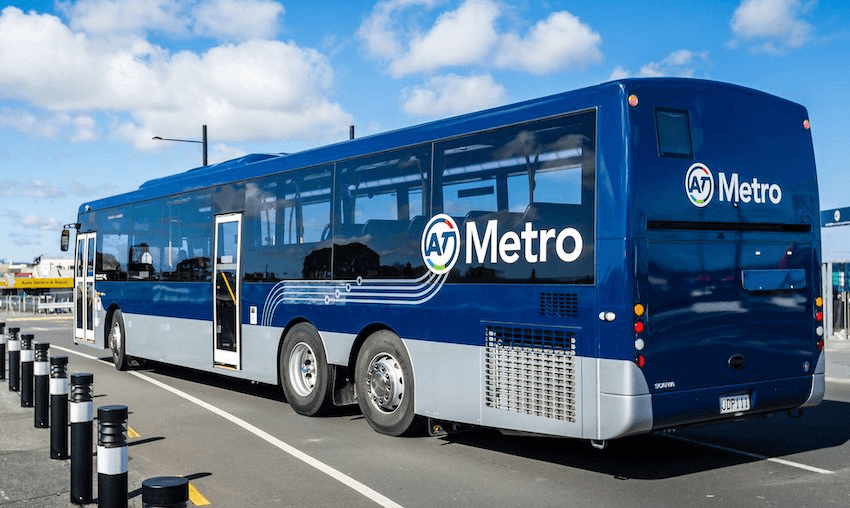
Thank God then for Auckland University students. Almost every soul that survived the great disgorgement at Wynyard was grateful. When the vehicle finally arrived at its final stop opposite the uni quad, seven out of seven passengers delivered a loud thank you on their way off.
Caveats apply. The first is the low number of passengers, the result of a bus directly in front snaking most of our potential embarkments. The second is the commendably generous nature of our driver, who flipped the script by saying thank you to everyone leaving the bus. There’s a chance his kindness filled the gratitude void and left others feeling like they didn’t need to add their own to the mix. / Hayden Donnell
Wellington
There are many joys in boarding the capital’s busiest bus route, the number 2, which connects commuters on the east (Miramar/Seatoun) through the city centre to the west (Karori). It’s never not full before 10am or between 5pm and 6pm, and if you’ve caught this bus during peak time I would safely assume you’ve had the experience of being squashed up between some yo-pro’s fully-stuffed backpack and an elderly gentleman who forgot to shower.
I catch this route everyday as it goes through Mount Victoria and on this day, just before 9am, it was already overflowing with more than 50 passengers aboard. We were mostly office workers – this route doesn’t really hit any school zones so the age demographic is typically 20s and above. The TYD (thank you, driver) rate was sparse heading through Courtenay Place but at the first stop on Manners St, all six passengers departing the bus gave the driver their gratitude. It seems to make a difference if the first person getting off gives a hearty “THANK YOU DRIVER” and thus creates some pressure for passengers following who don’t want to look impolite, even if their version of TYD is just a whisper.
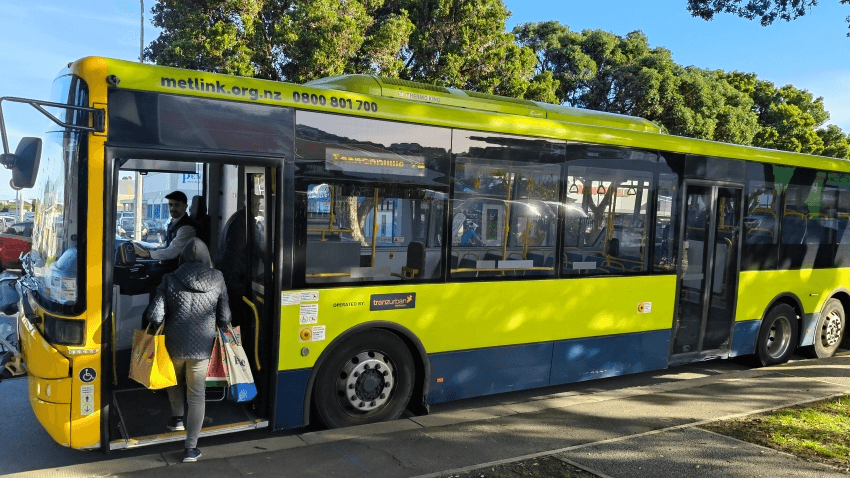
The frequency of TYDs picked up around Lambton Quay, with the majority of departing commuters thanking the driver for doing the hard yards. It’s also around this part of the journey that the bus typically thins out a lot, and I can’t help but wonder if being in a crowded bus makes you more grumpy and therefore less grateful for the journey, while a less crowded bus can help you appreciate the miracle that is getting from A to B on a public transit system and encourage you to express that gratitude openly and thankfully.
By virtue of being in a city inhabited by the likes of what Winston Peters may describe as soft-handed soy boys wearing comfortable shoes, you’d expect Wellingtonians to be “thank you, driver” purists. But all in all, only around 58% of passengers on this commute mustered up a “thank you, driver”. There was also one “thanks boss”, which really blew me away in all of its casual gratitude and is something I shall be adopting for myself. I will be taking my findings straight to my father, a bus driver who assures me the culture of TYD is still mostly alive and well. / Lyric Waiwiri-Smith
Christchurch
I had a lot of faith that the Garden City would be as littered with thank yous as it already is autumn leaves when I boarded the number 1 city-bound at 8.30am. When they aren’t yelling at you from boy racer cars or BMX bikes, I’ve found Cantabrians to be much more polite and friendly in public than Aucklanders. Given I overheard a 100% thank you rate from Cashmere High students getting off The Orbiter while I was waiting at the bus stop, expectations were sky high as we soon thundered through Cashmere and crawled down Colombo Street.
While there was only one outlier stop, where a large group of 12 surly teen boys, headphones on and eyes to the ground, refused to utter a single thank you, Ōtautahi generally did pretty well. It wasn’t just that 66% of travellers proudly bellowed their gratitude to the driver while getting off the bus, but many also said thank you while getting on the bus, often with a cheery “good morning!” I also watched people give up their seats for older people and women and children, and our heroic driver even chased after a passenger outside South City who had left his hat on his seat. “Thank you,” the man said. “No problem, it was easy,” the driver replied.
And what of those 34% who couldn’t be arsed? I certainly noticed people were less likely to say thank you if they were getting off at the front, perhaps the proximity making things awkward, and often would refrain if they were nestled in a large group alighting in high traffic spots like the bus depot. The coolest sign-off came from a tiny kid in a shark backpack who bellowed “BYE!!”, which I scientifically weighted as akin to the value of five thank yous via cuteness and enthusiasm. I made it all the way to Merivale and got off outside the denture clinic, smiling from ear to ear as I hit a powerful 100% thank you rate with my fellow three departees. / Alex Casey
Dunedin
I had high hopes for the good people of Ōtepoti Dunedin when I climbed aboard the number eight bus. My experience of living here is that we like public transport and are also nice people, which means getting off a bus is a polite person’s time to shine. Case in point: it was raining so the driver let me onto the bus early, and folded up his morning copy of the Otago Daily Times to start his engine at the exact departure time of 7.49am. I was thanking him already, and I had only just sat down.
The bus zoomed along from St Clair, through South Dunedin and towards Normanby in the north of the city, and quickly filled with school students and employees heading to the city centre. It took 10 minutes for the first passenger to disembark, and he set the bar with a hearty “thank you!” all the way from the back door. 70% of passengers offered their thanks on this journey – some were loud and emphatic, others muttered so quietly that they could barely be heard by the passenger themselves, let alone the driver. Full credit to the woman in the black jacket who gave the driver a jaunty wave, and to the giddy group of school students who effed and jeffed their way along George Street but who all said thank you to the driver when they got off.

Disappointingly, 30% of passengers did not move their lips as they left the bus. This mostly happened at the city centre bus hub, where only a couple of people offered any thanks, while the others made a silent exodus into the grey mist of the working day. Also at one point the bus driver swapped with a different bus driver, but neither driver appeared to thank the other driver, and when I caught another bus home, the driver thanked ME when I disembarked. What does it all mean? Not entirely sure, but thank you anyway, Dunedin. / Tara Ward
Comparative analysis
The good news for all of Aotearoa is that the majority of us are still choosing to say thank you to the driver when we get off the bus, even if the ungrateful demographic described by Hayden Donnell as “kids these days” threw the stats dramatically in both Auckland and Christchurch. It also appears that TYD rates plummet at busy stops such as city centres and bus depots, where passengers are more likely to alight in a silent peloton helmed by one lead thanker.
Even if we are still a country of more thank yous than no thank yous, the regional differences are clear. Not doing any favours to its snobbish reputation, Auckland was the least thankful city surveyed. Wellington was picked by our external expert Reilly to have the strongest showing of thank yous but failed to meet expectations (although it is worth noting that, also true to its brand, Wellington was the only place to drop a bit of creative panache in “thanks boss”.)
Which brings us to the South Island, and the clearest trend we can extrapolate from this highly scientific nationwide survey (again, sorry to Hamilton and Tauranga). The data certainly suggests that the further south one travels, the more “thank yous” one can expect to hear on public transport. Christchurch gave it a good old Kiwi try, but ultimately it was Dunedin who took the TYD crown with its southern charm and endless well of gratitude. Thank you, one and all.