Every political party is in opposition now

The opposition coalition controls 100% of parliament (Image: Joel MacManus)
In a rare show of unity, every party in parliament agrees they aren’t the ones in charge.
It’s a hard time to be in government. The post-Covid world has been defined by high inflation, sluggish economic recovery, geopolitical turmoil, a global fuel shortage, and lots of unhappy voters.
In 2024, 64 countries, representing nearly half the world’s population, held national elections. In 80% of them, the incumbent lost vote share compared to the previous election. There was no clear trend to the left or the right, voters just hated whoever was in charge.
Incumbency, once one of the greatest advantages in politics, is now a curse. A hot potato no one wants to handle. New Zealand’s last election was defined by voters blaming the incumbent government for high cost of living caused by global trends, and its next election will likely be defined by voters blaming a different incumbent government for high cost of living caused by global trends.
This is a major risk for New Zealand’s political parties, many of whom are incumbents or who are at risk of becoming incumbents soon. So, in a cunning tactical move, every one of them has pivoted to being in opposition.
National
Christopher Luxon was extraordinarily successful in opposition. He went from MP to PM faster than anyone in New Zealand history. But his preferred prime minister ratings have declined ever since he became prime minister and National’s party polling has followed suit.
This may explain why Luxon is trying to obfuscate his job title. “My job is the CEO,” he told Tova O’Brien in an interview last week. “Your job is prime minister,” she annoyingly reminded him.
Luxon has avoided the spotlight during some of the government’s daily fuel crisis briefings. This could be because he isn’t as across the details as his deputy Nicola Willis and is afraid of making another gaffe. Or it could be because he doesn’t want to give the wrong impression that he is in charge and has the power to do anything.
The government has been avoiding using the Beehive Theatrette for these briefings despite it being the default location for official government announcements. According to Thomas Coughlan at the NZ Herald, this is to avoid looking too much like the Covid-19 response. It also helps the government to avoid looking too much like a government.
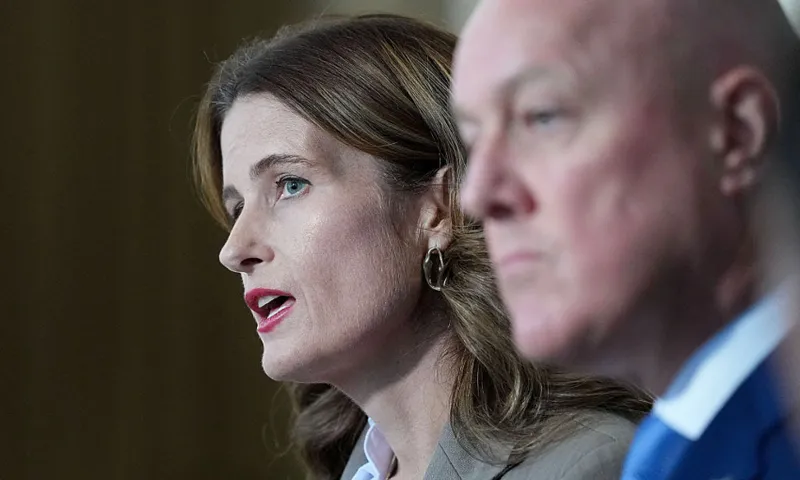
It’s not just optics. The National Party has taken a number of strong policy stances seeking to differentiate itself from the National-led government.
After the National Party announced its support for a bill that would allow three-storey townhouses by default on most properties, the National Party came out strongly against it and promised to repeal the law. The National Party proposed an alternative, giving councils more flexibility as long as they planned for the same number of houses. But then the National Party decided that would mean too many houses in the rich parts of Auckland and forced the National-led government to drop its housing target from 2 million to 1.6 million. Then they did it again, to 1.4m.
National has been a powerful opposition party on several other issues too. After the Labour government banned live animal exports in 2022, citing animal welfare concerns, National vowed to overturn the ban. MP Nicola Grigg said it caused “economic pain for farmers and consumers”. The National Party included the policy in its election manifesto and wrote it into its coalition agreements with Act and NZ First. In March, the National Party withdrew its support for repealing the ban, citing animal welfare concerns.
New Zealand First
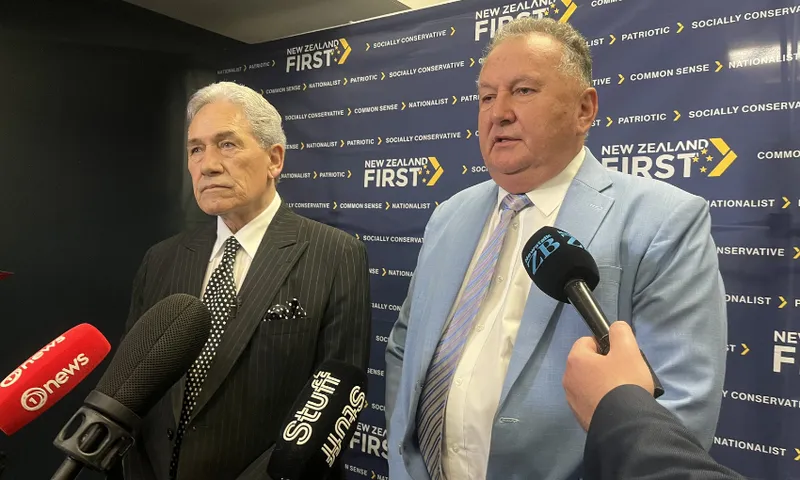
The pioneer of the opposition-while-in-government technique, New Zealand First has thrice ended a term in government by being booted out of parliament or very close to it, and is eager to ensure it doesn’t happen again.
NZ First leader Winston Peters was the deputy prime minister for the first half of this term but he would very much like you to forget that. Instead please focus your attention and anger on people who wear comfortable shoes.
Peters, who is the minister of foreign affairs, has come out strongly against the signature foreign policy achievement of this term: the India-New Zealand free trade agreement. He said the government he is part of had “rushed it through” for “political purposes”.
On the domestic front, NZ First recently got into an argument with National over who deserves credit for killing a controversial fishing bill that NZ First campaigned on and National officially endorsed in its coalition agreement. The proposal to remove minimum size limits for commercial fishing was widely opposed by recreational fishers. Both National and NZ First promised the anglers they would stand up for them against the overreaches of the out-of-touch government, whoever that is.
Act
The Act Party, in its eternal quest to wrestle culture war votes from NZ First, has followed its coalition partners’ lead by coming out strongly against many policies of the government it is part of.
Leader David Seymour has been at the forefront of this shift. After years of purporting to have a libertarian view of housing policies – including writing a book on the subject in which he urged politicians to do “nothing, or almost nothing, in the field of urban planning” – he abandoned that ideology once he realised new houses might be built in his neighbourhood. He now wants intensive regulations to stop apartment-dwelling sickos from “looking into everyone’s backyards and their swing sets and their pools”.
Act has taken a strong stand against the government’s proposed ban on paywave surcharges, which National’s commerce and consumer affairs minister Scott Simpson previously celebrated as “a win for New Zealanders”. Seymour countered that is “not actually a win” and is “bad economics”. Act recently pulled its support for the bill, which Seymour now says is “dead”, though Simpson insists the government is working on a way forward.
Act also recently withdrew its support for the government’s bill to ban greyhound racing. Act MP Cameron Luxton said the party wants more compensation for racing dog owners and asked the industry to “forgive our sins”. In an incredible piece of manoeuvring, Luxton managed to point the blame not at the current government that initiated the bill, but at a government that hasn’t existed in six years. “This reminds us of the Labour-New Zealand First government’s rush to seize the property of licensed firearms owners,” he said. This didn’t affect the bill, which passed last week with the support of opposition parties, and is set to take effect in August.
Labour
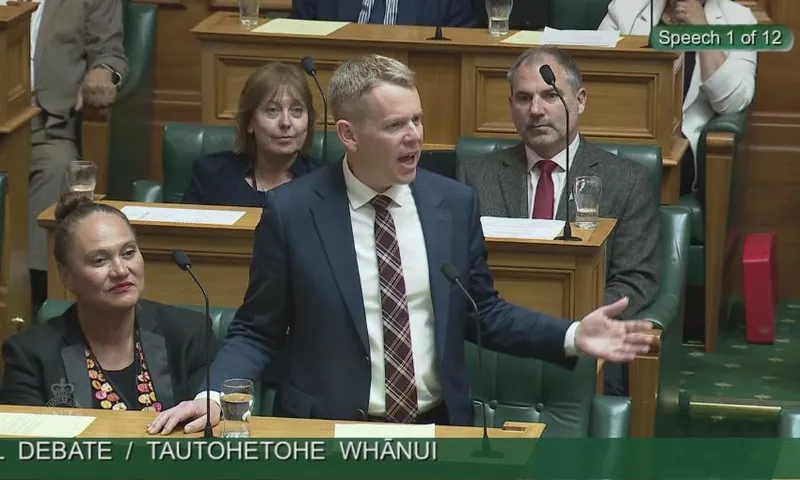
Labour leader Chris Hipkins has been the prime minister previously and it went poorly for him. Now that he isn’t in charge any more he’s doing everything he can to remind voters of that fact. When asked, repeatedly, what Labour would do about the fuel crisis, Hipkins offered no ideas, saying: “We are not the government.”
Even saying what you would do if you were in charge is too close to being in charge, and that’s a risk Hipkins isn’t willing to take. Opposition leaders have tried having opinions about government policies before and it worked out badly for them – case in point Simon Bridges during the Covid-19 pandemic.
Sometimes voters don’t want solutions, they just want to vent. Hipkins will be here to listen, nod, and remind you again that he’s not in government and can’t be blamed for any of it.
The Greens
The Green Party came dangerously close to looking like a government when they made the foolish mistake of proposing a constructive solution to the fuel crisis. The party offered National its votes in exchange for free public transport and relief payments for low-income people, among other things. Fortunately for them, the government said no, and they were able to retreat safely to their default position of righteous opposition without responsibility.
Te Pāti Māori
No party has executed the all-opposition strategy more elegantly than Te Pāti Māori, which is such a shambles that it couldn’t possibly be mistaken for a government. It barely resembles a parliamentary party.

Joel MacManus
Joel MacManus is a senior writer for The Spinoff. He previously worked at RNZ and Stuff, and began his career at Critic Te Ārohi. His writing explores the political, economic and cultural systems that underpin modern New Zealand. He won the 2025 Voyager Media Award for Best Columnist, Opinion or Critique.


