All the bogus reasons for National’s latest housing U-turn

Chris Bishop, right, and David Seymour, left.
We’ve been treated to a cacophony of handwringing about infrastructure, but it boils down to ‘not in my backyard’.
Chris Bishop was defiant in a Herald op-ed from September over what he called “an almost-unprecedented level of misinformation” about a government-led plan to legalise more apartments and townhouses across Auckland. Plan Change 120 wouldn’t usher in a flood of skyscrapers or see sewage bubbling up in the streets, he wrote. Most of all, it wouldn’t mean two million more houses would get built. The scaremongering on that figure was “nuts” and reality would be less dramatic, he wrote. “Don’t let people who should know better tell you otherwise.”
Psych! According to media reports and well-connected right-wing columnists, National is about to water down its plans for an influx of dense housing around Auckland, in a decision that appears to be predicated on the exact lines Bishop rubbished and urged people to disregard.
The Post got the exclusive on what will be National’s second major housing U-turn in three years on Friday. Its story makes it clear a lot of the misinformation getting put out on Plan Change 120 is coming from inside the house. “What [Bishop] doesn’t get is Auckland’s a much more complicated place than Wellington or frankly, an economics textbook,” an anonymous government source tells the paper. “If you want to see more houses built, it’s not as simple as removing all the zoning and saying anyone can build anything anywhere they want. You’ve got to connect the infrastructure, you’ve got to have the buses, otherwise it’s a nightmare.”
In one respect, anonymous government source is correct. Auckland isn’t like Wellington, an earthquake-prone city built on a cliff face where sewage regularly bubbles into the street like the world’s worst stovetop coffee. It’s actually much better suited to dense development than the capital. The source will be relieved to hear that, far from not having buses, it already has the most comprehensive bus system in Australasia. That network will soon be buttressed by a $5.5bn rail network upgrade and a $1.4bn rapid busway connecting its eastern suburbs to the city centre. Another $4bn busway is already in the early stages of development in the northwest.
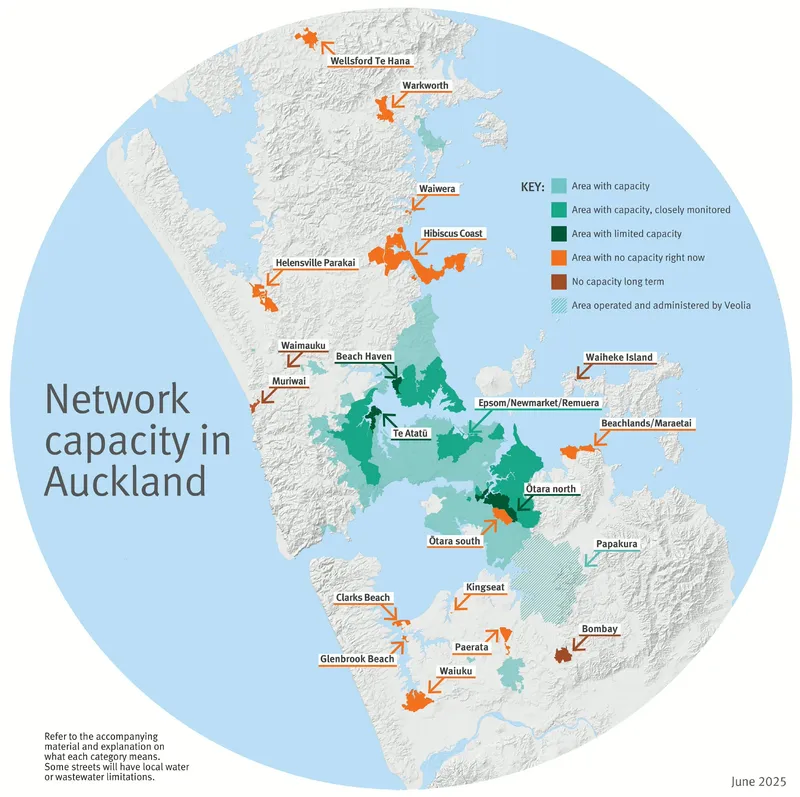
As for connecting the infrastructure, the council is in the final stages of construction on a $1.6bn sewerage pipe running from Herne Bay to the Māngere wastewater treatment plant. Though actually making a giraffe stand up in it would be cruel, the Central Interceptor is big enough for a giraffe to stand up in. It’s expected to reduce sewage overflows in the central isthmus by 80%. The council is also spending $500m upgrading three waters infrastructure in the inner east.
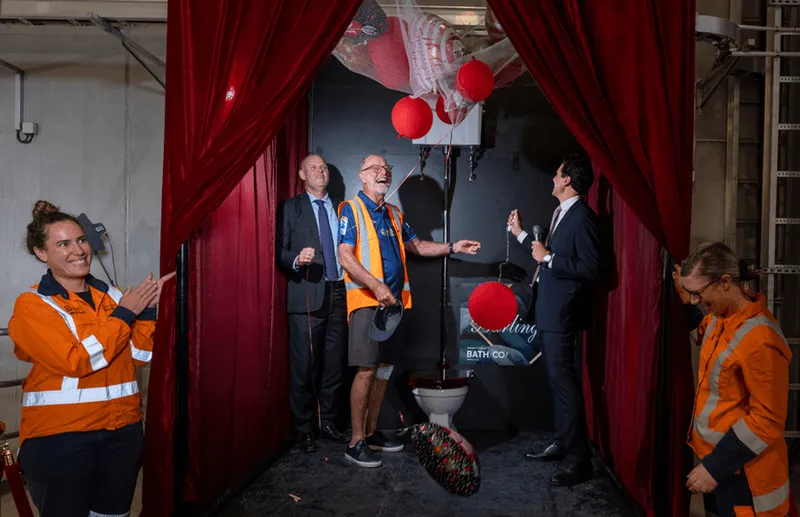
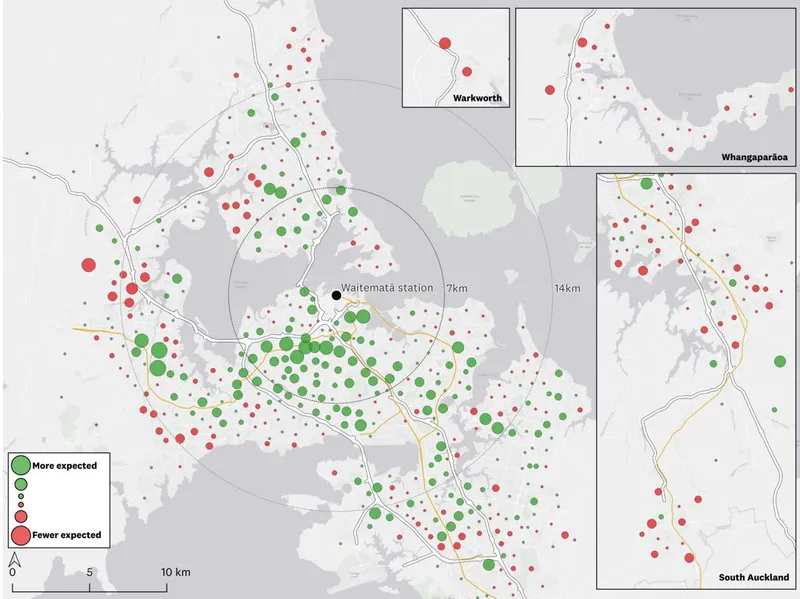
Happily for government source, Plan Change 120 focuses development on the places best served by these huge, city-shaping investments. That’s kind of its whole point. Though it doesn’t seem to provoke anything like the same level of concern from our current crop of passionate advocates for proper planning, Auckland’s existing Unitary Plan has pushed most development to greenfields areas with little infrastructure and Te Atatū, a peninsula 15km from the city centre whose one road in and out routinely becomes impassable.
That’s finally meant to change. Housing is set to go into the places with good access to jobs, trains and shitless beaches. Though the plan enables two million houses, the council expects only a fraction of that to be built, explaining that allowing more housing than it technically needs helps suppress prices, increase competition and ensure development can happen on the best sites.
Why would these supposed planning advocates inside the government be opposed? Another anonymous political figure puts forward a plausible answer elsewhere in The Post’s report. “You’ve got to be able to say to the older crowd, we respect the lifetime of work and investment you’ve made to live in a nice suburb and it should largely stay that way,” the source says.
The sentiment is echoed by deputy prime minister and Epsom MP David Seymour later in the piece. “All I would say is we need to find a balance between respecting the hard work of current property owners, while leaving open opportunities to future property owners,” he says.
Seymour could do well to read the work of a libertarian commentator who was disparaging of that kind of capitulation to existing homeowners’ interests in his 2011 book Birth of a Boom. “Civic leaders need to do a very courageous thing. They need to do nothing, or almost nothing, in the field of urban planning,” the commentator wrote. That would mean letting people open businesses and build housing even in quiet suburban areas, he said. “If such a development was to irritate the dull and puritanical who currently enjoy the area’s sterility, all the better.”
That writer was, you guessed it, David Seymour before he became the MP for Epsom. If he, along with others within government, have augmented their views to better align with their well-heeled constituents, that’s their right. But spare us the arguments about buses and pipes. The opponents to Plan Change 120 aren’t worried about housing going into areas where there’s no infrastructure; they’re worried about it going into areas where there’s plenty. Their pro-planning message makes little sense except as a cover for another less palatable one, heard in the background of every housing debate since time immemorial: not in my backyard.

Hayden Donnell
Hayden Donnell is a senior writer for The Spinoff. He previously worked at RNZ, TVNZ and the New Zealand Herald, alongside other media companies that have since closed down or been renamed. His primary passions are local politics and the Big Fresh animatronic fruit and veggies.


