Why Kerrin Leoni thinks she can win back Tāmaki Makaurau for Labour

Kerrin Leoni has a battle on her hands for Tāmaki Makaurau. (Photo: Supplied; additional design: The Spinoff)
Labour’s pick to reclaim the high-profile seat from Te Pāti Māori is making a case for power from within.
The last time Kerrin Leoni sat down with The Spinoff, she was in the midst of her campaign to become the mayor of Auckland. Today, she hasn’t given up on that goal, confidently announcing: “I still will be the mayor one day.”
We’re at a cafe in Manukau, close to where Leoni now works for a Māori youth organisation, delivering development programmes and services to rangatahi. It’s a big change from the council chambers where she spent the last three years, serving as the Whau Ward representative and first wahine Māori city councillor.
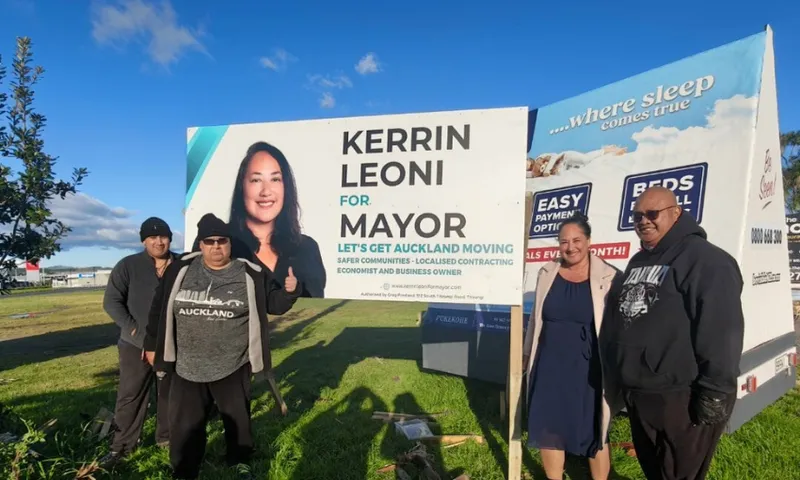
Leoni didn’t contest the Whau seat at last year’s local election, going all in on her mayoral bid. She received almost 80,000 votes, but lost decisively to incumbent Wayne Brown, who won by a margin of more than 100,000. But she’s taking lessons from that campaign into her next – attempting to win back the Tāmaki Makaurau electorate for Labour at this year’s general election.
Leoni was recently chosen as the party’s candidate for the electorate, defeating relative political newcomer and local business owner Nathaniel Howe. It’s not her first foray into national politics: in 2020 she was Labour’s candidate in the Waikato electorate, losing to National’s incumbent Tim van de Molen, and her list ranking wasn’t high enough to win her a place in parliament, despite a landslide victory for Labour that year. She had returned to New Zealand in 2015 after a decade in London, and was elected to the Waitematā local board of Auckland Council in 2019, becoming a councillor in 2022.
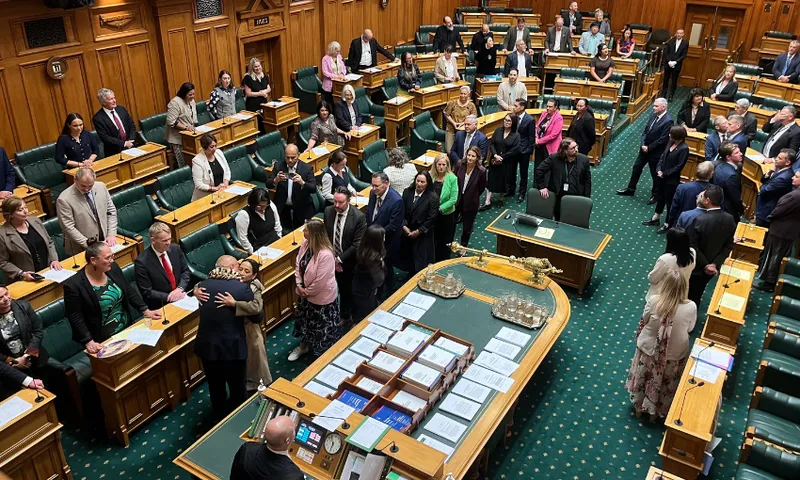
The Tāmaki Makaurau Labour electorate committee that Leoni once co-chaired alongside Grant Williams has now put its faith in the 46-year-old wahine, who was born and raised in Auckland, to take on incumbent Oriini Kaipara. Last September, Kaipara soundly defeated Labour Party MP Peeni Henare in the Tāmaki Makaurau byelection, held following the death of Te Pāti Māori MP Takutai Moana Natasha Kemp.
While Kaipara won the byelection definitively, Leoni says she’s confident it will be a different story when the general election rolls around in November. Some saw Kaipara’s victory as the result of tactical voting by the electorate to get two representatives in the House, given Henare was already an MP via the Labour list, and that’s partly where Leoni’s confidence stems from. She says she’s hoping to get a top 40 spot on the party list this year, but it’s unlikely she will be placed high enough to guarantee her a seat, making Tāmaki Makaurau a must-win.
Henare had held the seat for Labour for three terms before losing to Kemp in 2023 by a margin of just 42 votes. He has now left politics, and Labour’s new candidate taking on an almost-new Te Pāti Māori candidate will make for an interesting race in one of the largest and highest-profile Māori population centres in the country.
This time around, Leoni is hopeful voters in the electorate will be strategic and vote for her instead of Te Pāti Māori’s candidate, because she thinks there’s a good chance Kaipara could make it into parliament on the list (though her place on that list is not yet known). In a poll released by Roy Morgan last week, support for Te Pāti Māori was at 3%. If the party achieved that result in the election and managed to win at least one electorate, Te Pāti Māori could end up with four seats in parliament.
The other major change in dynamics since the byelection last year is the disarray Te Pāti Māori has found itself in, and Leoni is confident many of its supporters will turn to Labour. “Just keep doing what you’re doing, JT [John Tamihere, Te Pāti Māori president],” she laughs. “Keep going.”
Asked what she thinks about the “unapologetically Māori” catchphrase used by Te Pāti Māori throughout the Tāmaki Makaurau byelection, Leoni says she’s not concerned about being labelled a “Pākehā Māori” by Tamihere. When it comes to being a part of the well-established system of the Labour Party, Leoni says she won’t be toeing the party line when it doesn’t align with her values.
“I stood as an independent when I ran for mayor. I have shown that I can stand alone when required.”
Another source of confidence is the results of her mayoralty bid. Despite the significant loss, Leoni says many of her votes came from areas with a high density of Māori voters, such as Manurewa. She’s confident this will translate to electorate votes come November. “Te Tai Tokerau is won in West Auckland and Tāmaki Makaurau is won in South Auckland,” she says.
When it comes to policy, Leoni’s focused on the party’s priorities – jobs, housing and healthcare. Instead of benefit increases, she wants to see more Māori in employment. “If that means we have to provide grants so employers can give people a chance to work somewhere like this cafe – then I’m all for it,” she says. Trades training schemes are also a focus, and she would like to see an increase in support for night classes and those looking to change careers.
Leoni says she is acutely aware of the growing influence of gangs and drug culture on rangatahi Māori in Auckland, and is an advocate for getting ex-gang members and career criminals to speak to the youth about the realities of gang life, encouraging them to seek a different path.
When it comes to profile, former broadcaster Kaipara has a distinct advantage over Leoni, despite the mayoralty bid. But Leoni highlights her political experience as a clear point of difference between the two. She also argues she could achieve more meaningful change from within the Labour Party, as opposed to a minor party such as Te Pāti Māori.
“I can’t actually think of one meaningful thing that Te Pāti Māori has done, either as a coalition partner or in opposition,” Leoni says.
For someone championing their political acumen and support for empowering wāhine Māori, it’s a bold claim – and one that overlooks the establishment of Whānau Ora in 2010 by the late Tariana Turia, then Te Pāti Māori co-leader.
“We set up the Māori Health Authority, although it’s now been disestablished,” Leoni says. “Te Pāti Māori might be talking about establishing a separate Māori parliament and other similar things, but we’ve actually created quite radical change from within.
“They need to stop selling false dreams and making empty promises to our people.”
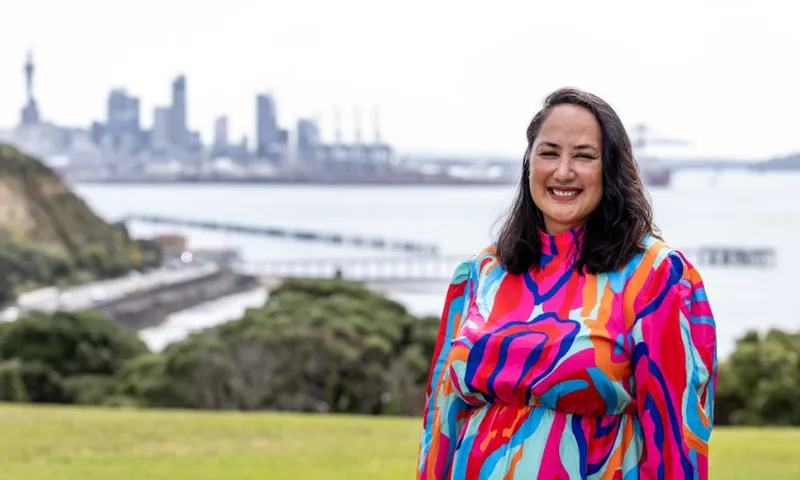
It’s the potential to create meaningful change from within that Leoni claims truly sets her apart from Kaipara, and she alludes to a belief she may one day be a minister within a Labour government.
“No offence to Oriini, but I doubt she would ever actually become a minister. If Tāmaki Makaurau wants somebody who can truly make change from within – I’m the person to do it.”
The bid to become the Tāmaki Makaurau MP is Leoni’s fifth campaign in the space of seven years. She says she’s learned from her previous campaigns and a large cohort of her team from the mayoralty bid are supporting her in Tāmaki Makaurau. Similarly to that campaign, Leoni is likely the underdog up against the incumbent Kaipara. However, she now has the backing of the Labour Party, which is desperate to win back the Māori seats.
With Te Pāti Māori in a state of turmoil, Leoni sees herself as more than a placeholder candidate in the Tāmaki Makaurau race, appearing to truly believe she has what it takes to reclaim the seat for the Labour Party.
In many ways, the contest for Tāmaki Makaurau is bigger than either Kerrin Leoni or Oriini Kaipara. It is a referendum on two competing ideas of Māori political power – whether it’s best exercised from within the machinery of a major party, or asserted independently and unapologetically from the outside.
Leoni is hoping voters will return to Labour’s promise of influence, access and delivery. That change comes not from rhetoric, but from proximity to power. Kaipara and Te Pāti Māori offer something else entirely – politics less concerned with compromise, and more willing to redraw the terms of engagement altogether. For voters in Tāmaki Makaurau – one of the country’s most significant Māori population centres – the choice is not just about who represents them, but how they want to be represented.
After a byelection shaped by strategy and circumstance, November’s result will be something closer to a true test. Not just of Leoni’s rise, or Kaipara’s hold on the seat – but of where Māori political momentum now sits, and where it’s heading next.

Liam Rātana
Liam Rātana (Ngāti Wairupe/Ngāti Kurī) is editor of The Spinoff's Ātea section. He is passionate about indigenous and minority issues. Liam enjoys cooking, poetry, photography, and exploring the outdoors.


