Is Dunedin’s number 18 bus the most scenic route in the country?

Tara Ward has a very lovely time on Dunedin public transport.
Earlier this year, my esteemed colleague Joel MacManus took a bus trip through the nation’s capital and bravely declared it to be Wellington’s most scenic commute. It’s hard to argue with a trip that features both a Beehive and a Zephyrometer, but it also got us thinking: what other New Zealand cities have picturesque bus rides, and what might be the most scenic public transport route in the entire country?
Ladies and gentlemen, I present my nomination: Dunedin’s number 18 bus.
The number 18 is a service run by Otago Regional Council, and is arguably the most beautiful public bus trip you’ll take anywhere in Aotearoa. It begins in Dunedin’s city centre, travels through South Dunedin and along the picturesque Otago Peninsula to the village of Portobello, approximately 18km away. It’s a charming trip that winds along the bays and coves of Otago Harbour, offering up stunning views across the sea to places like St Leonards and Port Chalmers.
But twice a day, the number 18 offers an even more spectacularly scenic ride. On its 8.38am and 2.38pm journeys, the bus leaves Dunedin and instead of ending at Portobello, continues a further 11kms north-east to Harington Point. This transforms the traditional number 18 journey into a jaunty 29km trip that gets you right among the trees, the cows, the carrots and the beaches. You’ll witness breathtaking vistas and wildlife aplenty, and if you’re anything like me, you’ll be quickly won over by groundbreaking concepts like “fresh air”, “nature” and “actually leaving the house”.
A one-way journey from the city bus hub to Harington Point takes one hour and one minute, and I reckon it’s the best $2.00 ($3.00 without a Bee Card) you can spend in Ōtepoti Dunedin.
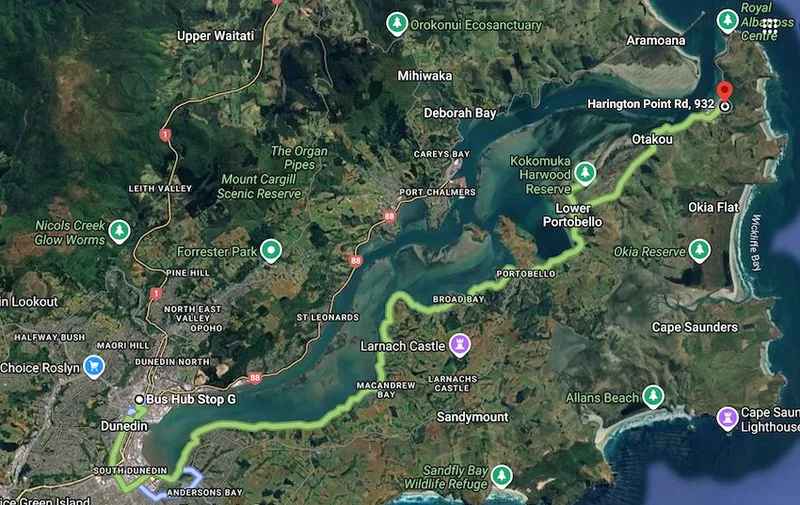
My journey begins on a quiet Thursday morning at exactly 8.38am at Bus Stop G. Three other passengers board the bus with me, with one woman telling another passenger that she’s taking the bus all the way out to Harington Point so she can return by foot along the harbour’s walk/cycleways. I am impressed, but not so impressed that I decide to do the same thing. Instead, I will return to Dunedin on the very same wagon I have just embarked, after it does a quick U-turn at its destination of 900 Harington Point Rd at the scheduled time of 9.39am.

My vehicle of dreams departs precisely on time from outside the local Look Sharp. We begin our journey by heading south down Great King Street, onto Moray Place and past the big recycling bins outside Woolworths. We take a left onto Lower Stuart Street, where a man is walking up to the public library to return his Dick Francis hardbacks, and turn into the one way system heading south.
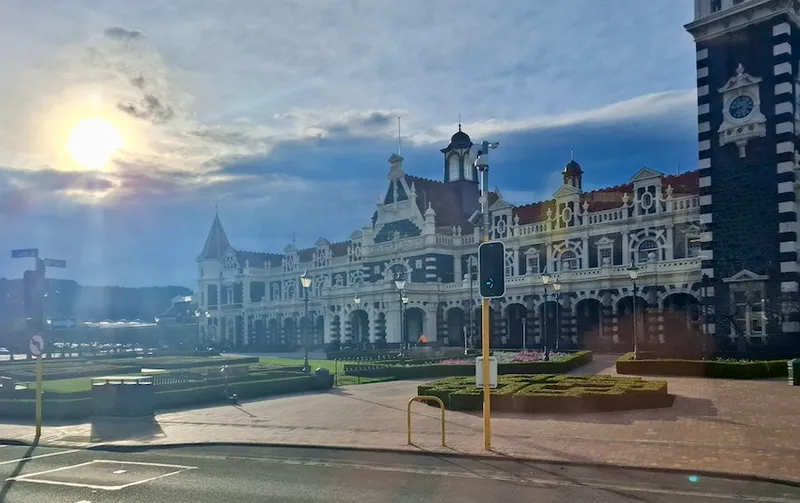
After passing the city’s historic railway station – please note the big sun in the sky, everyone who doesn’t live in Dunedin – we turn right at Queens Gardens, head up to the Exchange and turn south onto Princes Street. After driving along South Dunedin’s main shopping street, we take an important left turn to pay tribute to one of Dunedin’s most popular new attractions (the long line of road cones outside were an unexpected bonus).

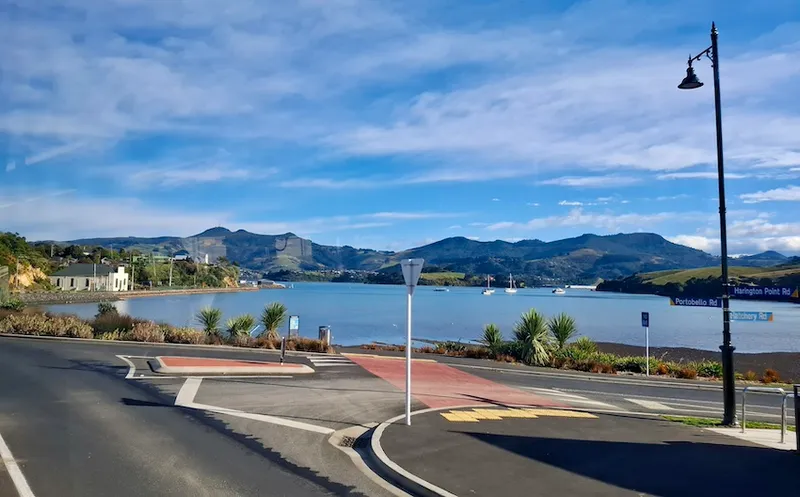
Passing Andersons Bay’s holy trinity of McDonald’s (the busiest branch in New Zealand), Mitre 10 Mega and NoMoes truckstop cafe, we turn right at the traffic lights on Portsmouth Drive. We’ve reached the edge of the harbour, and as we head across Andersons Bay Inlet and onto Portobello Road, the city stretches out before me. There is bird poop on my window and chewing gum smooshed into the seat in front of me, but like Ben Lummis winning NZ Idol, they can’t take that (view) away from me. Blue sky, blue seas – it’s a Dunner stunner.
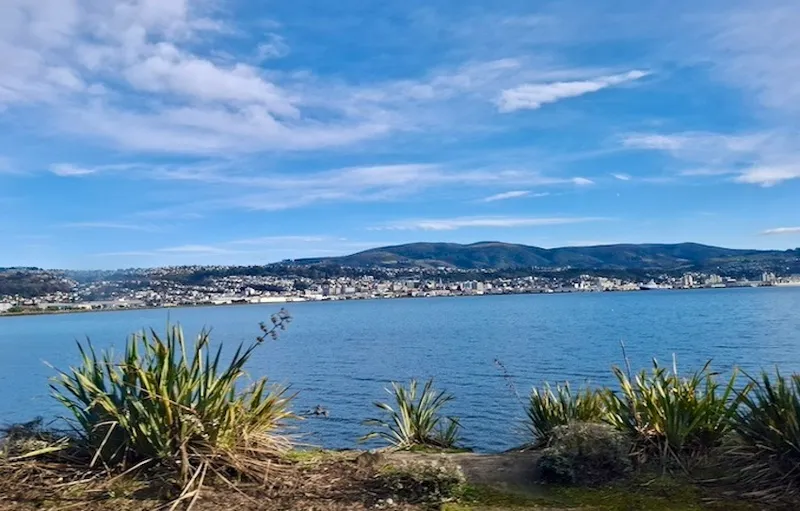
The bus begins its journey along the winding road that hugs the Otago peninsula coastline. We pass runners wearing fluoro jackets and older couples walking their dogs on the coastal walkway. I wonder how much it costs to buy one of the quirky boat sheds that are scattered along the shore, and then, like the old lady that I am, admire the grasses and trees planted along the path. This is a wonderfully sedate adventure, with the speed limit rarely breaking 70km/h on the entire trip.
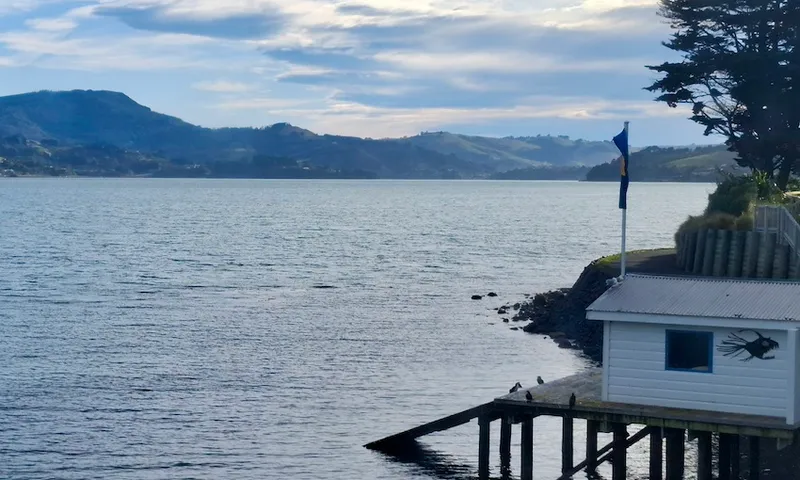
Looking across the sea to the other side of the harbour, I watch tiny trucks and buses drive out toward Port Chalmers, and notice how the houses climb up the steep hillside at Ravensbourne. It’s a whole new perspective on the city. The bus only stops a few times on the way out to Harington Point, so it’s almost an uninterrupted journey. We pass hand-painted signs promoting the upcoming Portobello Market (September 14) and the Macandrew Bay School quiz night (September 11), as well as many colourful bus shelters dotted along the route.
The bus driver pulls over to let the traffic behind us pass, and we reach beautiful Macandrew Bay. Here, a happy dog digs in the sand and locals enjoy a coffee in the sun. It’s only been a 20 minute bus ride, but it feels like a world away.
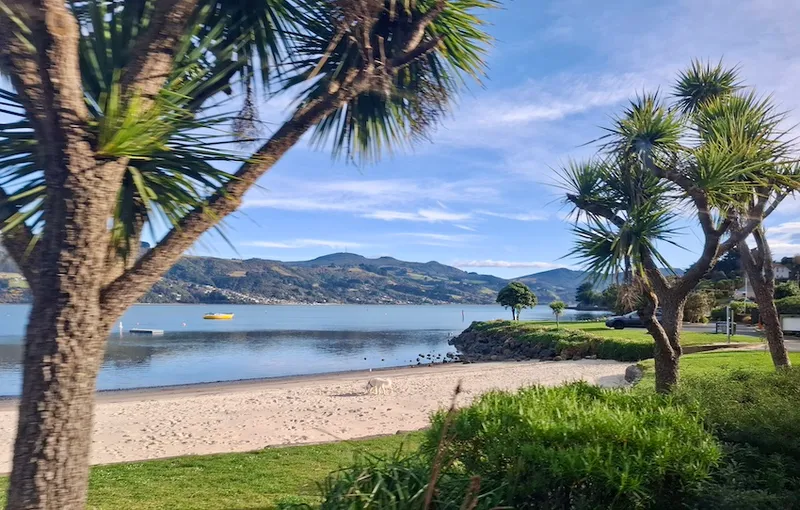
Do you like bays? Then you’re going to love this bus trip. As we leave Macandrew Bay, we look south to catch one of my favourite views of Dunedin, the now-distant city nestled between the two green curves of the harbour. You can turn off at nearby Company Bay and head up the steep road to Larnach Castle, but we stay by the water and and pass through Broad Bay, with its cemetery on the hill, beautiful golden beach and yachts moored quietly nearby.
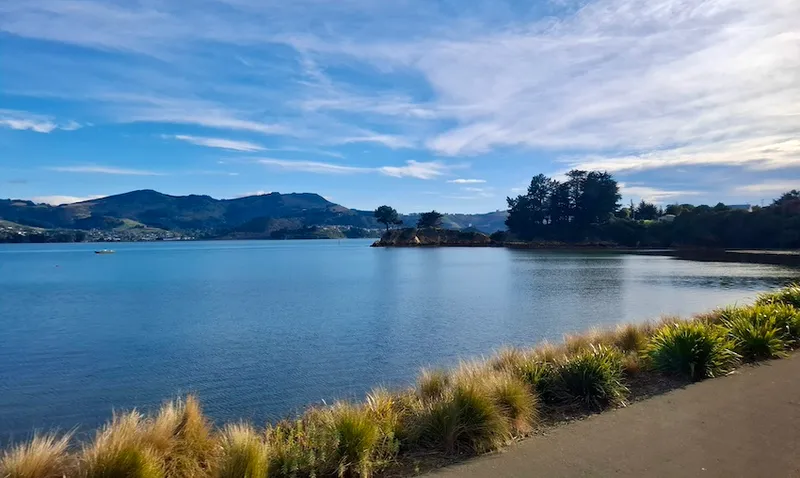
It’s low tide, and I watch what I think are pūkeko, ducks and oyster catchers (could be dodos and flamingos, for all I know about birds) pootle around on the mud flats. Later in the afternoon, a paikea humpback whale will be seen swimming up the harbour, not far from here. I overhear a fellow passenger recommend the coffee at Portobello cafe 1908 (“excellent”). Hard to argue with that praise, but I don’t get off the bus. It’s Harington or bust, baby.
After we climb the hill and leave Portobello, we drive past a group of black swans paddling gracefully in an inlet. It’s a beautiful scene, even when the swans all put their arses in the air at the same time. Nature is amazing. The landscape begins to open up as Portobello Road turns into Harington Point Road, and we take a left onto Tidewater Drive and drive slowly into the small settlement of Harwood.
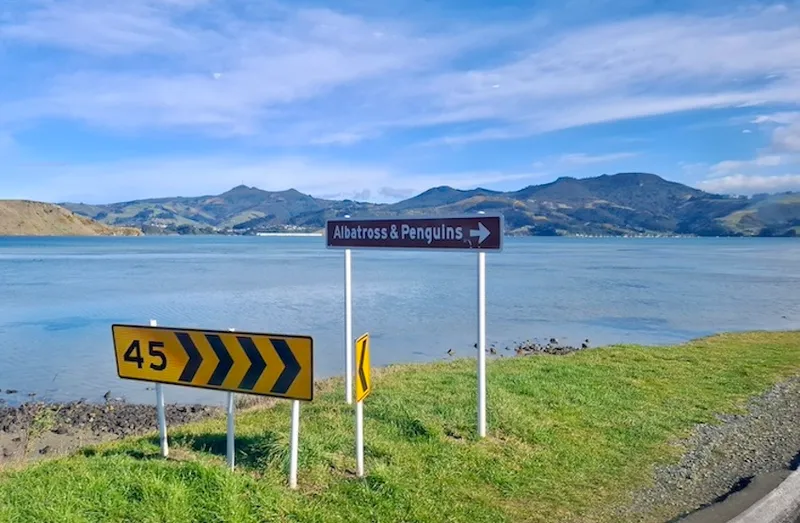
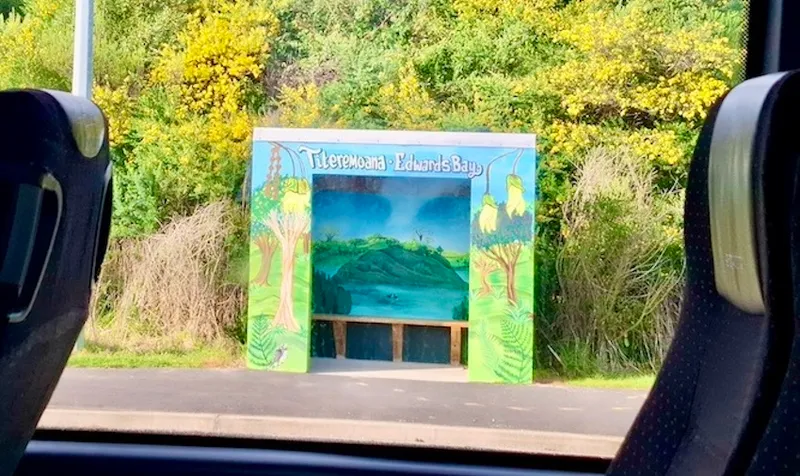
Here, a cluster of brightly-painted, weatherworn cribs sit on the edge of the inlet and gnarly macrocarpa trees line the narrow road that tracks through the village. There’s a bright orange Lilliput Library near the community hall, its tiny shelves stuffed full of faded paperbacks, and as the bus carefully makes a tight right hand turn along Kokomuka Ave, it passes by what must surely be New Zealand’s most picturesque bus stop.
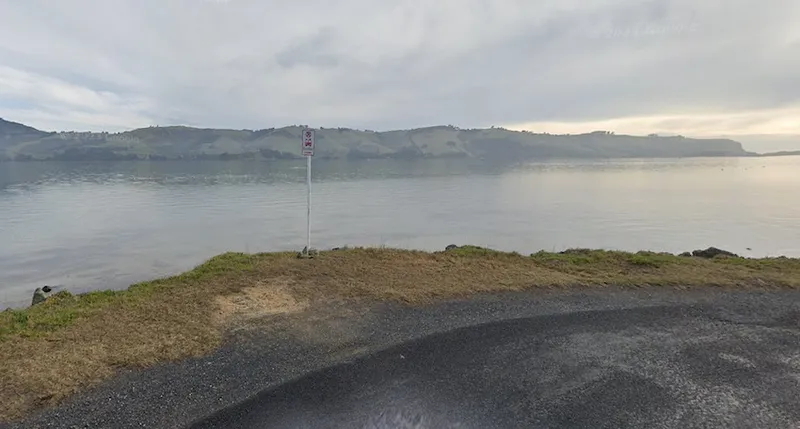
Leaving Harwood, we head back onto Harington Point Road. The sea and coast on my left is now farmland covered in gorse and scrub, with a few cows scattered across brown paddocks. We overtake a slow-moving front end loader with its bucket filled to the brim with carrots, and reach Otākou, where the water is shallow and crystal clear. As you look north, Aramoana spit is tantalisingly close across the harbour, with snowcapped mountains beyond.
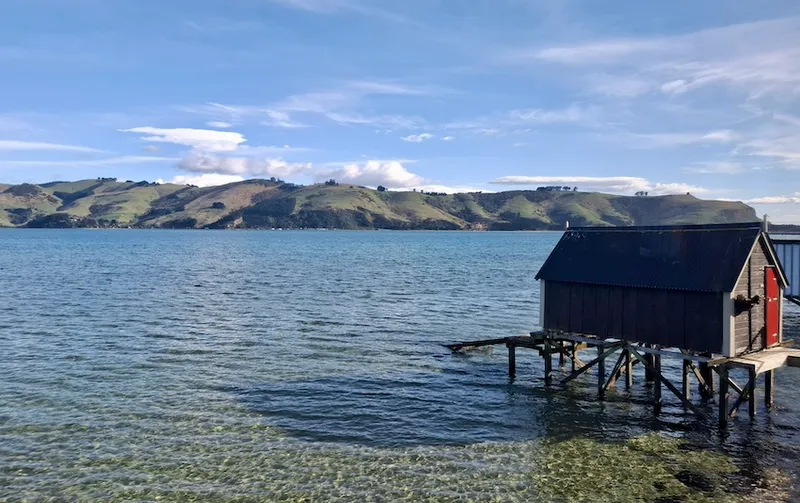
As we round the corner to see the golden Harington Point and Te Rauone beaches, my journey is almost over. Several small homes and cribs are scattered along the road, which ends a few kilometres further up the hill at the Pukekura Tairoa Head nature reserve, home to the only mainland albatross colony in the Southern Hemisphere, as well as kōrora little blue penguins at nearby Takiharuru Pilots Beach.
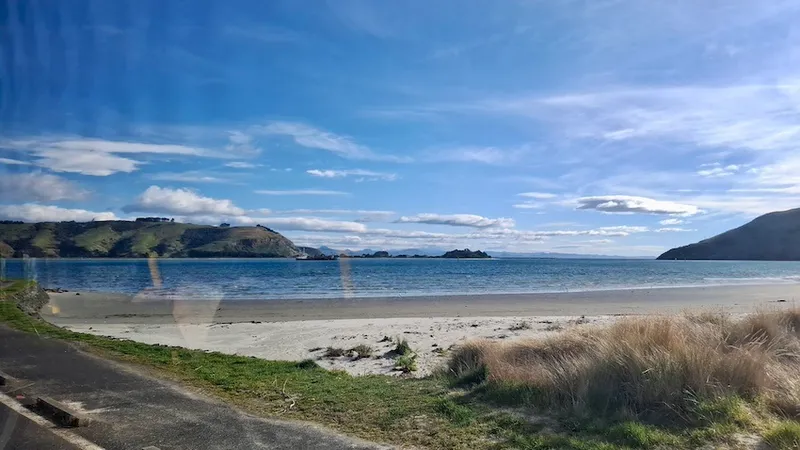
Exactly one hour and one minute after the bus departed from Dunedin’s bus hub, we reach the end of the most scenic public transport route in the motu. This trip was about the journey rather than the destination (no offence intended, Harington Point, I really like your playground), but at the corner of Pakihau Road and Harington Point Road, I’m tempted to disembark and spend the next six hours sitting on the beach in the sun. I have been transported to another world, one I believe other people like to call “nature”.
But before I have a chance to move out of my seat, the bus does a quick u-turn. This most scenic bus route may also be the most efficient in the country. The driver picks up a passenger, and the three of us head straight back into town.
Details: Dunedin’s number 18 bus runs on weekdays every 30 minutes from approx. 7:30am-9:30am and 3:00pm-5:30pm, and every 60 minutes during other hours, including a late service on Fridays. Weekends run every 60 minutes from approx. 8:30am to late evening. It travels to Harington Point twice a day. An adult bus fare is $2.00 with a Bee Card, $3.00 cash (prices will increase on September 29, 2025).

Tara Ward
Tara Ward has written about television and culture for The Spinoff for several years. She lives in Ōtepoti Dunedin, where she tries to avoid walking up hills.


