Shanti Mathias talks to disability advocates about what should be on the agenda for newly elected councils.
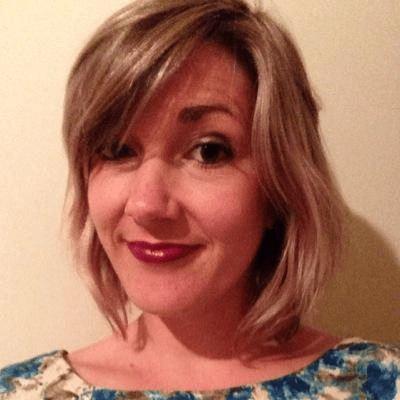
Kimberly Graham spends a lot of time noticing things many people simply step over. Footpaths bubbling with tree roots or a mobility parking spot without a kerb cut to allow a wheelchair to roll onto the footpath. The legislation that governs these choices is her bread and butter as an advocate with Access Matters Aotearoa, where she focuses on national issues about making places accessible. Graham is running for Auckland Council’s Devonport-Takapuna Local Board in the 2025 elections, training that attention on accessibility in her own neighbourhood.
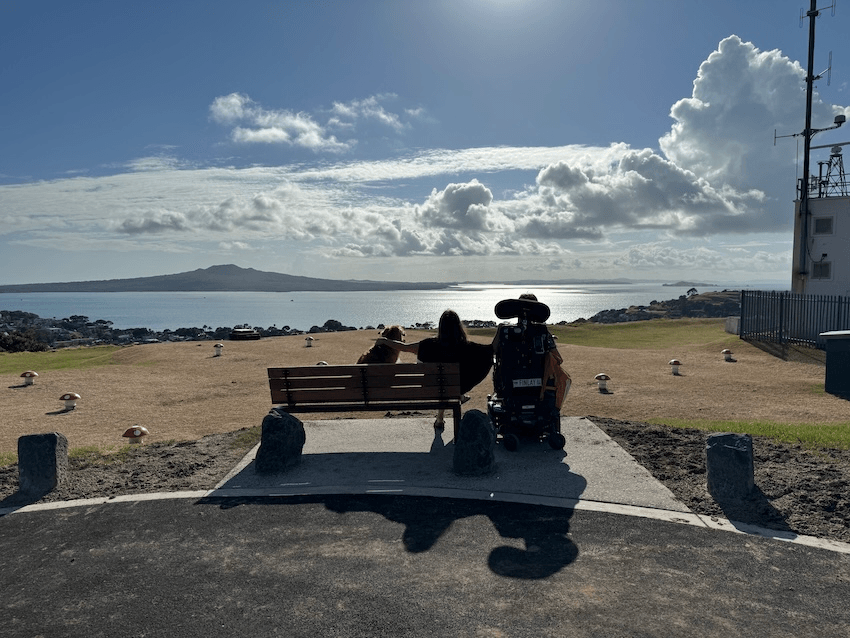
“I see so many things that don’t even meet the building code,” Graham says. But she wants access to go beyond that. There’s a long list of areas a local or community board can influence, and a long list of places where that standard hasn’t been met. “In Milford there’s a new toilet facility and playground, but they forgot a footpath to connect them. There’s no way to get to the toilet without going out on the road,” Graham points out. She’s noticed a retirement village with no smooth footpath to the bus stop, essential if you’re using a walker or a cane. When new park benches were installed on Takarunga, her local maunga, she advocated for a concrete pad so someone on wheels – like her son, who uses a power chair – could sit next to others enjoying the view.
“Everyone running for local board says the same thing: fix this, fix that, we need more sports, we need more of that,” Graham says. “No one was talking about disability, but this space is for everyone.”
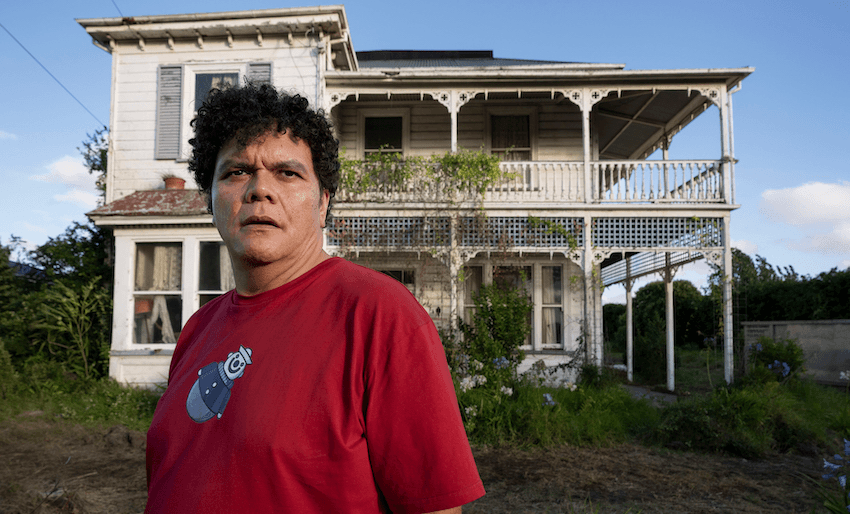
“Council is in every aspect of our lives,” says Vivian Naylor, an access advocate based in Auckland. She has worked with developers, architects and councils, ensuring people of all abilities can access venues, transport and events. “Sometimes I look at a finished project and see something so glaringly stupid – who thought this was OK?” One example is tactile tiles, the ones with bumps to let people with visual impairments know where the road ends. She points to a transport development that included stainless steel tiles, since the standard yellow ceramic was considered ugly – but the metal was slippery and dangerous, and had to be replaced by yellow. “When they don’t listen to us in the beginning, then have to change things out later, that costs money,” Naylor says.
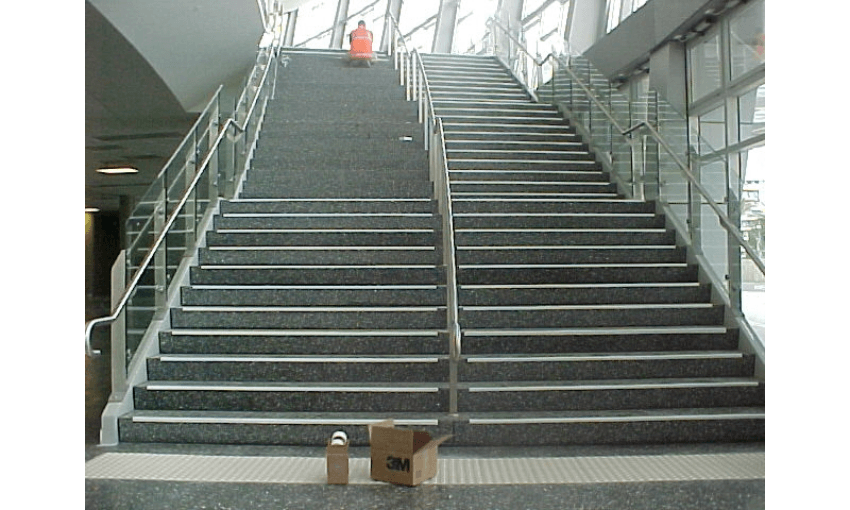
To Naylor, and other advocates, it’s frustrating that accessibility isn’t always consistent between projects. “It’s really soul destroying, knowing money is tight, and yet we are constantly reinventing the wheel,” Naylor says. She sees that part of the issue is a lack of communication between parts of council: what one local board does might not be replicated elsewhere, and accessibility reports are commissioned then not referenced when it’s next time to design a pool or library. “Once these things go in, they’re there for a long time.”
The Disabled Persons Assembly is a nationwide group which, among other functions, coordinates to make sure disability is being considered as part of regular council process like annual plans and transport plans. Chris Ford, based in Ōtepoti, is DPA’s policy coordinator for the southern and central regions – all the councils from Waikato southwards.
“We want to see councils and councillors be part of the process developing resources to improve access – in parks, public transport, housing,” says Ford.
Many people with disabilities rely on council services like public transport more – blind and low vision people cannot drive, so public transport is a key option for independent travel. (Total Mobility, which subsidises taxis for people with disabilities, is another option.) Yet in some of the areas where more elderly and disabled people live, there is less public transport – like the suburb of Aranui in Christchurch. “The central government has started to retreat from public transport,” Ford says, referring to increased fares that are a result of councils having a higher margin to return to the government. “That means there are fewer disabled people able to move through their communities, impairing their ability to participate in community life.”
Councils play a key role in implementing – or not – principles of “universal design”, an ethos where spaces and buildings are made to cater to all people, at different stages of life. This shifts the focus from just disabled to something everyone can benefit from. “What I want to bring to the local board isn’t just for people with disabilities,” Graham says. Someone she met at a campaign event is an able-bodied skateboarder who skates to work. “He wants rollability – the designs we want work for him,” she says.
Similarly, Naylor thinks about the choice to use bark for playgrounds instead of smooth rubber tiles. “Disabled kids can enjoy it, but it might also be the difference between their grandparent being able to take the kids to the playground without worrying that they can’t walk on the uneven surface.” After all, she points out, “almost everyone in their life at some point will have a disabling condition” – whether that is fatigue requiring stair handrails following cancer treatment or shallower steps making it possible to get into your council housing after breaking your ankle.
Accessibility isn’t just about physical infrastructure. Some councils have started issuing documents in Easy Read formats, meaning plans are rewritten in simple, short sentences, with supporting pictures. This makes it easier for people with learning disabilities to engage with the council – and can also be useful for anyone else wanting to make sense of documents which can otherwise be technical and filled with dense type. DPA and other groups have pushed for all council websites to be accessible, which can include image descriptions, ensuring contrast between colours used in different parts of the site, and the ability to navigate the website with a keyboard as well as a mouse.
Councils are also involved in organising civil defence and responding to emergencies. Ford wants elected members and officials to ensure disabled people, especially those with limited mobility, are part of evacuation plans. “That’s one big thing we’ve learned from Cyclone Gabrielle and the Auckland Anniversary floods – disabled people need to be prioritised for evacuation, there needs to be a plan for support animals, especially as we move to a future where climate change makes natural disasters worse.”
While accessibility is important, councils also need to remember why including disabled people should be a default. “We have so much loneliness, people confined to their homes – of course you’re not going to leave your home if it doesn’t feel safe,” Naylor says. “If councils can get things right, they can be an example to everyone else.”
Ford is encouraged by the new South Dunedin library and accessible council housing in Ōtepoti, which has meant vulnerable disabled people have more places to live. He wants new councillors to represent all of their communities. “Disabled people deserve to have the opportunity to be an active part of their community,” he says. “The best way to do that is through accessibility.”