PSA: Your VHS tape collection could be about to die

David Elder is Aotearoa’s custodian for decrepit videotape formats (Photo Chris Schulz, with design by The Spinoff)
It turns out storing that box of videotapes in your shed wasn’t a great idea – and now you’re up against the clock if you want to save them.
David Elder runs his fingers across ancient machines, touching dials and adjusting knobs. They have nicknames – often a muppet, like Kermit, or Animal. Stickers give each a status report – “Heads OK… playback good,” says one – but they’re faded and peeling, so Elder smooths them down as he reels off memories. “We were really sad when we thought we had to put Fozzie Bear down,” he says. “But we managed to recover him.”
These machines are videotape players, and they’re not museum pieces. Each is kept alive thanks to a rotating roster of retired technicians who Elder calls on when they break down. Like Elder, they’re obsessed with his collection of 127 machines, worth $100,000 in their prime but now given away or chucked in skips. Elder and his team treat them like precious taonga, so beloved one technician “forgets” to file his invoices. “He loves fixing them,” says Elder. “It’s his joy.”
Elder needs these machines operational because they’re his essential work tools. In his air conditioned office off Rosebank Road in Tāmaki Makaurau, he and his small team at DAMsmart spend their days restoring the past. Hundreds of videotapes on old, discarded, long-forgotten formats arrive in boxes and Elder’s machines help recover their contents. If salvageable, those tapes – from U-matics to Digital Betacams – are converted into something more useful: digital files.
It is repetitive, laborious, time-consuming work. Some collections are massive. Entire archives from the TAB and Sky Sport have landed here, requiring years of digitisation work. One collection ran to 30,000 tapes, each needing to be numbered, filed and assessed. If stored correctly over the past few decades, they’re probably OK for digitisation, Elder says. If not, they may be covered in dust and mould, requiring extensive cleaning.
That’s why The Spinoff is visiting today. Elder has a warning: one particular beloved, nostalgic home video format isn’t going to survive much longer. If you’re among the many that have a box of VHS tapes stashed in a spare room, shoved in a box in the garage, or pushed into the attic space, you need to read on. It’s time to pull those tapes out to see if the footage on them can be saved, before it’s too late.
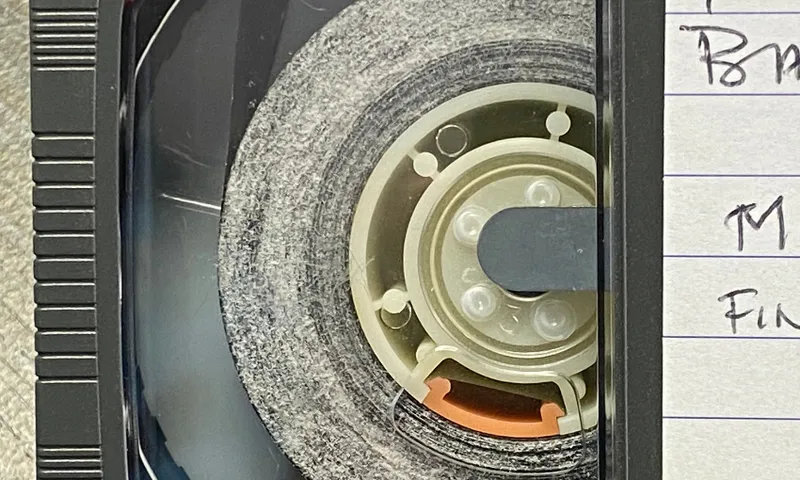
For many, they may already be lost. The evidence arrives at Elder’s office frequently. He knows instantly when a tape has turned bad because he can smell the mould. “It’s dirty and dusty and damp,” he says about that musty odour. His team wears masks, cracks the tapes open, then they use small vacuum cleaners to assess how damaged they are. For some, the tape breaks; others simply fall apart in their hands. “This is triage,” says Elder of his tape cleaning equipment.
Launched in 1976, VHS (it stands for Video Home System) ushered in the home recording era. They became lounge-room staples across the 80s and 90s, recording favourite TV shows on tapes labeled with marker pen then piled next to VCR (video cassette record) machines. That meant catalogues of Star Trek, The X-Files, or WWF wrestling matches. For those who could afford the equipment, it also meant home movies containing precious memories.
Those formats were surpassed by DVD, then Blu-ray, and now, the streaming era. They’re properly ancient, and more VHS tapes than ever are coming to Elder in bad shape. Elder cites the 2015 study Deadline 2025 that gave VHS and other “magnetic media” 10 years to go. That deadline was a year ago, so it is now end times. “VHS is as close to death as you can get,” he says.
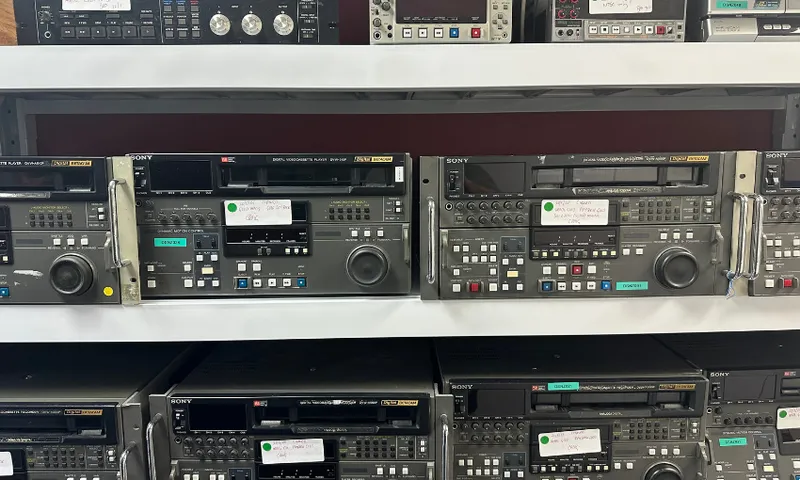
Elder has spent a lifetime becoming Aotearoa’s custodian for decrepit videotape formats. After failing school exams in 1978, he blagged his way into a role at TVNZ. “I fell in love with it the moment I walked in the door,” he says. He’s stayed in the industry ever since, clocking up stints at Sky Sport, Mediahub Australia, and the BBC. “I pushed the button that launched TV3,” he says, proudly pulling out the photo to prove it. Was the button red? “There’s a pause as he ransacks his own archives. “Orange.”
He’s spent the past five years digitising our country’s ancient TV archives out of DAMsmart’s Avondale office. No job is too big. When the TAB asked Elder to restore their entire collection, he said yes, watching on amazed as he unearthed footage of the Queen’s visit to Ellerslie Racecourse in 1953. “That blew me away,” he says. His biggest job was Sky Sport’s archives – that’s 30,000 tapes, including every All Blacks and Warriors game, “everything they have” up until they went digital in the mid-2000s. It took more than two years.
The cleanest tapes are those stored in air conditioning which minimises the mould risk. Some aren’t looked after quite as well. Elder tells a story of 141 master tapes for a local children’s TV show stored for 20 years in a swimming pool filtration room. “We rescued 140 of them,” he says, proudly. “We had to open up every single one and hand clean the tape.” Will he reveal how much a job like that costs? “No.” A lot of money? “Yeah.” (He also resuscitated the VHS tape for what is believed to be the last copy of Zane Lowe’s famed 1996 interview with late rocker, Jeff Buckley.)
Right now, the restoration business is a little lean. Elder’s waiting for a couple of large jobs to land, one involving nitrate footage – an incredibly old, and flammable, video format. He’s not bored though, with fingers in many other media industry pies. He mentions things that are off the record, pointing to cameras recording our every move as proof of their importance, then reels off contracts his other companies have with film studios and streaming services.
After our chat, Elder is attempting to restore something personal: 40-year-old footage of the time the BBC presenter Phillip Schofield crashed Elder’s director’s office with a live TV crew. This, his restoration work, is what he considers his most important job. Elder worries less about the footage that gets to him and more about that which doesn’t.
Where others see dusty rubbish, Elder sees possibility and, potentially, another piece of the puzzle that is Aotearoa’s history books. Those tapes could contain things no one has seen since they aired, crucial moments from Aotearoa’s televisual past. Elder’s ultimate goal is impossible, but he says it out loud anyway. “We’re hoping there won’t be any footage left [to restore],” he says.

Chris Schulz
Chris Schulz is a contributing writer at The Spinoff. He's an award-winning journalist from Tāmaki Makaurau who has spent 25 years working for local publications. His specialties include live events, pop culture, infrastructure and Aotearoa music.


