The cost of proving you’re poor enough

Photo: Getty Images, additional design by The Spinoff
On paper, the system had worked. In reality, the quiet erosion of dignity had taken a toll.
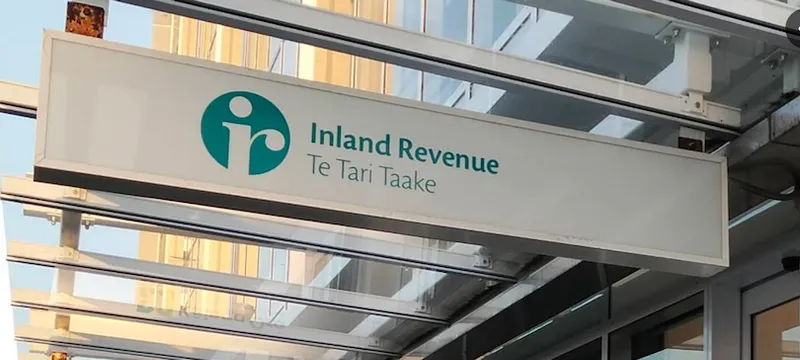
On May 1, 2024, Inland Revenue phoned to tell me my application for financial relief for the 2022/23 tax year – relating to a tax bill of just over $5,400 – had been approved.
The person I spoke to was kind. My taxable income for the year was just under $40,000, largely from a self-funded income-protection policy I had taken out years earlier while working in Australia, before multiple sclerosis narrowed my earning capacity. The policy had allowed me to remain financially independent for as long as possible, and meant that I had not required direct financial support from the state. That broader context appeared to be understood at the time.
She acknowledged that I would likely face the same issue the following year and suggested I begin making small payments towards it. “Even $10 a week,” she said.
And so I did. Every week. Religiously.
When my 2023/24 accounts were completed, the same issue arose and I applied for financial relief again. A year later, on May 22 – while Budget 2025 was being announced on my radio – the tone changed.
The call did not begin with understanding. It began with reference to something called the “tax integrity system”. The phrase was repeated with the confidence of doctrine. Integrity required consistency. It required review.
Then, as if caught in a time warp, the IRD representative began quoting from my February 2024 bank statement. I had not submitted that statement as part of a new application. The department already had it.
The transaction in question was a $339 payment to my dentist. “If you can afford to see a dentist,” she said, as though she had conclusively proved my ineligibility for relief, “you can afford to pay tax.”
For a moment I thought she must be joking. In February 2024 I had still been receiving income-protection payments. I had not been seeking tax relief; I had been seeking relief from toothache. But in the architecture of the system, time collapses. Context evaporates. Only transactions remain.
What unsettled me was not the amount, but the resurrection. A 15-month-old payment had been retrieved and repositioned as evidence – not of debt, but of capacity. The system had reached backwards in time to reinterpret a moment of basic healthcare as moral surplus.
I was then introduced to Inland Revenue’s Household Expenditure Guide (HEG) – an assessment model based on regional averages. According to HEG, I had a surplus. While HEG is based on data from Stats NZ’s 2023 Household Economic Survey, I suspect the concept was formulated in simpler times – dissociated from a modern world defined by a cost-of-living crisis, falling hardest on those with fixed incomes, chronic illness, or the least room to absorb error.
HEG’s “surplus” conclusion rested partly on the mistaken belief that I was drawing from an ongoing overseas investment fund, rather than from my self-funded, Australian-based insurance policy that was due to expire. I had explained the distinction repeatedly and provided letters to support it. Within the framework, the difference was immaterial. Income was income; duration incidental.
On paper, I was solvent. In reality, my income protection was ending, my rent had risen, I was living with a progressive neurological condition, and I was approaching retirement age with no property and, after two hardship withdrawals, roughly half the average KiwiSaver balance for a woman of my age – part of a persistent gender gap that leaves many women approaching retirement with significantly less security than men.
When I mentioned that I had followed last year’s advice – the $10 a week, every week – this was barely acknowledged and the “tax integrity system” was again cited as a compulsory process that had to be followed.

I later discovered that in 2024, Inland Revenue had rolled out a tougher approach to managing overdue debt. The rhetoric around “integrity” and a renewed focus on automated risk triggers meant ordinary compliance signals were interpreted as evidence of capacity rather than context. I had narrowly fallen into the category requiring provisional tax payments in advance – even though it was for a year in which my insurance income would end and I would turn 65. Integrity, it seemed, was dynamic.
I was advised, without irony, to approach the Ministry of Social Development (MSD) – another government department – to assist me in paying IRD. At the same time, updated income information had been shared across agencies under the new compliance framework, embedding Inland Revenue’s assessment of “overseas income” into MSD’s system and affecting my access to disability support, even after the payments had ceased.
This is how systems begin to look less like safety nets and more like circular accounting exercises.
Tax systems exist to ensure fairness, prevent evasion, and protect collective resources. In principle, I agree with all of this. I have paid tax throughout my working life, including on income-protection payments that were not taxed at source.
The system, it seemed, had taken on a life of its own. It becomes the quiet recalculation of a citizen’s life in reverse. Prudence becomes excess. Suspicion becomes the default setting.
I began to narrate my own spending defensively. Groceries had to be bought “on special”. Visits to health professionals felt strategic. I treated my bank balance like a crime scene, careful not to leave fingerprints – afraid to buy anything that might trigger another interrogation. A thousand dollars in an account – briefly – became something to explain rather than evidence of prudent budgeting.
And yet, inside the machinery, there were people.
One official later apologised three times during a single call. He acknowledged that my situation was “a lot to have to cope with”. He could not alter the framework, but he could soften its edges. For a moment, scrutiny gave way to recognition. That shift felt radical.
When the decision finally arrived – financial relief approved – it did not feel like generosity. It felt like acquittal. My hardship had been measured, interrogated, recalculated, and found acceptable.
On paper, the system had worked. What does not appear in the metrics is the cost of proving oneself worthy of discretion. The hours spent clarifying. The fatigue of repeated explanation while living with a disabling autoimmune disorder. The quiet erosion of dignity when integrity is defined externally and applied retrospectively. Power does not need to be loud to feel absolute. It only needs to keep reinterpreting your circumstances.
The only true counterweight I encountered was human judgment – a pause in a voice, a private acknowledgment that the situation was unreasonable. Those moments were not part of the framework. They were deviations from it. Perhaps that is what resistance looks like now. Not the dismantling of systems, but the insistence that they remember who they exist for.
There is a cost to proving you are poor enough. And it is not always financial.

Claire Jewitt
Claire Jewitt is a writer based in Diamond Harbour. Her work explores contemporary life, community and resilience, often through humour and observation.


