Inner-city homelessness has become an economic emergency

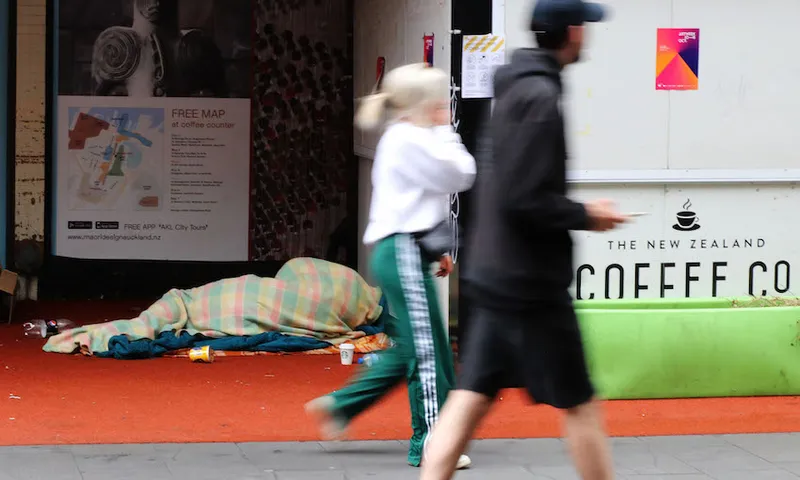
Homelessness is having a direct impact on retail spending in New Zealand cities (Photo: David Jensen)
The human toll of homelessness is visible, but new statistics show the economic one is just as devastating.
When you look at the story of cities over the past couple of centuries, some broad economic trends emerge.
The city starts as a port or trade hub for agricultural products. Then, there’s an industrial revolution and a wave of migration from the rural poor seeking manufacturing jobs. It’s great for the economy, but it creates new problems: overcrowding, pollution and disease, which put the future of the city at risk. Governments respond with massive investment in sewerage, environmental controls and suburban expansion.
The next great revolution comes from the service sector, as cities become hubs for office jobs. There’s a wave of migration from young, educated, upwardly mobile workers. Again, it’s great for the economy, but it creates new problems. This wealthier class of residents price others out of the housing market. In Anglosphere countries, this has coincided with a movement that restricted the construction of new housing on character/environment/heritage grounds.
When you have too many people competing for a small number of expensive houses, inevitably, some people miss out. The result is the relatively new phenomenon of mass urban homelessness. And just like the problems caused by the industrial revolution, this one requires a large-scale, concerted response, because it is jeopardising the future of our most productive centres.
A survey released this week by Auckland city centre business association Heart of the City found 91% of business owners thought rough sleeping and begging were harming their trade, while 81% believed the CBD was unfit to attract new people and investment. In a recent Wellington Chamber of Commerce survey, 12.5% of business owners thought crime and antisocial behaviour was the top barrier to their business succeeding.
And let’s be clear: when business owners talk about “crime and antisocial behaviour”, they’re not talking about gang wars, or mugging, or bands of pickpockets. They’re talking about homelessness. There’s some complexity to that claim: on the whole, city centres are among the safest they’ve ever been. The street community don’t tend to commit violent crimes; in fact, they’re more often the victims. But their mere presence has a huge impact on perceptions of safety.
It can sometimes be hard to see the impact of homelessness in the broader economic data, because homelessness is a disease of prosperity. It gets worse when cities grow wealthier. But there is clear evidence that visible homelessness can lead to reduced foot traffic and retail sales. People avoid places where they feel uncomfortable and unsafe.
New Zealand is in the middle of what prime minister Christopher Luxon likes to call a “two-speed recovery“. Rural areas are performing well on the back of high milk prices, but urban centres are lagging behind. The decline of city centres is a global post-Covid trend. Against the forces of remote work, online shopping and the general convenience of staying in, it’s getting harder and harder to convince people to live, work and play in city centres.
Housing minister Chris Bishop is fond of citing the statistic that doubling a city’s population increases the per-capita productivity by 15%. Growing our city centres is crucial to New Zealand’s long-term economic future, but right now we are failing. Between the 2018 and 2023 censuses, the two most urban administrative areas in the country, Wellington City Council and the Waitematā Local Board, both declined in total population.
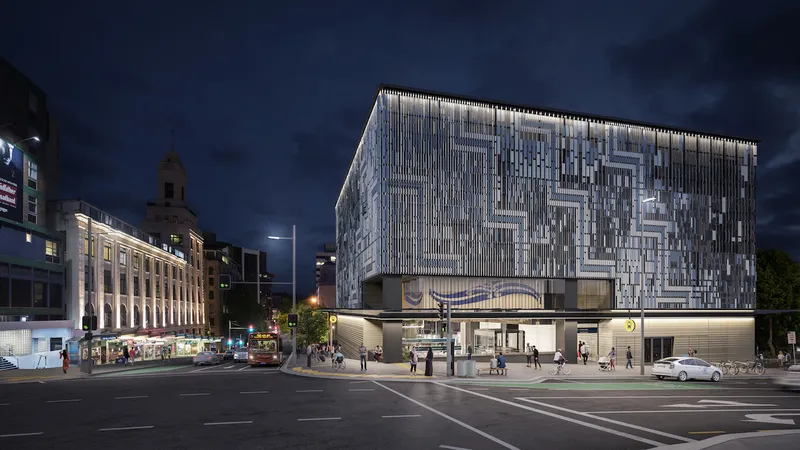
Councils are spending millions on street upgrades, pedestrian improvements and transit infrastructure in the hopes that it will attract more people to the city. But we’ll never realise the full benefit of that investment if people don’t feel safe. How many suburban mums would be happy for their 20-year-old daughter to move into a one-bedroom apartment on Queen Street?
This problem is only going to get worse. Homelessness takes root like a degenerative disease. The longer someone is on the street, the harder it is to get them back on their feet. If New Zealand doesn’t take decisive action soon, it could snowball beyond our ability to contain.
Homelessness has traditionally been seen as a social problem, supported by the welfare system and charitable services. It’s now reaching the point where we need to view it as an economic problem, a major hindrance to our national productivity and prosperity, one that justifies and requires a drastic, all-of-government response.
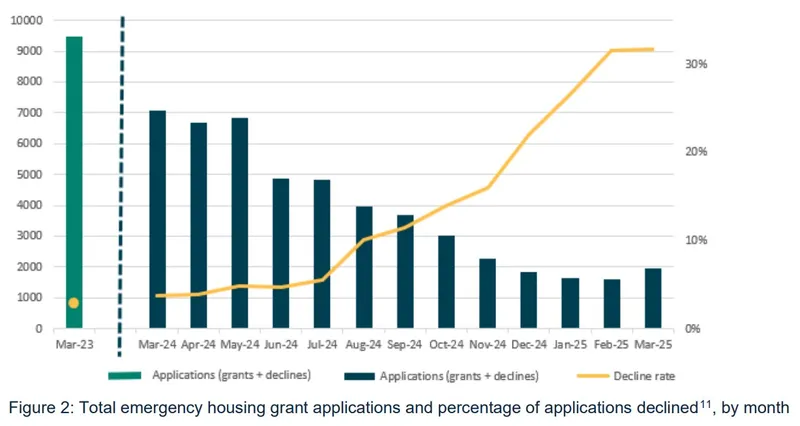
The past two governments have made good strides to liberalise zoning laws and allow more housing construction, but that’s a long-term, indirect solution to the crisis. Bishop’s recent scheme to guarantee loans for community housing providers is another step in the right direction. But other policies have been counterproductive: evidence suggests the government’s changes to tighten the gateway into emergency housing caused a spike in street homelessness.
Several business owners have called for tougher policing. That’s already happening; there are more cops, Māori wardens and council support staff patrolling city streets. But arresting people isn’t a very effective way of solving homelessness. There have been calls for more CCTV cameras and better street lighting. Some people have proposed strict bylaws to ban begging on Queen Street, Courtenay Place, or other premier destination streets.
The most extensively studied policy with the best record of reducing homelessness is Housing First, which provides immediate housing for chronically homeless people with wraparound support. New Zealand has adopted these schemes in several cities, but it is still treated as a relatively minor expense in the broader social housing budget; the government gave it $25 million per year over four years in Budget 2025.
Treating homelessness as the economic emergency that it is would mean spending significantly more on the solution. It could mean special legal powers to fast-track buildings that supply single-residency dwellings suitable for Housing First services. It could even mean compulsory acquisition of properties for those services. Whatever it is, it’s clear that we need to do more than we’re doing now. Our economic future depends on it.

Joel MacManus
Joel MacManus is a senior writer for The Spinoff. He previously worked at RNZ and Stuff, and began his career at Critic Te Ārohi. His writing explores the political, economic and cultural systems that underpin modern New Zealand. He won the 2025 Voyager Media Award for Best Columnist, Opinion or Critique.


