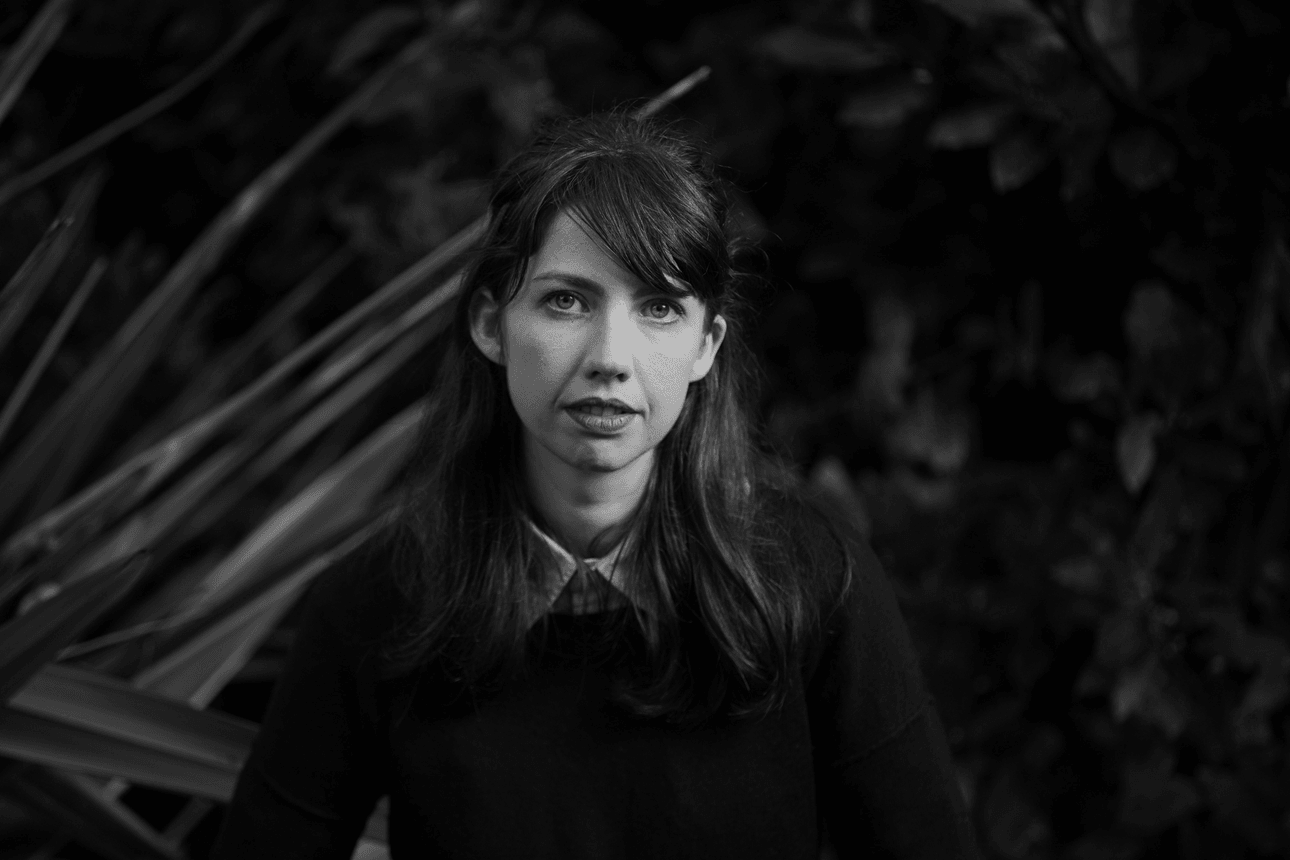

On the anniversary of the 2011 Christchurch earthquake, Shanti Mathias revisits her childhood stomping ground, now inside the red zone.
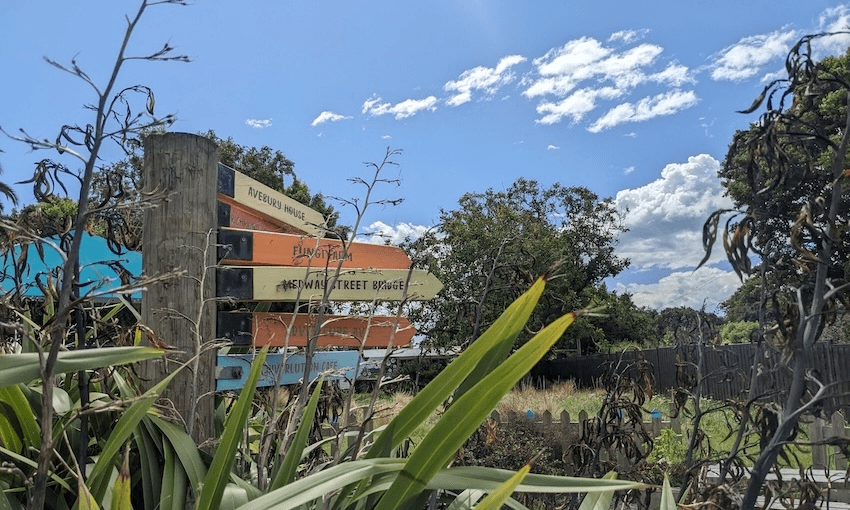
It’s nearly autumn in the red zone, and it’s not hard to find abundance. A bay tree is flourishing with leaves to flavour winter soups. A small tree is dotted with dozens of small pears. One apple tree has fruit so bright the red can be seen from 100 metres away.
Years ago, I read the book The World Without Us for an environmental science class. Author Alan Weisman travels to the Chernobyl fallout area and the Korean demilitarised zone to imagine what would happen to human infrastructure if we disappeared. It takes constant maintenance to keep roads smooth and houses upright.
Christchurch residents don’t need to go nearly so far. Walking through the red zone with a friend recently, we traversed unmarked streets looking for fruit trees labelled on Google Maps. It was strange to me how hard it was to navigate without the ticking numbers of letterboxes as points of reference. It took a moment to imagine the shapes of where houses had been, now they all blurred into one big backyard.

Before it was the red zone, one of those backyards had been mine. It was on a short street diverging off River Road. I know which landmarks I’d need to find it – there’s a little pump house just before the turn-off. Halfway up the street, two conifer trees sat beside the letterbox – but I’m not sure I want to look.
Moving in when I was eight, my memories of the house remain solid. Playing with my baby sibling on sunny days in the back garden, stirring flowers through water to make “potions” with my sister and our friend, walking to the Fitzgerald Ave intersection all by myself to get rosemary from a bush there for dinner. In autumn, I’d pick up chestnuts on the walk home, peel off the spiky case until the shiny brown seed sat in my palm. I would tuck them into a hollow at the base of the trees beside the letterbox, the hoard slowly getting bigger. As I’d read books set in European-style fantasy lands, I imagined squirrels would find the chestnuts, or that I’d return in 50 years to find a stand of chestnut trees where the driveway had been.
When my family left Christchurch and moved back to India, I thought that the house by the river was a place we’d live in again. Instead, about two years later, a teacher at school asked casually at lunchtime if I knew that there had been an earthquake in Christchurch. “Isn’t that where you’re from?”

Now I’m an adult, I can start to grasp how much was lost in the earthquakes. But when you’re 11 and thousands of kilometres away, it’s hard to understand. A few years later – I was maybe 13 – we came back to Christchurch for a visit and went to look at the 185 empty chairs installation, artist Peter Majendie’s effort to represent the lives lost on February 22, 2011. But when you’re that young, there are limits to the loss you can comprehend. I remember, instead, focusing on the empty space where the house had been. That night, there was an aftershock. It sounded like someone was trying to kick down the house; a reminder that walls aren’t as permanent as they look.
I didn’t have to deal with insurers or paperwork, liquefaction or dust, years of disruption, or the tragedy of loved ones lost, like so many people did. But the earthquakes did change how I thought of home, just as they did for hundreds of thousands of other Cantabrians.

Fourteen years after the earthquakes, and 16 after I had left as a child, I returned to live in Ōtautahi. A whole new central city had scribbled itself over my childhood memories. No more Centennial Pool, where joining the “Marlins” level swim classes had felt like such an achievement. No more parking garage to bike past and scream into to hear the echo; terraces around the Avon, to sit on while eating Rollicking Gelato instead. No vertical slide at Science Alive, but the promise of new hydroslides sticking out of Parakiore like octopus tentacles.
I felt like I was part of a trend: so many people were moving to Christchurch! There were dozens of articles about it, documenting apartments being built in the city centre, projected population growth, affordable housing. Words like “vibrant”. Phrases like “capital of cool”. I’ll leave the question of why houses are cheaper in Christchurch than other major centres of New Zealand to economists, but it seems hard to think the earthquakes, and post-earthquake construction, isn’t a factor.
Fifteen years after the earthquakes, and the word “Christchurch” does not always have to be followed by “earthquakes”. This city is a good place to live, partly because so much public money and community effort went into (and still does) making it so. In the red zone, the Riverlution community garden and cafe sells ice-cream made from the fruit trees; quince, purple peach.
Without cars, the slow movement of the river is peaceful. Walkers, runners, cyclists and scooters fill the path. Some friends have moved nearby: proximity to the red zone makes a flat more desirable.
The ghost of pre-earthquake Christchurch still lives here. There are thousands of images of intact cathedrals because the city council still uses the building as a logo. Meanwhile, Cathedral Square contains flat, empty tiles and walls around a damaged building waiting to be restored.
Sometimes my childhood memories try to sketch buildings onto the big empty plots in the central city. Am I disoriented, or just rebuilding what used to be there?
The red zone is a pleasant place to visit. I leave with some fruit and a photo of gawky cygnets, sleeping adorably next to a parent swan by the river. Despite all the abundance, it’s a place to return from, not a place to return to. Home to swans, but not people.