One position, 1,200 applications: A snapshot of New Zealand’s job market right now

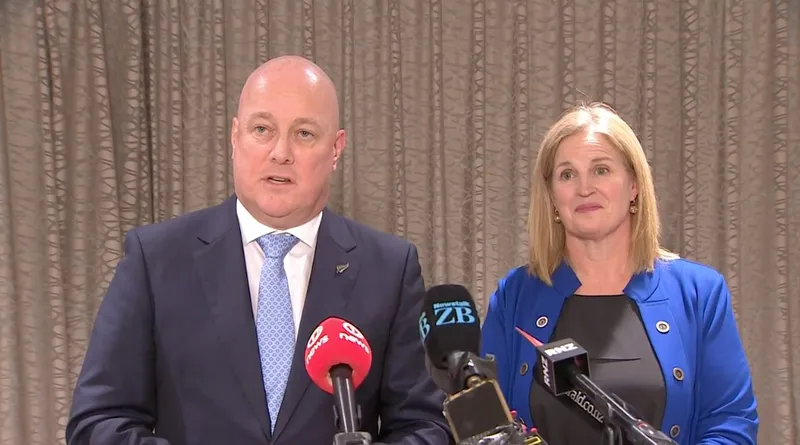
Image: Gabi Lardies and Tina Tiller.
Those looking for jobs say times are tougher than ever. Mountains of applications are being ignored, job listings are drying up and Australia is calling.
“I feel like a small, dumb worm,” says Jean*. After seven years of working a string of “dead-end” jobs, she returned to study in her mid-30s to upskill and change her career path. She finished an honours degree in October and has been looking for work ever since. In November, Jean was “hard out” applying for jobs. Then December came around and “there was nothing on Seek – there was fucking no jobs”. Job listings cropped up again in January, and Jean began to apply for three jobs a day – in her field and beyond. “I tailor my CV to each one and all the cover letters are tailored,” she says. There have been a couple of interviews but “so many fucking rejections” – many that said they’d had hundreds of applicants. Worst of all, some applications have gone completely ignored. “It’s really hard,” she says, “maybe impossible.”
For Olivia, “there are zero jobs to apply for”. She has a masters in her field – accessibility and planning – but the few opportunities she sees advertised are only in senior roles, while her experience puts her in the intermediate band. She left a job halfway through last year to go traveling with an informal understanding that “there would be a job to come back to” because so few people are qualified for her role. When she got back in October, she was told that disability funding cuts meant there was no work and no way to employ her. Now, she’s on the benefit and trying to rustle up any work she can get.
Jean and Olivia are among about 156,000 unemployed people in New Zealand – unemployment reached the highest level since 2020 in the final quarter of 2024, at 5.1%. In December, the quarterly report on job advertisements from the Ministry of Business, Employment and Innovation read “advertisements fell in all regions, all occupations, all skill levels, and in all industries, except education”. The most recent data, from January, continues this plummeting trend. Forecasters are expecting the rise in unemployment to continue until halfway through this year.
Liza Viz, CEO for Beyond Recruitment, says that while there are always peaks and troughs in the job market, this downturn is worse than what was seen as a result of the 2008 Global Financial Crisis because the pressure has come from both the public and private sectors. The “really buoyant times post Covid” are over, the Covid lag caught up with us, the government changed and cut the public sector by more than 9,500 people. At the same time business confidence declined. For most of last year, Viz saw a “freeze in hiring” and a “significant increase” in redundancies. When Beyond advertised an administrative and customer service role late last year, there were about 1,200 applications in two days. This is not normal, Viz says. “There's no way that you can deal with that type of application level.”
Amidst poor polling in early February, Christopher Luxon said he knows it's “been tough” but that there has been relief and “some green shoots” with interest rates lowering, tax relief and rising levels of business confidence. “That’s all good,” he said, not mentioning employment. A week earlier, further sanctions for job seeking beneficiaries were announced – job search reporting and upskilling. It's not completely clear what the required weekly “job-search activities” will be, but job applications seem likely. But more job applications doesn’t mean more employed people, it means more job applications. Seek data shows that last year, the number of applications per job was up 32% compared to 2023 and that year was up from the previous too.
Though the requirements won't officially come into effect until later in the year, for Olivia they have arrived. Her case worker told her that he is preparing his clients for the “heightened rules”. She is required to meet him every 2-4 weeks with proof of all the jobs, “at least six a week”, that she has applied for. “This can be difficult when there's no jobs to apply for,” she says. “I've just been applying for ones I have no chance of getting.”
Theo spent all of 2024 looking for work after being made redundant in late 2023, and describes the experience as Kafkaesque. On the government’s careers website, the job opportunities for his role are firmly in the green category – “good” – as apparently there is “high demand” for his skills. Theo had five years of experience and had worked on projects he was proud of. He didn’t expect to have trouble looking for work, but it was “slim pickings”. Sometimes, suitable jobs came up and he would look at the job description and think, “that's pretty much me. I've done all these things” and yet the responses were often a generic emailed rejection. He started to feel worthless, and says he “couldn’t make sense of it – it was such a bizarre twist of fate – why?”
Eventually, Theo “got lucky” and found a job, which he started in January. The salary is “a little bit less” than what he was earning before and it's a short term contract until later in the year. He is hoping they will extend it. “If they can't offer me a job, I'm gonna have to go back to the job hunt, and it's gonna suck,” he says. “I don't want to look at another job app, write another cover letter. Oh god, it's like nightmare fuel.”
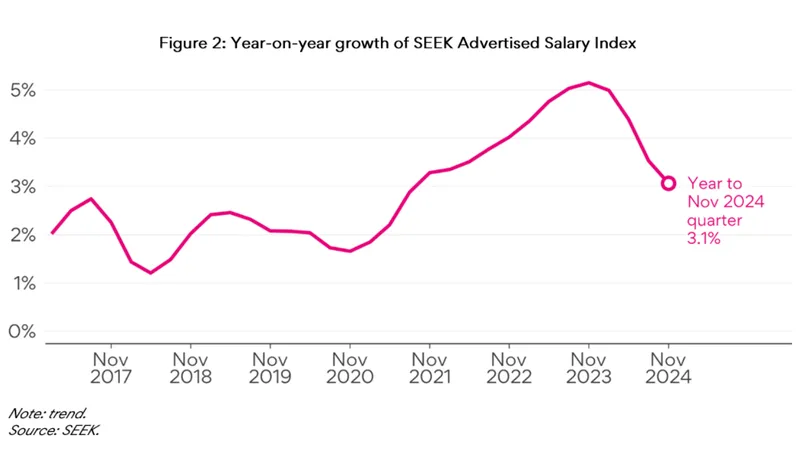
Bridget Clarke, the Wellington senior director at recruitment firm Robert Walters, says that the dire job market affects those in work too. When people’s team members get made redundant, their roles expand and it can lead to burnout. “Who's holding the business up?” she asks. On top of that, pay rises are down and inflation is up, so “people are having to do more work for less money”. Robert Walters’ 2025 salary survey found that just 10% of New Zealanders believe they are earning what they are worth and being paid fairly. In this kind of environment, “people get resentful,” she says. “It's all just a bit of a spiral.” The survey also found that 67% of employees are planning to move overseas, with higher salaries being the main driver. Of those planning to relocate, 42% are looking to Australia.
Clarke says that “we always see the brain drain with the grads… but typically speaking, they bounce back.” What she is seeing now is highly qualified and skilled individuals leaving – “it's the muscle that we're starting to lose”. Migration data from Stats NZ shows that the biggest increase in departures in 2024 compared to other years was in people aged 25 to 46 – that's the working muscle Clarke is referring to. She says experienced seniors of the workforce are selling their houses and moving overseas with their children – “they’re not going to come back. And that's scary.”
She expects that later this year, businesses will be looking to hire, and there won’t be enough candidates. Clarke thinks that the job market will return to what it was like in 2022 when there was “a war for talent” meaning salaries and contract rates “skyrocketed”. As an expert in supplying the public sector with talent, Clarke can’t help but wonder, “was it all worth it? Are these cuts worth it? We still need the public sector to be able to deliver.”
Jean, who has “so many fucking bills coming out my ass because of being so broke” is now looking at jobs across the ditch. “There is just a fuck ton of jobs in Australia where the pay is like 30 grand a year more,” she says, and a friend from her programme got a job there “without even trying”. Jean is reluctant to move because of her parents’ ages but if there’s no job leads here by the end of the month, she will be off. “I just feel like New Zealand really fucking sucks right now.”
*Names have been changed.

Gabi Lardies
Gabi Lardies is a contributing writer and former staff writer at The Spinoff.


