


Would a school lunch meet the NCEA level 1 standard in home economics? Former teacher Sue Parkes delivers the bad news.
Recently, my grandson brought home a school lunch. As a former home economics (food & nutrition) teacher, I couldn’t help but assess it through a professional lens.
I started with a simple question: would this meal meet the standard of a quality applied nutrition and practical lesson? More importantly, would it demonstrate the knowledge and application required for a student to achieve at Level 1, NCEA?
Let’s start with the Ministry of Health’s healthy plate model. It says a balanced meal should be a quarter protein, a quarter carbohydrate and the remaining half should be vegetables. Of course, we’re all different ages and sizes, so portions are guided by the hand model. That means one palm of protein, one fist of carbohydrate, and two to three handfuls of vegetables in different colours.
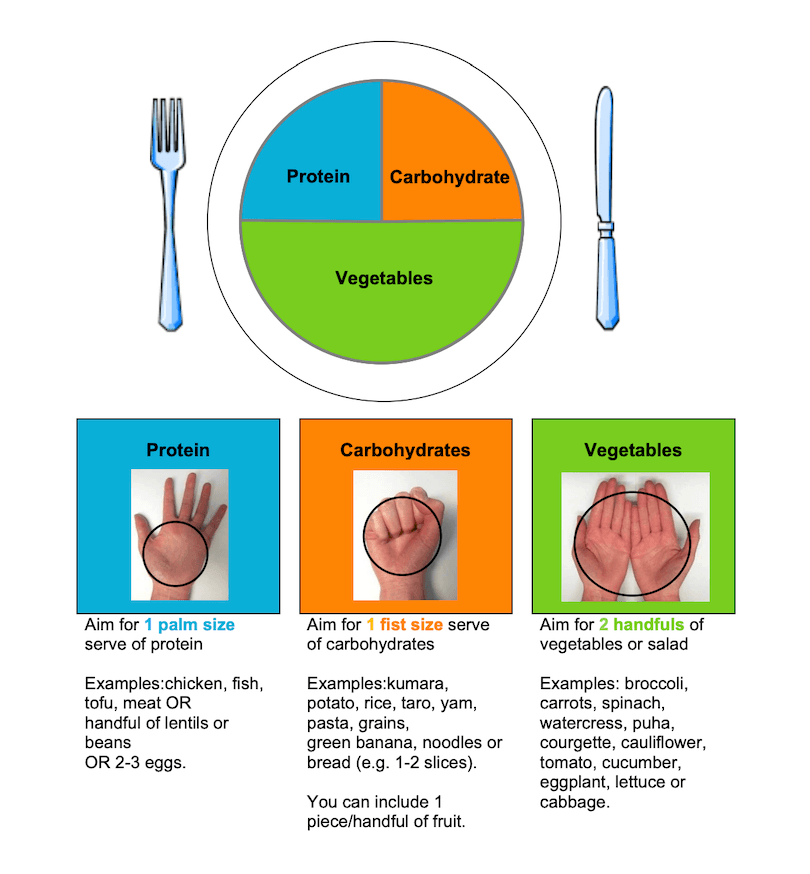
To reach achieved at NCEA Level 1, a meal should meet these proportions. To reach excellence, however, students need to demonstrate not only correct portions but also a variety of colours, textures, and flavours to ensure a broad range of micronutrients. The dish should also be visually appealing and age appropriate.
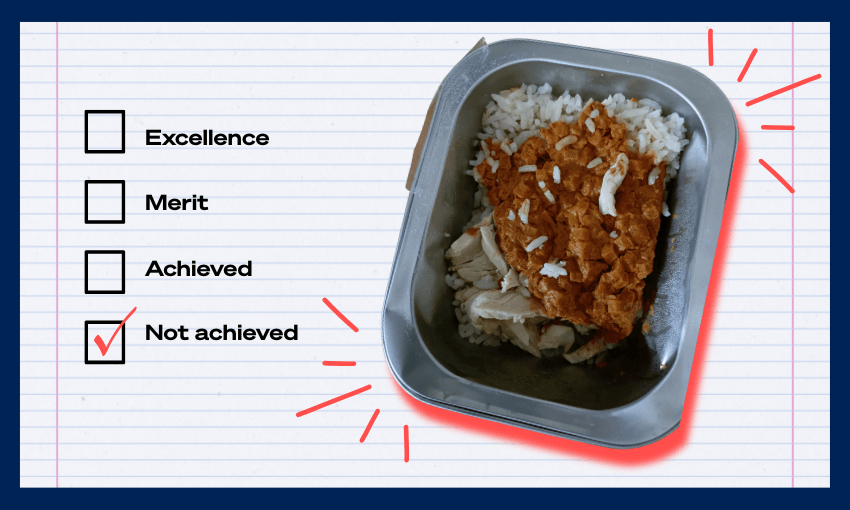
So, to my grandson’s lunch. There was a palmful of protein in the form of finely diced chicken, two fistfuls of white rice and a sauce provided moisture and colour. On closer inspection, I spotted tiny carrot pieces in the sauce. The flavour was bland but appropriate for a five to six-year-old child. My grandson ate most of it, saying the flavour was “OK”. He left some dry rice.
Time to assess, and I’m afraid it’s bad news: I would mark this meal not achieved. While the portion of protein and quantity were appropriate for the age group, the meal failed to demonstrate sufficient vegetable content, colour diversity, fibre, or the micronutrient balance required to meet Ministry of Health guidelines or NCEA Level 1 expectations.
If the school lunch provider was a student, I would give feedback: The finely diced chicken is well prepared and suited to the age group. The portion size is appropriate, and the mild flavour suits diverse cultural backgrounds. Replacing white rice with brown rice would significantly increase fibre and micronutrient intake.
New Zealand guidelines recommend five or more servings of vegetables a day. A main meal at lunchtime should include at least two to three servings. A medley of finely diced vegetables, such as carrots, leek, yellow beans, cabbage, spinach, or broccoli would provide essential colour range and phytonutrients or natural pigments that make vegetables so colourful, have different protective qualities, with different colours giving different health benefits.
Vegetables fall into five colour groups; red, orange/yellow, green, white/brown, and blue/purple, each offering different protective health benefits. Where possible, skins should be retained, as many micronutrients sit just beneath the surface. Simply put, a high intake of vegetables (raw or cooked) is the cornerstone of a healthy diet – you cannot eat well without them.
If I was teaching the school lunch provider (or maybe, really, the Government), I’d be tempted to do more than just mark its work and give a little feedback. I may well invite them for a bit of a chat. I’d tell them the 2025 New Zealand Health Survey shows that the proportion of people meeting vegetable intake guidelines had declined over the past year, from 9% to just under 6.8% in adults and from 8.6% to 5.8% in children aged two to 14 years. That reality makes the nutritional role of school lunches more critical than ever.
Then I’d ask, why are our children being served lunches that do not meet Ministry of Health nutritional guidelines? School lunches are not just about filling hungry stomachs; they are daily, real-world lessons in what healthy food looks like.
Perhaps I’d really get stuck in: School lunches offer a powerful opportunity to model healthy eating in practice. When children are served meals that fall short of nutritional standards, we send mixed and confusing messages about what healthy food actually looks like. We entrench poor dietary habits that follow them into adulthood. Poor childhood nutrition is linked to rising rates of obesity, diabetes, cardiovascular disease and mental health challenges. These conditions place enormous strain on the health system and widen inequities already deeply embedded in Aotearoa New Zealand.
Nutritious school lunches are not a luxury; they are a long-term investment in the health of Aotearoa New Zealand. If we want a healthier nation and to give our children the best possible foundation for lifelong wellbeing, the starting point is simple: model healthy food, every day in every school. Nutrition principles taught in the classrooms must be put directly onto every child’s plate.
The school lunch gets a not achieved, and I think our children deserved better than that.
Sue Parkes is a former home economics teacher and is now a doctoral student in the Faculty of Education at the University of Canterbury, Faculty of Education. She is researching global citizenship within the Aotearoa New Zealand context.