Echo Chamber: Under more scrutiny? Act more stupidly

David Seymour, Chris Bishop and Nicola Willis.
With the latest scrutiny week done and dusted, have we learned anything new, or just had a few laughs?
Is a recess week truly a recess week if you still have to show up to parliament and do your work anyway? With all staffers in the halls of power currently dragging themselves to the end of this sitting calendar, running between Bowen House and parliament’s ground floor to sit through endless hearings and ask questions that will never be properly answered is the last thing anyone here wants to live through. And yet, here we are.
Twice a year since two years ago, parliament has been engaging in a little charade known as “scrutiny week”. In June, MPs question ministers and heads of government departments on their spending plans, while in December, the scrutinising switches to how the money has been spent. It could be an opportunity for a groundbreaking revelation that everything’s fine, nothing to see here, we’ve definitely balanced the books.
But for the most part, scrutiny week is an opportunity for a good dramatic sigh, an insult muttered under the breath or an all-out shit fight. It’s kinda like what Kanye West once said: “I feel the pressure, under more scrutiny. And what I do? Act more stupidly.”
Hearings got under way on Monday, but because The Spinoff wasn’t in parliament that day, they may as well have never happened. But, on Tuesday, the typically snooze-worthy Finance and Expenditure Committee kicked off a big morning in Bowen House.
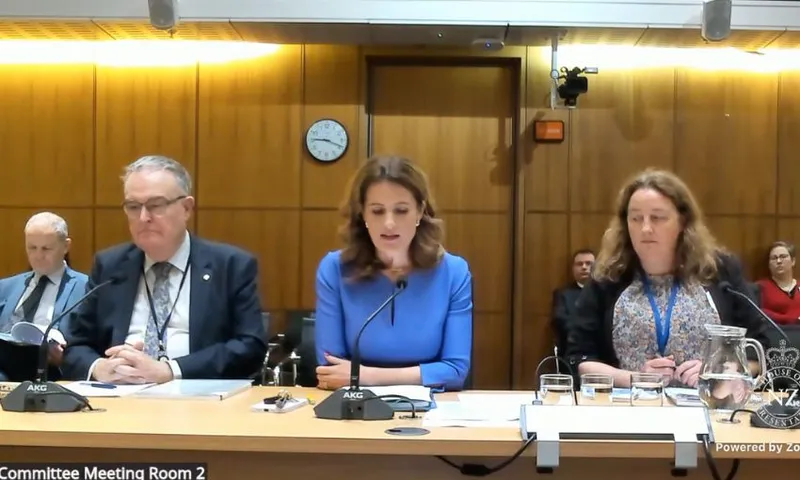
Finance minister Nicola Willis was naturally frosty when facing questions from Green Party co-leader Chlöe Swarbrick and Labour’s trio of trouble (Barbara Edmonds, Deborah Russell and Megan Woods). Te Pāti Māori MP Rawiri Waititi was also there, but as committee chair Cameron Brewer noted, the co-leader was “uncharacteristically quiet”.
It only took around 10 minutes for a bit of chaos to erupt, over the pressing issue of Crown account tables. The opposition side of the committee got a bit too eager to know “which table?” the minister was referring to when claiming her government managed to get more shovels in the ground than the last one. Swarbrick, Edmonds, Russell and Woods all tried to get in at once: “which table number?”; then “what’s the table number?”; and “so, which table?”; but also “I’m asking you, minister, which table?”; and at the same time, “which table?”
The committee kept that energy until the end, when Willis chose the perfect moment for her just deserts. When asked by Russell whether the government had altered the Emissions Trading Scheme to make their financials look a bit sexier, Willis replied, “when you’re a conspiracy theorist, you see conspiracy theories everywhere.”
“Oh, for goodness’ sake,” O’Russell muttered back. “When you can’t answer the question, you resort to insults.” But the minister was already up and out of her seat – the session had ended, and Willis got the last word.
The only person more exasperated than Willis and co that morning may have been public service commissioner Brian Roche. He seemed almost as pained as the journalists were to be made to sit in front of the Governance and Administration Committee, answering questions about some bloke named Andrew Coster and what’s so bad about running advertisements about/during a public sector strike.
So, asked committee chair and Labour MP Camilla Belich, would the commissioner like to explain why those ads were put on Facebook? Well, Roche explained, social media is a critical communication channel and it’s important to set the facts straight. “I’m not suggesting we were at fault, but we had a job to do …. It is likely we will do this again,” Roche continued. Was that a promise? A threat? The public can only wait and see.
Later on Tuesday, police commissioner Richard Chambers faced the justice committee. Naturally, much of the questioning in the near-four-hour session revolved around the recent IPCA report, those 30,000 falsely recorded breath tests, the 500 new cops we’re not getting for another year and that funny little issue of systemic racism – if anyone wants to acknowledge it exists.
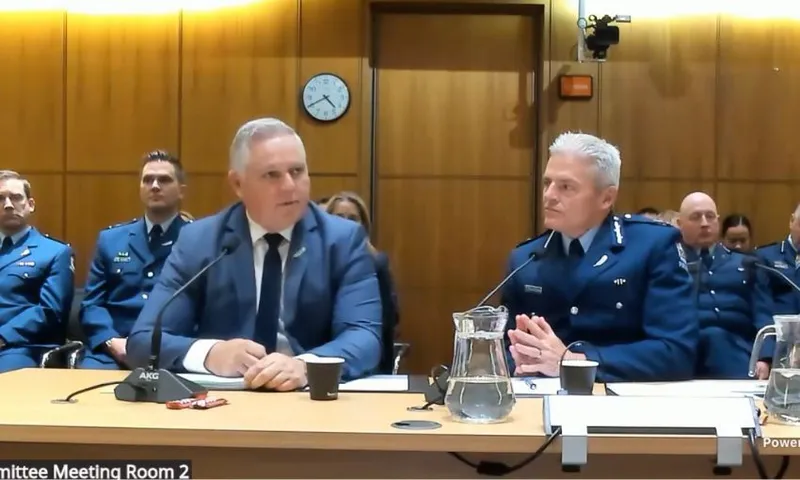
Questioned by now independent MP Tākuta Ferris and Greens MP Tamatha Paul on the police’s relationship with and treatment of Māori, Chambers offered that the police just don’t celebrate its Māori success stories enough. “Systemic bias and racism is not saying every police officer is racist,” Paul reminded him, but the two still failed to see eye to eye. “You’ve asked your question,” committee chair Andrew Bayly told her, before moving on to someone else.
Police minister Mark Mitchell joined the hearing in its last hour, and admitted the original date for when the government expected the police workforce to be bolstered by 500 more employees had been “aspirational”. So then, what got in the way of the aspirations? “Joblessness?” offered Labour MP Duncan Webb. “That’s going to be you soon,” National MP Tom Rutherford replied.
On Wednesday morning, the social development minister Louise Upston made a brief appearance in front of the Social Services and Community Committee. She didn’t have much to reveal, but that might be because the whisperings of committee members Helen White and Ginny Andersen were louder than the minister.
The hallway holding select committee rooms 3 to 7 went through stages of bloating and thinning as crowds moved between rooms, waited on chairs or impromptu media stand-ups blocked the entrances and exits. The one MP reporters couldn’t get to speak was Te Pāti Māori’s Oriini Kaipara, who speed-walked out of the Māori Affairs Committee room.
The corridor filled up again by 1.30pm, with housing, education and Māori affairs hearings kicking off at the same time. Housing minister Chris Bishop was chipper as he entered the room, telling The Spinoff he couldn’t wait to get given the go ahead on blowing up the Gordon Wilson flats – although he was disappointed to learn that these days, you press a button on an iPad rather than pumping some TnT.
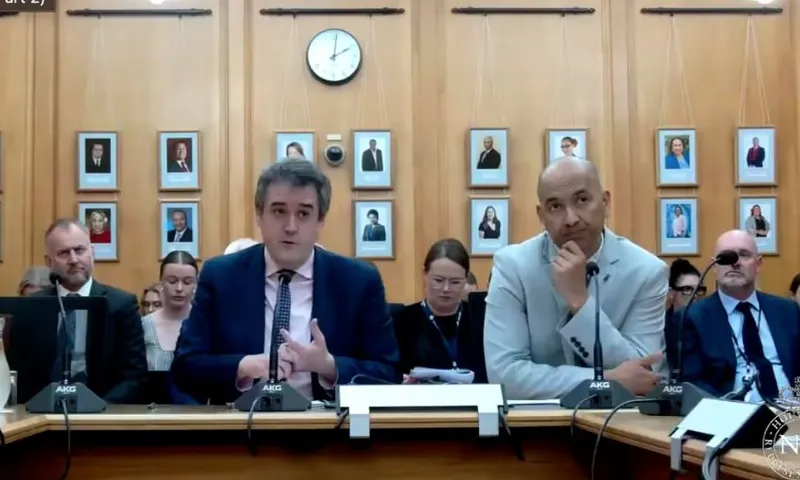
Inside the select committee room, Bishop and social housing minister Tama Potaka spoke on the prisons (“the most expensive form of social housing”, said Bish), homelessness (which the ministers insisted hasn’t gotten worse, despite essentially every frontline service saying the opposite), and what was happening with the soon-to-be expired consents on the Arlington Heights project. On the latter, “All I have to say to you, Tamatha [Paul], is that good things come to those who wait,” Bishop told the Greens MP.
“Wait how long?” Paul asked desperately.
Associate education minister David Seymour was one of the last speakers of the day, joining the Ministry of Education hearing in room 3 around 5.30pm. His presence is perhaps an acquired taste – as Labour MP Phil Twyford told him after Seymour accused Willow-Jean Prime of acting, and badly at that, “Give it a rest, jerk.”

Lyric Waiwiri-Smith
Lyric is an award-nominated politics reporter at The Spinoff. She covers parliament from the press gallery, pens the weekly column One MP, One Pint and is endlessly curious about what makes our decision-makers tick. Off the clock, Lyric loves a live gig, a cold brew, and being a Wellingtonian (on a good day).


