As politicians relitigate Labour’s pandemic response, NZ First is seizing the chance to remind the freedom movement which party is on their side, writes Catherine McGregor in today’s excerpt from The Bulletin.
To receive The Bulletin in full each weekday, sign up here.
Another inquiry?
The day after the release of the second phase of the Royal Commission of Inquiry into New Zealand’s Covid-19 response, NZ First called for yet another investigation – this one focused on vaccine injuries. The Royal Commission report unequivocally endorsed the use of vaccines and found New Zealand had “among one of the best pandemic responses in the world”. NZ First had hoped for more. Presumably seeing an opportunity to stir the debate further, yesterday it seized the initiative.
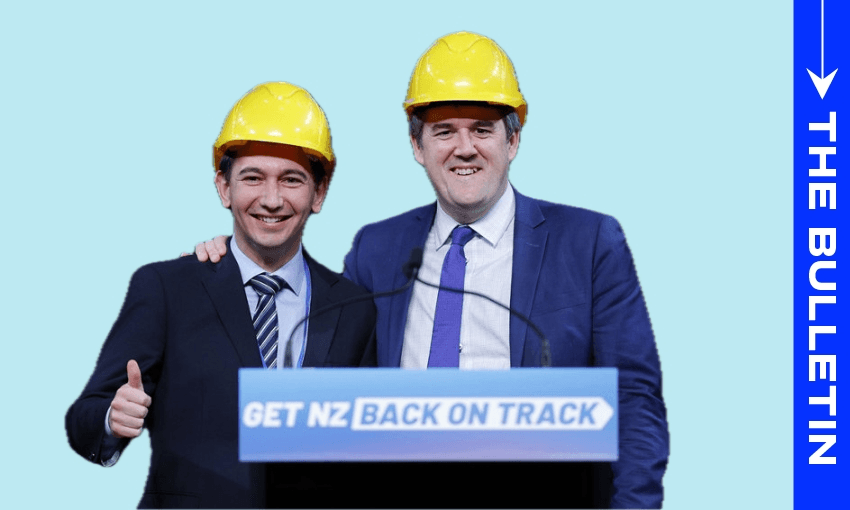
Winston Peters told reporters he had serious concerns about vaccine safety. “Hundreds of thousands of people have been affected here. They need to know the truth,” he said, calling for a select committee to give anyone injured a voice and to hold decision-makers accountable. A select committee inquiry would require National’s backing – something prime minister Christopher Luxon declined to commit to.
Labour leader Chris Hipkins reminded reporters that Peters was originally a staunch advocate for vaccines, even calling for them to be a requirement for welfare and parole – a vaccine mandate, in other words. “One of the wonders of being Winston Peters,” he told reporters, “is you never have to be consistent in your position on anything.” It should be noted that Peters has said someone else posted the mandate comments and they did not reflect his views.
Spin cycle
The report’s embargo had barely lifted before the press releases began rolling in – many bearing little resemblance to the document they were supposedly summarising. Writing in The Spinoff, Alice Neville catalogues the gaps between what ministers claimed the report found and what it actually says. Act’s release claimed officials had concerns about the Auckland lockdown but “were ignored by Labour”; the report actually says the key lockdown decisions “were sufficiently informed”. Health minister Simeon Brown’s official response was more measured, but still played fast and loose with the facts, claiming Auckland’s lockdown “went longer than advice recommended” – which refers to a finding about the shift from Level 4 to Level 3, not the end of lockdown itself.
“It’s election year, I get it,” Neville writes. “But implying science and health advice was routinely being ignored fuels the distrust that erodes social cohesion – something the report is at pains to emphasise must be restored.”
An unlikely election weapon
Writing in The Post (paywalled), Luke Malpass is sceptical that the report will loom large at the ballot box later this year. The report confirms what was broadly already known – that the Covid response started well before becoming more problematic from 2021 – without landing the decisive political blow against Labour some in the coalition had hoped for.
Malpass shares his pet theory: almost everyone is at least a little embarrassed by how they acted during the pandemic, which means almost no one wants to relitigate it. “The public does not like reading stories about it, politicians do not much like talking about it, and dwelling on it does not appear to be an electoral winner.”
Brown’s harder task
While the initial response was fiercely political, the harder work starts now, Marc Daalder writes in Newsroom. Simeon Brown has been tasked with coordinating the government’s response to the commission’s 63 recommendations, with an initial approach due in July. Politically, Daalder writes, it will be a “difficult job”. Many recommendations will be unpalatable to Brown’s coalition partners: it is hard to imagine NZ First supporting pandemic legislation with powers to mandate vaccines – even with robust human rights protections attached. “Yet that is exactly what this second phase of the Royal Commission has recommended.”
Both phases of the inquiry – more than 1,200 pages combined – trace New Zealand’s pandemic problems back to insufficient preparation before Covid-19 arrived. There will be a next time, Daalder writes. How ready the country is when it comes will depend on whether Brown and his colleagues are willing to move beyond politics and do the unglamorous work that preparedness actually requires.