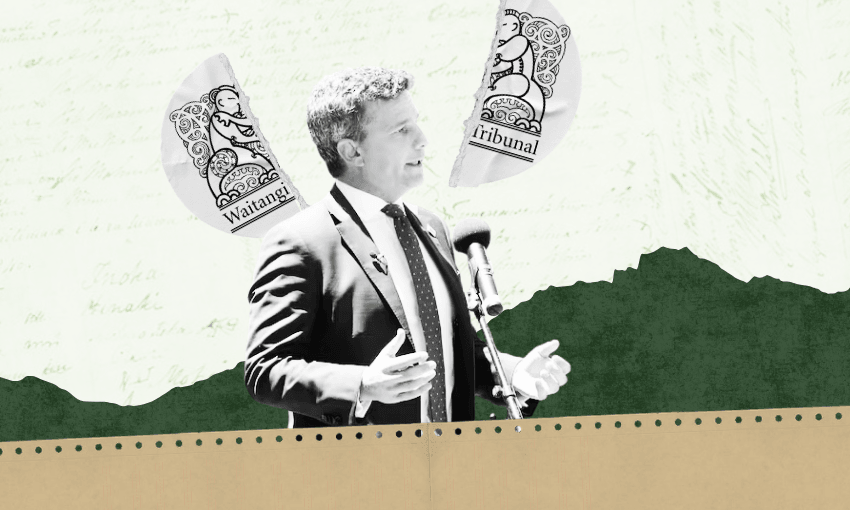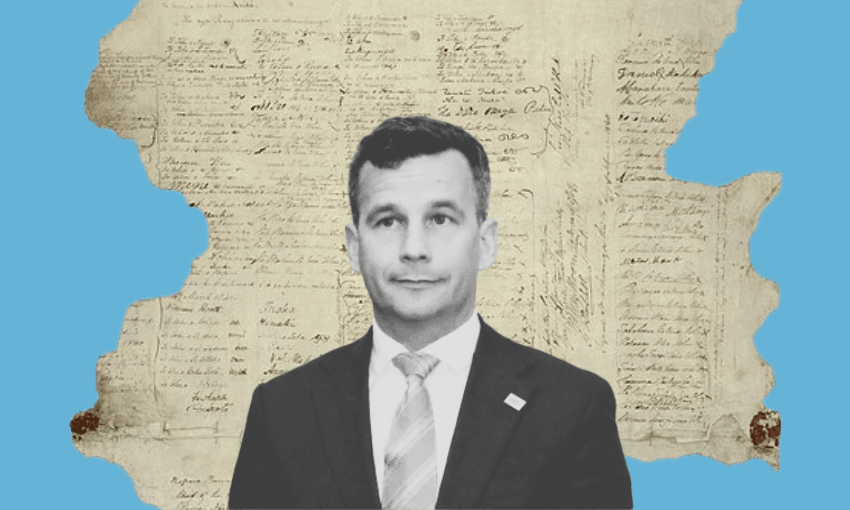

The reshuffle that stripped Chris Bishop of his key party roles has presented National’s wunderkind with the challenge of a lifetime, writes Catherine McGregor in today’s excerpt from The Bulletin.
To receive The Bulletin in full each weekday, sign up here.
The new numbers
The latest Taxpayers’ Union-Curia poll shows the coalition on an election-winning 65 seats – but the internal breakdown is still not great for National. NZ First is up 3.9 points to a whopping 13.6% – numbers that would more than double its current eight seats – while National sits at 29.8%, translating to just 37 seats against the 48 it currently holds.
The March Roy Morgan poll was grimmer still: National is at 26.5%, its lowest result in the poll since November 2021, with Labour on 34% and the two blocs deadlocked at 47.5% each. Roy Morgan CEO Michele Levine did not pull her punches: “Luxon and his National colleagues are hoping to avoid being the first one-term New Zealand Government for over 50 years.” That was the context in which, last week, the prime minister stripped Chris Bishop of two of his most important roles.
Brown steps up, again
Bishop has lost the role of campaign chair to Simeon Brown and the role of leader of the house to Louise Upston. Writing in Stuff, Jenna Lynch says Brown was a shrewd choice: “he’s a political animal, he holds a safe seat so doesn’t need to focus on his electorate campaign, and he knows Auckland. And when you lose Auckland, you lose.”
Toby Manhire, writing in The Spinoff, adds some more bio: “wunderkind” Brown – who celebrates his 35th birthday today – is known for his “unwavering loyalty” to the PM, a fellow east Aucklander with ties to evangelical Christianity. Over the past three years, Luxon has entrusted Brown with a plethora of portfolios including health, energy, SOEs, transport, local government and Auckland issues.
“Brown, like Bishop, has a very sharp political mind,” Manhire writes. “In other ways, he could not be more different. Bishop sits at the most socially liberal point in the National spectrum, Brown at its most conservative. He voted against the decriminalisation of abortion, for example, and against the ban on conversion therapy. Brown goes for Schubert, Bishop for Shihad.”
The Strait of Bishop
Just how significant were the roles that Bishop lost? Writing in The Post (paywalled), Henry Cooke explains that the twin roles of campaign manager and leader of the House gave Bishop a uniquely powerful position in the party machine. Manhire puts it more vividly: Bishop had become “a channel through which just about all National political activity must travel – the Strait of Bishop, perhaps.” Cooke is direct about the motivation behind Bishop’s defenestration: it was “quite obviously in response to sustained conversations about Bishop wanting Luxon’s job.” The consolation prize of attorney-general offers prestige but none of the leverage over the caucus Bishop once enjoyed.
It doesn’t necessarily spell the end of his leadership ambitions, however. Noting that Bishop still retains a ferocious ministerial workload, Manhire draws a historical parallel worth sitting with: “I’m reminded – and I admit this may be overthinking it a bit – of Jenny Shipley, who told us in an interview for the Juggernaut podcast that she was burdened with a huge amount of ministerial responsibility by Jim Bolger, prompting many to wonder whether that was designed to leave her too busy to mount a challenge. We all know what happened there.”
The Auckland problem
Richard Harman, writing in his paywalled Politik blog, argues that an under-acknowledged factor in Bishop’s demotion is his politics on housing. Auckland MPs were united in their objections to his density proposals, as were the Auckland party faithful, particularly those reliable National voters aged 65+ and over.
Intriguingly, Harman also reports that officials in the transport and housing ministries were asked a fortnight ago to prepare briefing documents for incoming ministers – suggesting Bishop was in line to lose those portfolios too. In the end he kept them, but the request, Harman writes, reveals the extent of the retribution that had been planned. Whether the reshuffle amounts to a decisive move or merely a deferral of the tensions within National’s caucus may depend on whether the party’s stubbornly low poll numbers finally begin to shift.