The City Rail Link at rush hour, reviewed

The trains are arriving at long last.
We’ve waited a decade for this railway. Here’s what it will actually be like.
When they shut down Auckland’s train network to test the City Rail Link back in January, things didn’t go smoothly. Transport advocates whispered about trains backing up at stations. They murmured about problems with the network’s proposed timetable. Worried that our carriage of public transport triumph may be derailed by the locomotive of official ineptitude.
Auckland Transport fessed up to some of the teething troubles, with its public transport manager Stacey van der Putten calling the testing a “valuable learning curve”. She promised to make changes to ensure the CRL would provide reliable services from opening day, whenever that is.
At Te Waihorotiu station on Tuesday, it sure looked like the tweaks had paid off. I’d been sent down into the still-unopened station by Aotea Square with a gaggle of reporters to see the CRL running through a simulation of its rush-hour peak. Trains turned up with almost alarming regularity. Each time they stopped, crew members would disembark onto the platform and set a stopwatch. They waited for 75 seconds to tick by, mimicking what the CRL’s operators think will be the actual dwell time when dozens of passengers are entering and exiting the carriages. Then they’d get back in and signal to the driver to leave. As their engine slid away, the white lights of the next train to arrive at the station were often already visible in the tunnel behind.
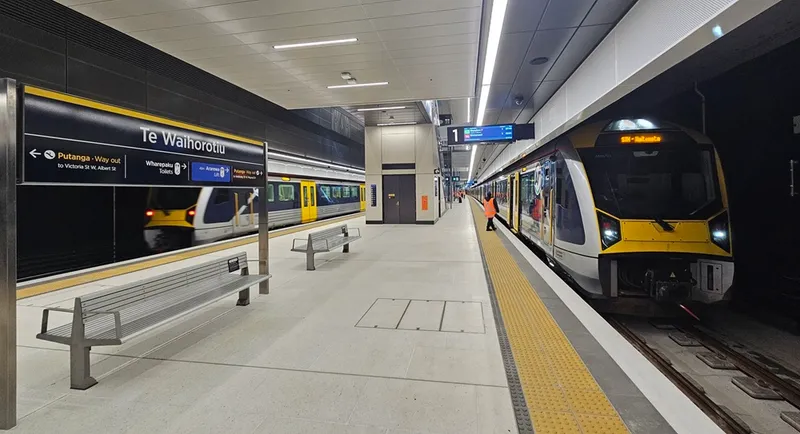
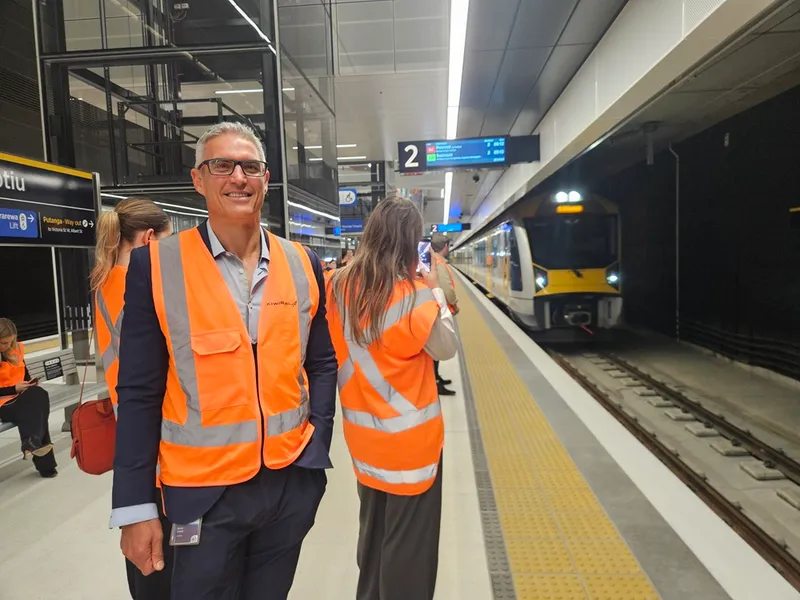
It seemed, at least to non-expert eyes, to be running like clockwork. If it wasn’t, the CRL’s operators were keeping a poker face. Auckland One Rail will be charged with staffing and running the new network. Its chief executive Martin Kearney grinned and chirped cheerfully for the entire 40 minutes we spent at the platform. When a journalist later brought up Port of Auckland boss Roger Gray’s assertion that far from being a game-changer, the CRL will be a “disaster” for the city, he seemed almost incredulous. “Did you see the trains down there?” he asked. “In my personal opinion, that’s going to be a massive game-changer for Auckland.”
The train tsunami did seem pretty game-changey. It was also, at least to my slow-moving and occasionally misfiring neurons, a bit overwhelming. The upside of Auckland having a stunted rail network that ends in a bottleneck is that it’s easy to tell where you’re heading. Trains shuttle from Waitematā station (nee Britomart), along the western, southern and eastern lines and back again. The CRL will upend the network’s timetable, rearranging it so trains zip from Manukau, through the eastern suburbs, into the city centre and all the way out to Swanson on one East-West line and from Manukau, around the city centre stops and back out on the South-City route.
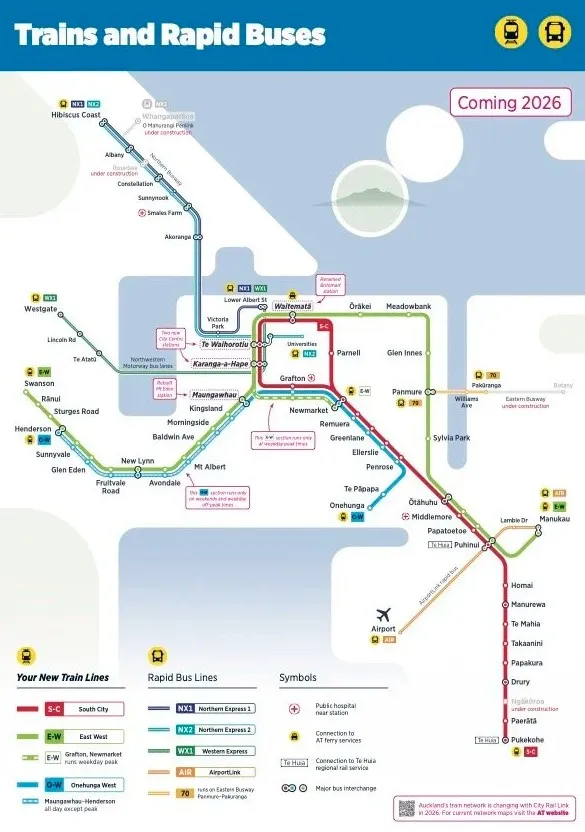
It should make for a much more fluid and free-flowing network, particularly on the western line, where trains will no longer have to stop at Waitematā and reverse out via Newmarket. But the changes will make the in-station mental arithmetic more complex for passengers. Standing at Te Waihorotiu as trains hurtled past every few minutes, I received visions of a future me boarding on the wrong side of the platform and miserably traipsing my way to Meadowbank by mistake, instead of my intended destination of Spinoff HQ in Morningside.
There’s nothing I dread more than accidentally ending up in east Auckland, and the spectre of a visit to Panmure is deeply troubling. But KiwiRail’s CRL programme director Bevan Assink thought people, including senior writers from The Spinoff, would get used to the new system. “We do put where the trains are going on the sign on the front of them,” he said, reassuringly.
OK, and the upsides of the CRL are pretty numerous. Te Waihorotiu will open up midtown Auckland to heavy rail for the first time, while the new Karanga-a-hape station will allow passengers to disembark on the doorstep of the Karangahape Road shopping strip. Journey times will halve for many people heading into the city from out west. According to Auckland Transport, the extra capacity will be equivalent to 16 extra traffic lanes heading into the city at peak times.
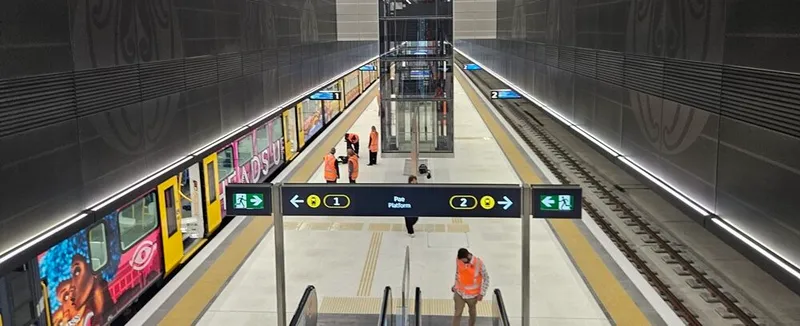
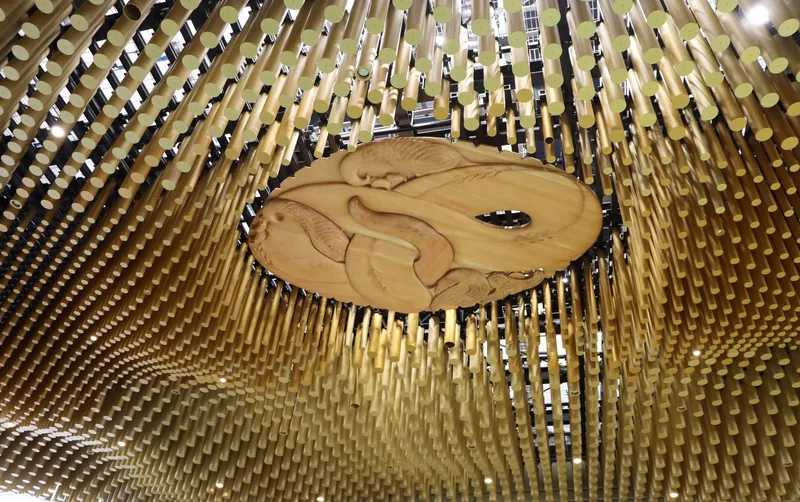
Then there’s the literal, physical structure of the three new stations built for the CRL. When it came time to leave, reporters were herded along the length of Te Waihorotiu station. At 15m deep, it’s not as far underground as Karanga-a-hape, but it’s still a feat of engineering with its 300m platform spanning the Aotea Square arts precinct. Kearney, Assink and Auckland Transport’s CRL manager Mark Lambert delivered a media conference at the station’s Wellesley Street entrance, standing beneath a whakairo designed by Auckland University student Paraone Luiten-Apirana (Ngāti Hikairo, Ngāi Tūhoe, Te Arawa) and 4,000 golden rods that Ngāti Whātua Ōrākei’s Graham Tipene hung on the station’s ceiling to evoke the rippling of the Waihorotiu stream that once ran down the Queen Street valley.
The trio’s enthusiasm was so palpable, it was almost sweet. When bureaucrats front the media, it’s usually because people are complaining. Here they were spruiking a product a decade in the making, and they seemed genuinely excited. Strangely they were stoked because the CRL at rush hour was, for the most part, pretty uneventful. The trains came and went without much fuss. There were no emergencies, no obvious scheduling failures. After all the drama and debate of the last 10 years, they were basking in a morning of mundanity. On Tuesday, the arrivals and departures were notable. But Kearney looked forward to a point, hopefully soon, when they would just be the norm. “What we actually want is a boring railway,” he said.

Hayden Donnell
Hayden Donnell is a senior writer for The Spinoff. He previously worked at RNZ, TVNZ and the New Zealand Herald, alongside other media companies that have since closed down or been renamed. His primary passions are local politics and the Big Fresh animatronic fruit and veggies.


