
NZ First and National are both claiming credit for killing the most toxic clause in Shane Jones’ Fisheries Amendment Bill, writes Catherine McGregor in today’s excerpt from The Bulletin.
To receive The Bulletin in full each weekday, sign up here.
Whose backdown is it anyway?
The government on Tuesday backed down on one of the most controversial elements of the Fisheries Amendment Bill – removing minimum size limits for commercial fishers – and descended immediately into a coalition squabble over credit. As Stuff’s Emma Ricketts and Jenna Lynch report, NZ First leader Winston Peters and prime minister Christopher Luxon posted near-identical statements within minutes of each other, both claiming to have spoken to fisheries minister Shane Jones and killed the measure.
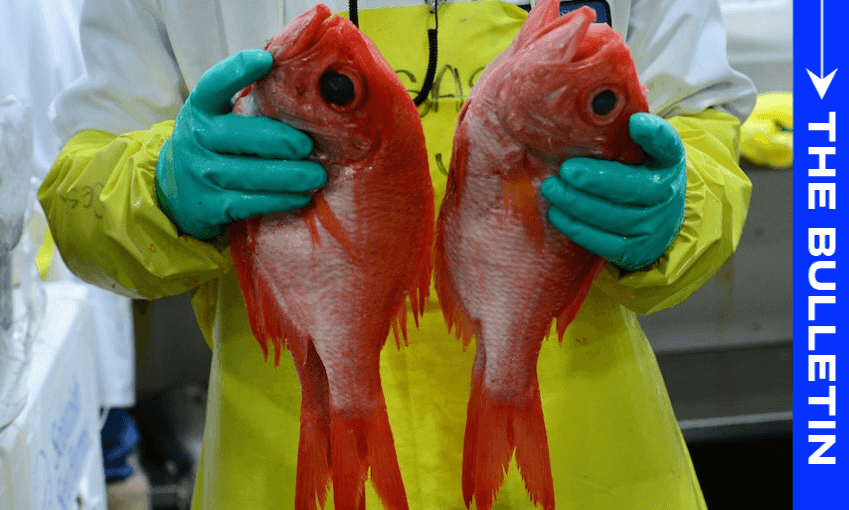
Jones was dismissive of Luxon’s version of events: “There’s only one person that’s capable of instructing the matua, and that’s the rangatira Winston.” Peters concurred – Luxon had “absolutely nothing” to do with it. Luxon said the important thing was the government had “got rid of the most egregious” part of the bill. Jones continued to defend the underlying principle that commercial fishers should be forced to count undersized fish against their quota rather than dumping them at sea, “but I understand that the recreationists are concerned about Nemo”.
How the bill blindsided everyone
As the NZ Herald’s Sarah Curtis reports, the removal of minimum size limits was only discovered when LegaSea volunteers read the draft legislation line by line when it was released on Thursday, with almost no notice before its first reading this week. Recreational fishing advocate and TV host Matt Watson called it the largest overhaul of fisheries legislation since the quota system was introduced in 1986.
The stakes, Watson argued, were stark: “As fish stocks deplete, the larger fish disappear first… there are more small fish. Instead of ensuring enough fish are going into the future, we’re now taking the little ones too.” Also buried in the bill was a proposal to reduce the window for appealing fisheries decisions from several months to just 20 days – a change Watson said was designed to prevent opponents gathering evidence given that Official Information Act responses routinely take longer. Forest & Bird was blunter: “It’s as if the Minister has looked through all the good things in the Act and wiped them out entirely.”
Jones accused critics of “saltwater amnesia”, saying recreational groups had agreed to the size-limit changes in 2022.
Gulf war
The sizing disagreement is part of a broader political rupture over fishing. At National’s BlueGreen conference last month, conservation spokesperson (and current conservation minister) Tama Potaka announced National would reverse the decision to allow commercial ring netting in two of the Hauraki Gulf’s 12 high-protection areas – a decision his own government had made.
Jones responded by telling The Post’s Henry Cooke (paywalled) that, by making commercial fishing of snapper and other related species in the Gulf all but illegal, Potaka’s policy would “essentially cancel” the 1992 Sealord Treaty settlement, costing Māori fisheries interests up to $250 million. “That means someone’s hospital is not going to be built. That’s a lot of hip and knee operations that aren’t going to happen.” Moana NZ chief executive Steve Tarrant backed Jones, saying “there are certain species that you can’t catch in economic quantities in any other way”. Potaka flatly rejected the framing, insisting the new policy would “uphold our Treaty obligations and existing fisheries settlements”.
A surprising battleground
The bill and the Gulf row reflect a broader trend, writes Newsroom’s Andrew Bevin. Fisheries has “found an unseasonably early spot on the election agenda” following three years of coalition policy tilted strongly towards commercial interests. Bevin looks at the parties’ current stances, noting that Labour has matched National’s policy on the ring-netting reversal, while the Greens want a full bottom-trawling ban, 30% marine protection by 2030 and a new oceans commission. Act didn’t respond to Newsroom’s questions, but the party’s fisheries spokesperson has in the past praised Jones’ reforms as relief from “unnecessary red tape” imposed by “landlubbing activists”.
The most complicated position may belong to Te Pāti Māori, sitting at the intersection of environmentalism, commercial fishing and Treaty-derived quota rights – exactly the fault line the current debate is reopening.