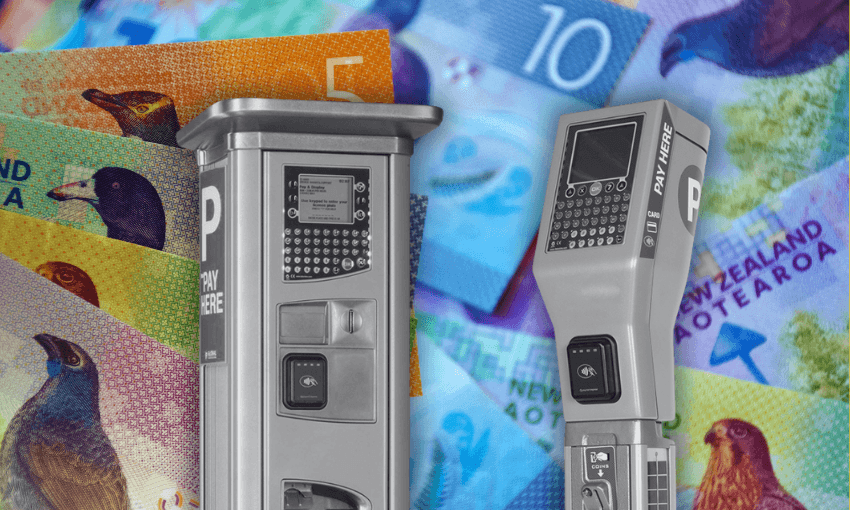

In today’s excerpt from The Bulletin, Madeleine Chapman takes stock of one area that’s raking in money: council parking.
To receive The Bulletin in full each weekday, sign up here.
It’s been an expensive year for drivers. The cost of petrol has risen sharply due to Israel and the US’s war on Iran, and every month it feels like there’s a new announcement of previously free parking becoming paid. The latest (and arguably least sympathetic) is Auckland Transport’s decision to implement paid parking on a number of side streets in Ponsonby, which has seen outcry from local businesses, reports NZ Herald.
One could argue the residents and consumers of Ponsonby can afford to cough up $4 for parking, but the wealthy suburb isn’t the only place seeing a rise in ticket machines.
Parking infringement revenue skyrockets
In the past 18 months, councils across the country have reported record revenue from parking and infringements, despite many dishing out the same, if not fewer, tickets overall. That’s due to the October 2024 central government increase in parking infringement fees, particularly the 400% increase to the misuse of mobility space fine, from $150 to $750.
At the same time, a number of councils have increased their paid parking areas in CBDs as well as the number of plate-monitoring vehicles. Dunedin did away with free parking on Sundays in November 2025 and collected $120,000 in revenue and $35,000 in fines in the first six months with, according to the council, no increase in enforcement staffing hours, reports Otago Daily Times (paywalled). In Whangārei, where the proliferation of paid parking in the CBD has been blamed for its “ghost town” status, the council more than doubled its infringement revenue in the 2024/2025 financial year, with the cost of enforcement holding steady.
Rotorua mayor Tania Tapsell has defended her council’s decision to overhaul parking in the tourism city after bringing its management back in-house. From July 1, permits will be required to park in much of the CBD, at $12 a day. Workers have criticised the move, having previously made use of free parking. “The parking service isn’t here to make money,” Tapsell told the Rotorua Daily Post. “What’s collected is reinvested back, and we’ve ensured there’s a range of parking options, including the new permits.”
In April, RNZ reported Auckland Transport had pulled in a massive (and record) $49m in fines in 2025, with 25 monitoring vehicles in its fleet. Hamilton’s council reduced its two-hour free parking period in the CBD to one hour at the end of 2024, and saw parking fines more than double in the subsequent 12 months.
Where’s the line?
Well, hospitals, apparently. While nobody likes paying for parking, steep hospital parking charges can feel like insult to literal injury. In February, Health NZ abruptly dropped its proposal to charge “market rates” at hospital carparks across the country. The proposal was labelled “mean-spirited and wrong” by Public Service Association national secretary Fleur Fitzsimons, and reported by The Press (paywalled) at the time. “Parking at hospitals should not be exploited to make money. Patients and health workers should not be treated as cash cows.”
On the moral flipside, the Department of Conservation reported a largely positive response to its move to charge for parking at tourist hotspots like Aoraki Mt Cook, Punakaiki and Franz Josef. Charging $5 per hour, DOC netted $214,000 in its first month (December), a “great result”, DOC’s Sally Jones told Morning Report, with few visitors questioning the fee. “In fact, some have asked us if that was all. I think they accept the fact that paying to reinvest in a site like a national park seems reasonable.”
No such thing as a free park
Parking fees typically cover the cost of maintaining and enforcing the parking network, while fines get funnelled back into local council operating budgets. Some councils earmark infringement revenue for transport specific projects, especially improving public transport options, while others simply add it to the kitty. Ultimately, parking everywhere is paid for, one way or the other, whether through a home loan, a restaurant bill or a plain old ticket.
The real question, then, is what angers New Zealanders more: parking tickets or rates rises?