The Waitangi Tribunal: 50 years of damning criticisms and ‘mild’ recommendations

Matiu Rata was the minister responsible for introducing the Treaty of Waitangi Act 1975. (Image: Te Tai Treaty Settlement Stories / https://tetai.nz/en/te-mana-o-te-reo-maori-matiu-rata). (Additional design: The Spinoff).
This week, the Waitangi Tribunal celebrates its 50th anniversary. Today, current tribunal member and law lecturer David Williams shares some personal reflections on its origins and impact.
In 1974, Matiu Rata – as minister of Māori affairs in the third Labour Party government – sought support from his caucus colleagues to establish a Waitangi Tribunal with jurisdiction to inquire into historical grievances from 1900 onwards. The date was chosen to avoid dealing with the egregious colonial pillaging and oppression in the 19th century and instead look into more recent grievances. Rata persuaded his colleagues to support it, but only if the established tribunal had authority to consider future contemporary grievances, not historical. “Its purpose is to provide for the observation and confirmation of the principles of the Treaty of Waitangi and to determine claims about certain matters which are inconsistent with those principles,” Rata said in his speech introducing the bill.
As the Māori Land March walked from Te Hāpua to Wellington, the bill moved through the parliamentary processes. The opposition wavered between criticising the proposed tribunal as a toothless tiger, and fear that its reports might lead to debate, dissension, and even divisiveness within the community. The bill received the royal assent on October 10, three days before thousands supporting Te Matakite o Aotearoa arrived on the steps of parliament.
The first two hearings of the tribunal took place in 1977. They confirmed the toothless tiger prognosis. The hearings were held in the ballroom of the Intercontinental Hotel Auckland. After hearing evidence, the tribunal decided that there were no reasons for its reports to make any findings, nor any recommendations. The legal profession showed no interest in proceedings, except for myself and fellow law lecturer Peter Horsley providing free legal advice.
In 1982, resorting to the tribunal was the last-chance effort by environmentalists and Māori in Taranaki to forestall one of the government’s fast-tracked “Think Big” projects – a Synthetic Fuel Plant at Motunui, with an outfall to be discharged into adjacent pristine kaimoana reefs. Under new chief judge Eddie Durie, the tribunal convened at Manukorihi Pā in Waitara to hear the claim lodged by Aila Taylor of Te Ātiawa. This time, a carefully crafted report made numerous findings and a practical recommendation to divert the outfall. Prime minister Robert Muldoon brusquely rejected the report outright – Think Big projects could not be halted.
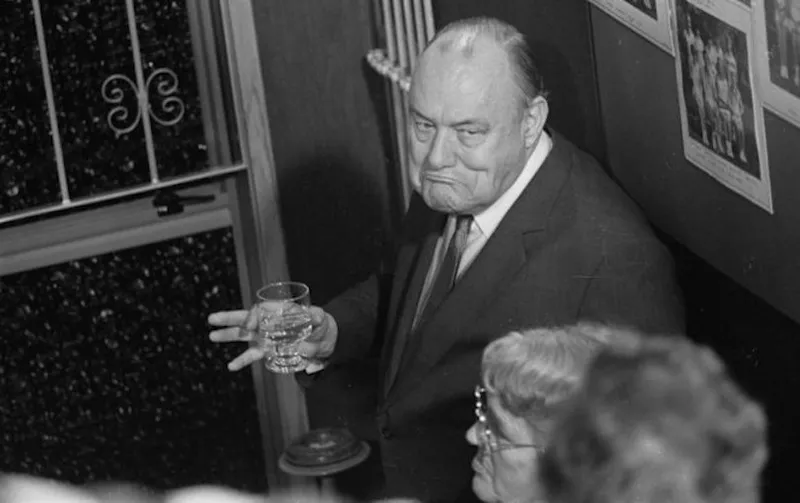
A large hui at Waitara and many protests from a broad range of people around the country persuaded the government to change its mind. The report’s pragmatic recommendations were accepted. The tribunal was not toothless after all, and neither was there bitter debate in the community about the outcome.
Keith Sorrenson, a historian and member of the tribunal – who went on to sit on 14 inquiries – noted findings of the tribunal’s Motunui-Waitara report were a radical reinterpretation of New Zealand history. What was “radical” about them was that they took account of Māori histories of te Tiriti. The tribunal found that in Article 2 of te Tiriti o Waitangi, “te tino rangatiratanga” included “the sovereignty of their lands” and Māori retained the mana to control those lands in accordance with their own customs. The then-startling conclusion was that the transfer of sovereignty mentioned in the English text of the Treaty of Waitangi did not justify a one law/English law-for-all system of government. On the other hand, the Motunui report recommendations were “mild and conciliatory”.
Sorrenson noted a similar pattern in the many cases that were now brought to the tribunal after the successful outcome in 1983. Radical reinterpretations of history were accompanied by pragmatic recommendations for remedies. The Manukau report was damning in its criticisms of the Ministry of Agriculture and Fisheries for its abject failures to protect Māori customary fishing rights, but the tribunal’s recommendations were “mild and compromising”. Searing criticisms of the Native Land Court in the findings of the Ōrākei report were followed by “restrained and achievable” recommendations.
The enlargement of the tribunal’s jurisdiction in 1985 to empower inquiries into historical claims from 1840 onwards did not escape criticism. Jane Kelsey identified the fourth Labour Party government’s amendments as a policy to pacify Māori dissent evident from the 1970s to 1984 in protests and occupations. The tribunal might be a safety-valve that would deflect Māori from more direct challenges to the authority of government institutions. There have been criticisms too – from myself, among others – of the tribunal’s subsequent malleable interpretations of the principles of the Treaty, and of court judgments that were no more than a subtle cultural repositioning. This jurisprudence diverted attention from te Tiriti itself as the paramount source of Crown obligations to Māori. The colonial leopard, Kelsey argued, had not attempted to change its spots.
Yet Māori from virtually all iwi – and a large proportion of all hapū – did choose to engage with the lengthy proceedings of the tribunal’s district historical inquiries. Some practical things made that possible. Rachel Steel, a counsel in the northern Kaipara historical inquiry, found a way to meet the requirements of the Legal Services Board so that legal aid could cover the costs of employing lawyers in tribunal proceedings. Also, the Crown Forestry Rental Trust – established for quick attention to issues arising within Crown forest licensed lands – became a source of ample funds for the necessary historical research and for claimants to host tribunal hearings when government policy from 1994 onwards insisted on comprehensive settlement of all claims in a district, and not just the forestry lands.
Nevertheless, in my view, the major driving force for claimants to pursue their grievances before the tribunal was the simple fact that claimants wanted their own history validated. The emergence of truth and reconciliation commissions in other countries – especially South Africa – was an impetus for claimants to treat the Waitangi Tribunal as a forum for their truth-telling. The tribunal would hear evidence in public hearings from kaumātua and kuia whose wisdom and knowledge had been discounted in the past.
Claimants wanted what was thought to be radical to become historical common sense. Māori-sourced histories of te Tiriti, and the breaches of that sacred covenant, had to be central to a proper understanding of the constitutional history of the nation. Māori wanted to speak truth to the Crown, to hold Crown officials to account for past actions, and to let the world know what hurts had been suffered to indigenous peoples in the colonisation of Aotearoa from 1840.
One of my regrets is that so few Pākehā attend the tribunal’s public hearings. The tribunal’s published reports are freely available, but simply being present to listen and learn while evidence is given is an opportunity that far too few tangata tiriti people have chosen to embrace.
By and large, the pattern of tribunal decision-making this century has followed the precedents of the mid-1980s. Reports set out, in damning detail, findings on the historical injustices of the past. When it came to recommendations, it was common to urge claimants to negotiate with the Office of Treaty Settlements for redress available within successive government’s Treaty settlements policies. These are generally mild and compromising recommendations that are achievable – that has been the tribunal’s strength from 1983 to the present. Others, of course, see that as a weakness because recommendations have not sought the higher moral ground and required fuller accountability from the Crown for its Treaty breaches.

David Williams
Dr David V Williams FRSNZ is a Professor Emeritus in the Faculty of Law at The University of Auckland Waipapa Taumata Rau. He is currently a member of the Waitangi Tribunal and a member of the Auckland War Memorial Museum Tāmaki Paenga Hira Trust Board.


