

After facing backlash over its use of a Māori word, Australian activewear brand Aroha Collective has rebranded as Vyra. The controversy reveals why language, profit and accountability are never just ‘surface level’.
On Tuesday evening, Australian-based activewear company Aroha Collective announced it was changing its name to Vyra.
“This isn’t a rebrand. It’s a reflection of who we are now,” the company said in a social media post. The statement framed the shift as a natural evolution – from “connection and softness” to “strength” – positioning the change as growth rather than retreat.
But there was a bigger story.
Despite operating since 2021, Aroha Collective only recently came under sustained scrutiny after it was revealed that its founder, Katie Bourke, is not Māori. A video in which Bourke explained she chose the name because she “didn’t want an Australian name” and wanted to be “a little bit different” sparked debate across social media. The clip was intended to share the brand’s origin story. Instead, it ignited a broader conversation about cultural appropriation and the commercial use of te reo Māori.
“When I was researching the brand, I wanted meaning behind it,” Bourke said in the video. She explained that the business was built around the concept of love and compassion and she’d factored having a Māori stepdaughter into her decision-making process.
The reaction was swift and divided.

Some Māori voices, including Korotangi Paki – brother of Kuīni Nga wai hono i te po – saw no inherent issue with the use of the word. Others were openly critical. Content creator Holly-May Neho called it appropriation. Some questioned whether the brand reflected Māori values, particularly given the absence of Māori representation in its marketing.
As attention intensified, further revelations followed. It emerged the company had been alerted to concerns about the name six months earlier. Screenshots circulated showing the brand responding to a comment in June by stating it was Māori-owned – a claim Bourke later said was the result of a misunderstanding by a staff member managing social media accounts.
Then came the apology.
Bourke posted a video apologising “to the entire Māori culture”, acknowledging that her research into the word had been surface-level. She insisted the brand had never intended to present itself as a Māori business and said a rebrand was not something that could happen overnight.
“This was never based on traditional culture. We’ve never branded as a Māori brand. We are not a Māori brand. The cultural ties, we were not aware of until six months ago,” she said.
But for many Māori, the issue was never simply about intention.
“Aroha” is often translated as “love”, but that translation barely scratches the surface.
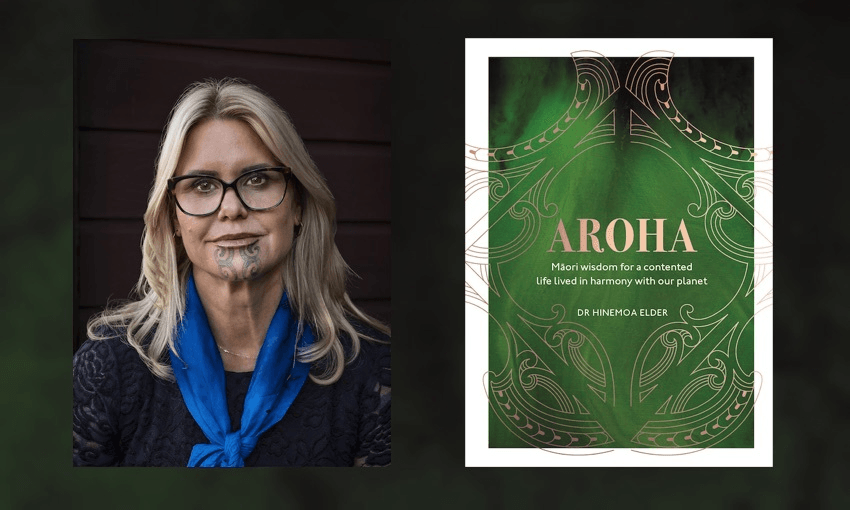
According to psychiatrist and author Hinemoa Elder, the word can be understood as a compound concept: aro relates to thought, attention and focus; ro to inner reflection; hā to breath and life force; and oha to generosity and abundance. In te ao Māori, aroha carries layered meanings of care, responsibility and relationship.
“Te reo Māori is a living language and a taonga,” Ngahiwi Apanui-Barr, Tumu Whakahaere of Te Taura Whiri i te Reo Māori, told The Spinoff.
“Words like aroha resonate with many people because they express rich and layered meanings, including care, concern, compassion, and responsibility for others, not simply a direct translation of the English word ‘love’.”
Apanui-Barr emphasised that the commission does not discourage respectful use of te reo Māori, however, he said organisations using Māori language in branding should engage with Māori communities and avoid trademarking Māori words or concepts.
“It’s not too late for them to come and talk to us so we can guide them through the issues. Situations like this present an opportunity for conversation and connection. Ultimately, the value of aroha is grounded in relationships – in listening, learning, and showing mutual respect.”
That distinction – between use and misuse – sits at the heart of the debate.
For Māori entrepreneurs, the controversy also touched on a deeper history.
Kat Tua, founder of the brand Manaaki, said she commends Bourke for taking steps to change the name, but she also sees the issue as part of a much longer pattern.
“A word like aroha – just like manaaki – is not just a beautiful word in te reo Māori; it’s a powerful one,” Tua said. “It carries whakapapa, responsibility and mana. Holding a word like that isn’t a marketing decision for me, it’s a privilege I don’t take lightly.”
Tua recalled being shocked when she discovered that “Manaaki” had already been trademarked by the Crown – the same entity historically responsible for suppressing te reo Māori – and required permission for its commercial use.
“I’ve encountered barriers where the goalposts are incredibly high just to access and live my own culture and language,” she said. “That’s the difference people often miss – Māori culture was actively suppressed and nearly erased. It’s not comparable to cultures that have always been free to live, breathe, and benefit from their language in their own countries.”
For Tua, the issue is not simply whether a non-Māori person can use a Māori word. It is about who benefits.
“Māori, like many indigenous cultures, have a long history of our culture being profited from by non-Māori,” she said, pointing to the late 1800s, when photographs and postcards depicting Māori were circulated globally as tourism commodities.

“The issue then, as it is now, was where the profits went.”
Aroha isn’t the first company to have faced scrutiny for adopting a Māori word as a brand. International running shoe giant Hoka takes its name from hoka, a te reo Māori word meaning “to fly”. In recent years, the brand has drawn criticism for using the word without clearly acknowledging its origins or demonstrating meaningful engagement with Māori communities. Early references to the word’s Māori roots have quietly disappeared from its website, while promotional material frequently mispronounced the name.
The controversy highlighted a recurring tension – while te reo Māori is increasingly visible and globally admired, the communities from which it comes are rarely centred in decisions about how it is used – or who benefits from its commercial success.
In announcing the shift to Vyra, Bourke said the brand did not want communities “fighting against each other”. She cited bullying, racism, and comments directed at children connected to the business as part of the reason for stepping away from the name.
The company confirmed that remaining Aroha-branded stock – reportedly worth hundreds of thousands of dollars – would continue to be sold during the transition.
The Spinoff contacted Bourke for comment.
The rebrand tells a story. It signals that sustained public pressure, and Māori voices, have weight. But it also leaves unresolved questions about accountability in a global market where indigenous language can be admired, stylised and monetised far from its cultural roots.
Apanui-Barr suggests that for Australian businesses, there are opportunities closer to home: “More broadly, this situation highlights the importance of authenticity,” he said. “For Australian businesses, there are opportunities to work alongside Aboriginal and Torres Strait Islander peoples to draw on indigenous language and identity in ways that reflect their own place and context.”
The debate over Aroha Collective was never just about a single brand. It was about what happens when language is treated as inspiration rather than inheritance. About whether intent outweighs impact. About whether change follows harm – or only follows backlash.
Vyra may represent strength and progression for its founder. For Māori, the conversation it sparked was about something older and deeper. It was about who gets to carry a word like aroha – and what responsibility comes with it.