Te Pāti Māori wants to abolish prisons. The idea is not just a fantasy

Te Pāti Māori want to abolish prisons by 2040. (Design: Tina Tiller).
This week, Te Pāti Māori announced its policy of dismantling New Zealand’s prison system and replacing it with Māori-led justice. Critics say it’s impossible, but, writes Liam Rātana, evidence suggests otherwise.
Te Pāti Māori has been making noise for all the wrong reasons. The in-fighting that started last year, and saw two of the party’s MPs kicked out before one was reinstated, continues in court next week. But the party is trying to move on, turning its hand to championing policy. The first cab off the rank is justice reform, specifically the abolition of prisons in Aotearoa.
Drastic justice reform is not a new part of the party’s manifesto, but Te Pāti Māori has recently gained attention by saying it wants to rid the country of prisons as we know them by 2040. In response, Labour leader Chris Hipkins has sternly ruled out ever abolishing prisons, but Te Pāti Māori has remained firm in its stance.
“Decades of evidence from Aotearoa and across the globe has made it absolutely clear that prisons are completely ineffective at deterring crime, rehabilitating offenders, and lowering reoffending rates,” Te Pāti Māori co-leader Rawiri Waititi said in a release.
The issues Te Pāti Māori is highlighting aren’t new. The shortcomings of New Zealand’s justice system are well documented and by all measures, Māori remain the most disproportionately impacted group in our society. If New Zealand wants rehabilitation and reintegration – not only punishment – then the system has a long way to go.
Numerous reports about the need for drastic reform to our country’s justice system have been written and revisited over the decades. Many of them have repeated the same messages – radical reform is required.
While much has been done in an attempt to make meaningful change for Māori, little has been achieved. Seven years ago, then minister of corrections Kelvin Davis allocated $108 million for the implementation of Hōkai Rangi – a co-designed Māori pathway initiative for Hawke’s Bay, Te Tai Tokerau and Christchurch.

At the time, Māori made up approximately 52% of the prison population. By the end of 2025, that percentage was unchanged, despite Māori only making up about 17% of the general population.
So, how would the policy work in practice? “We want to move resources away from ineffective prisons towards effective prevention, rehabilitation, and community-led solutions,” Waititi said in the release.
“We need a transformative move; focused on rehabilitation, reintegration and recidivism rather than punishment and incarceration.”
Te Pāti Māori says the abolition of prisons isn’t the starting point, but something that will happen once there is no longer a need for them. Until then, the party says its focus is on eliminating the “root causes” of crime: poverty, inequality, unemployment, homelessness, racism, poor mental health and trauma.
New Zealand spends over $1.7 billion annually on prisons, with costs exceeding $160,000 per prisoner every year. The operating budget for the Department of Corrections is significant, reaching roughly $1.94 billion in 2024 to cover rising remand numbers and capacity, including major projects like the Waikeria prison expansion.
In its 11-page justice policy document, Te Pāti Māori says it would reallocate at least half of this money, plus half of all money spent on the police and courts budgets to be spent on establishing an Independent Māori Justice Authority. It would also look to establish an independent Māori legal aid service, fund kaupapa Māori community law centres, and invest in establishing kaupapa Māori legal units within every community law centre in the country.
The policy also proposes abolishing youth justice residences by 2030, then prisons in 2040. It also details overhauling laws such as bail, drug and criminal responsibility legislation, wiping drug convictions, ending benefit attachment orders, and strengthening police accountability. In the interim, the policy says the priorities should be to uphold human rights for people in prison, restore voting rights, improve reintegration support, and invest heavily in community mental health and addiction services to address the root causes of harm and intergenerational trauma.
The policy is not to abolish prisons tomorrow, but replace them over time with community-based justice systems, with abolition as a stated, deliberate end goal. It would be a drastic change for New Zealand, but certainly not a world first. The party is looking to the Scandinavian prison systems, such as those in Norway, for some of its inspiration.

“Instead of large, centralised prisons, Norway has a system of small, community-based correctional facilities that focus on rehabilitation and reintegration into society,” Waititi said in the release.
But would it work? Earlier this week, Act’s Nicole McKee, the minister for courts and associate minister of justice, told parliament it would be dangerous. “Locking them [criminals] up to make sure they are not in our communities creating harm is what this government is committed to doing.”
On social media, Act leader David Seymour expressed his concern at what the policy would mean for Māori victims of crime. “Why would they do this when Māori are disproportionately victims? Act New Zealand does believe in rehabilitation, but only after we’ve locked up the criminals to protect victims.”
Yet, the Nordic criminal justice systems – often lauded for placing emphasis on rehabilitation over punishment – have notched up impressive results.
Before Norway overhauled its penal system, replacing punishment with care in the 1990s, its recidivism rates were sitting at 70%. Five years on they had dropped to 25%.
A key part of the country’s change included the establishment of 57 small regional prisons with an average of 70 cells. Part of the philosophy was keeping prisoners geographically close to their homes, so they could maintain relationships with spouses, friends and family. Many of the prisons allow up to three family visits per week. The teachers and doctors used in the surrounding communities also take care of the education and medical needs of inmates.
In the Netherlands, prisons left empty because of decreased demand are being reopened as cultural centres and movie theatres, as recidivism rates have dropped by more than 40% over 20 years. Interestingly, the Dutch don’t attribute their decreasing prison population to any one particular policy, but rather to a change in the nature of crime being committed in the country and leniency in sentencing by the judiciary.
While Scandinavian and Dutch prisons are being held up as examples of what true rehabilitation can look like, they are not without their problems. Many of the prisons face staffing shortages and issues of overcrowding. While recidivism rates are low, prisons in Finland and Denmark are at capacity. A key cause of the increasing prison population is said to be growing support for conservative right-wing political parties, many of whom take a “tough on crime approach” similar to that of the current New Zealand government. This means stronger sentencing for certain crimes, such as sexual or violent assaults.
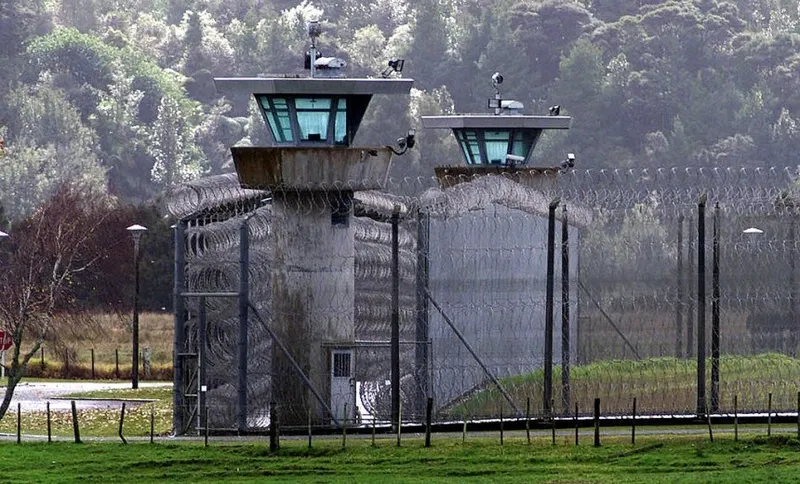
While the argument for being “tough on crime” is fundamentally flawed, it’s a vote winner often employed by right-wing parties.
Regardless of the arguments for and against radical change, the first – and major – hurdle for Te Pāti Māori would be getting support from future coalition partners.
Asked whether Labour would support the proposal, corrections spokeswoman Tracey McLellan was unequivocal: “No. Prisons are a necessary part of the corrections system, providing rehabilitation and services aimed at reducing reoffending.”
Labour leader Chris Hipkins was just as clear: “There are clearly some policies being promoted by Te Pāti Māori that Labour would never support – including the abolition of prisons. I would love to live in a society where we don’t need prisons. Unfortunately, we don’t. Sadly, there will always be a need for them.”
The Green Party, however, seems aligned on multiple fronts around justice reform. Corrections spokesperson Tamatha Paul told media earlier this week the party was “interested in meaningfully addressing the social and economic disparities in our criminal justice system which has seen a major increase in the women’s prison population and the continued over-representation of Māori”.
That may mean Labour may have a tough time saying no to its probable coalition partners if they find themselves at the negotiating table come November.
Either way, Te Pāti Māori looks ready to play the long game. The party is admitting that what it wants won’t happen overnight, but it’s looking for a fundamental redistribution of power, money and authority away from the Crown’s punitive justice system and towards Māori-led, tikanga-based justice.

Liam Rātana
Liam Rātana (Ngāti Wairupe/Ngāti Kurī) is editor of The Spinoff's Ātea section. He is passionate about indigenous and minority issues. Liam enjoys cooking, poetry, photography, and exploring the outdoors.


