To show or no? A short history of prime ministers at Waitangi in election year

Christopher Luxon, Jim Bolger, Jacinda Ardern and Helen Clark at Waitangi over the years (Photos: Getty Images)
Luxon will be there tomorrow, but how often have his predecessors taken part?
The political centrepiece of the annual Waitangi festivities takes place tomorrow with the pōwhiri on the upper grounds, and Christopher Luxon will be there. He’ll rock up with politicians from across the country and across parties to mark 186 years since the treaty signing and test his oratorical chops.
It will be Luxon’s second Waitangi outing as prime minister. In 2024, he delivered a speech mostly remarkable for being strikingly similar to the speech he delivered the year before as leader of the opposition. In 2025, he gave it a miss. He’s certainly not the first prime minister to sometimes attend and sometimes not.
The governor general – as representative of New Zealand’s head of state, who lives in London – has attended events at Waitangi since 1952, while prime ministers have been heading up the northern paradise more or less regularly since the late 50s.
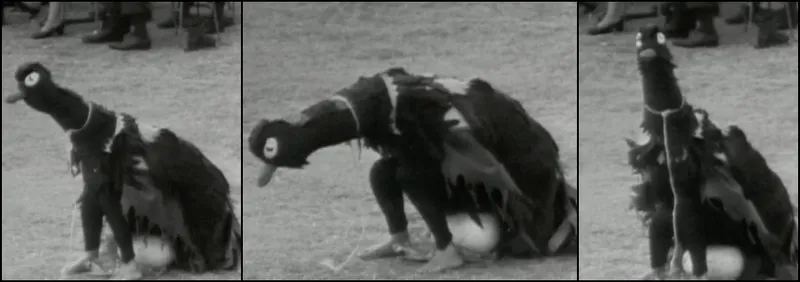
February 6 became a national holiday under Norman Kirk from 1974, though renamed as “New Zealand Day” – the occasion was marked with an audience, Queen Elizabeth among them, being treated to an elaborate performance including a dancing moa laying an egg. Nobody knows what happened to the moa, but in 1977 the name reverted to Waitangi Day.
From a political perspective, there tends to be an added fascination in an election year. How have prime ministers in our recent history approached that challenge? Let’s start by alighting on 1990, another of the years in which the Crown was represented by someone who wears an actual crown.
1990
Pop quiz: Who was the New Zealand prime minister in February 1990? It was Geoffrey Palmer, then halfway through his 13 months in the job. There was plenty of attention on Waitangi – it was, after all, the sesquicentenary of the treaty signing. This was the year that a protester hurled a wet T-shirt at the Queen.
Māori and Pākehā must “live together as one nation”, said the prime minister at Waitangi. “In the past decade we have confronted realities about the Treaty of Waitangi. Grievances are being resolved now in a way which is just and which is ordered … This generation will be judged by its successors on the way we managed to deal with issues raised by the document whose signature we mark today.”
The Queen said, “Today, we are strong enough and honest enough to learn the lessons of the last 150 years and to admit that the treaty has been imperfectly observed.” Her speech, like Palmer’s, was heckled throughout, before the crowd was won over by a rousing impromptu exhortation from Whakahuihui Vercoe, the bishop of Aotearoa. “The treaty was a compact between two people, but since the signing of that treaty, 150 years ago, I want to remind our partner that you have marginalised us,” he said. “You have not honoured the treaty.”
1993
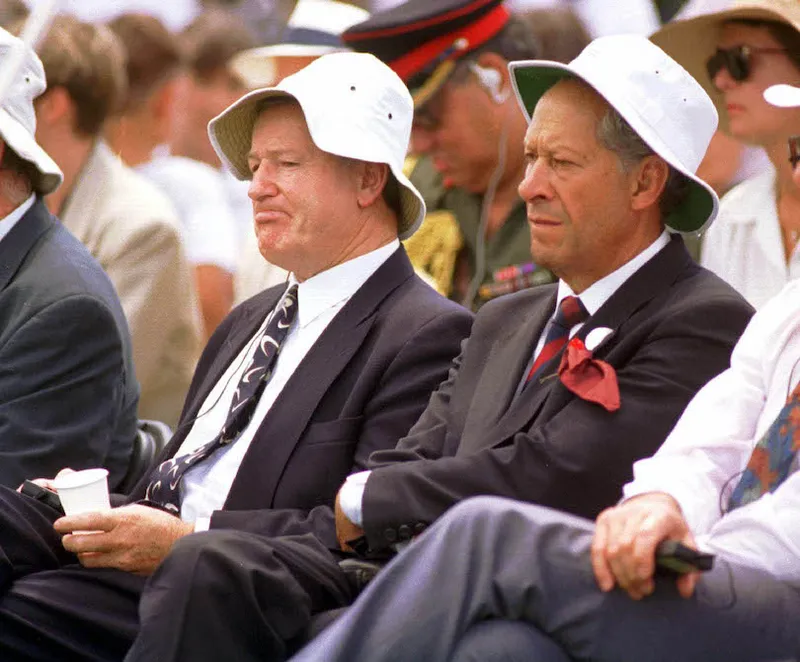
Jim Bolger arrived at Waitangi after a combustible couple of years notable for reforms including the “mother of all budgets” and the Employment Contracts Act. In terms of Crown-Māori relations, the Sealord deal – which received a mixed response in te ao Māori – had been sealed a few months earlier. There was some protest, but the occasion was reported to be largely “incident free”. Bolger did prompt some controversy after the commemorations by suggesting Māori commentators had too often overlooked a “very simple word of thanks”. He said: “I think it is important that New Zealand hears that word from time to time when legitimate claims have been genuinely addressed. It is easy to just go on and extend the list of claims, but occasionally just remember to say thanks, and I think that perhaps that was forgotten too often in this year’s Waitangi celebrations.”
1996
To talk about 1996, we need to talk about 1995. Then, Waitangi Day came in the molten heat of the “fiscal envelope” controversy, with opposition to the government’s billion-dollar cap on treaty settlements spilling into angry protest around Te Tii Marae. Speaking to a business audience 10 days later, Jim Bolger said: “What happened at Waitangi means there can be no going back to commemorate and celebrate Waitangi as it was. That is over. That shouldn’t cause too much grief. In recent years it has served as a focus for anger, protest and rudeness. There has been a lot of shouting but little, if any, listening.”
Winston Peters, leader of the newly formed New Zealand First Party, retorted: “Who is he to decide what will become of Waitangi Day? Whatever it becomes, it will assume a form that best suits all New Zealanders, not just Jim Bolger. To maintain otherwise demonstrates the kind of clumsy arrogance that has characterised the prime minister’s handling of the debate so far.”
When February 1996 rolled around, neither Bolger nor the governor general attended Waitangi, though deputy PM Don McKinnon and Labour leader Helen Clark were there. Protesters clashed with police over access to the upper grounds but it largely passed uneventfully.
1999
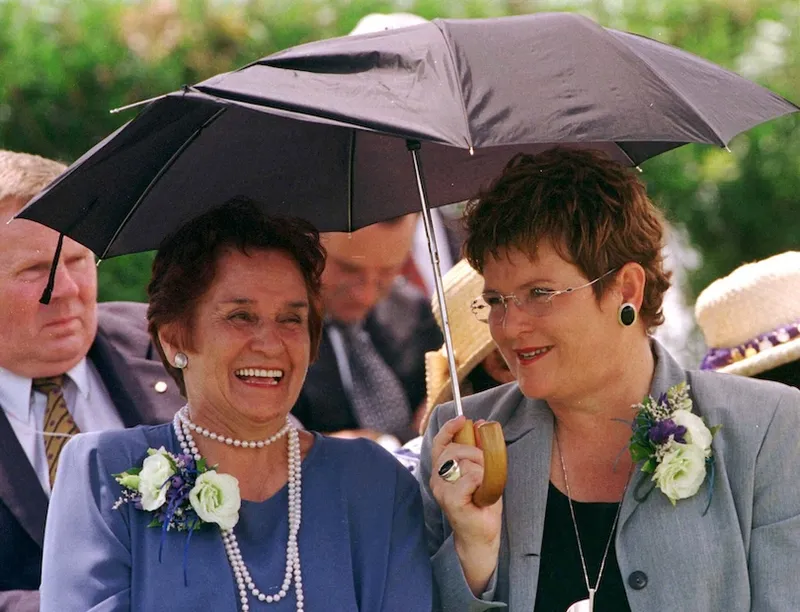
Having toppled Bolger in 1997, Jenny Shipley as prime minister continued his commitment to ongoing treaty settlements. (The fiscal envelope had been finally torn up as part of the first MMP coalition agreement, between National and NZ First, in 1996.) Shipley attended the dawn ceremony in 1998, but that was in many ways overshadowed by what happened to her rival. Helen Clark, the Labour leader, was visibly distraught at being challenged by Ngāpuhi activist Titewhai Harawira and prevented from speaking on Te Tii. Formal Crown representation – the first since 1995 – would resume in 1999, when both the prime minister and governor general took part, but not Clark.
2002
Helen Clark returned to Waitangi for the first time since 1998, and for the first time as prime minister. Escorted on to the marae by Titewhai Harawira in a gesture of conciliation, Clark did not speak, and declined to have a male MP speak in her stead.
2005
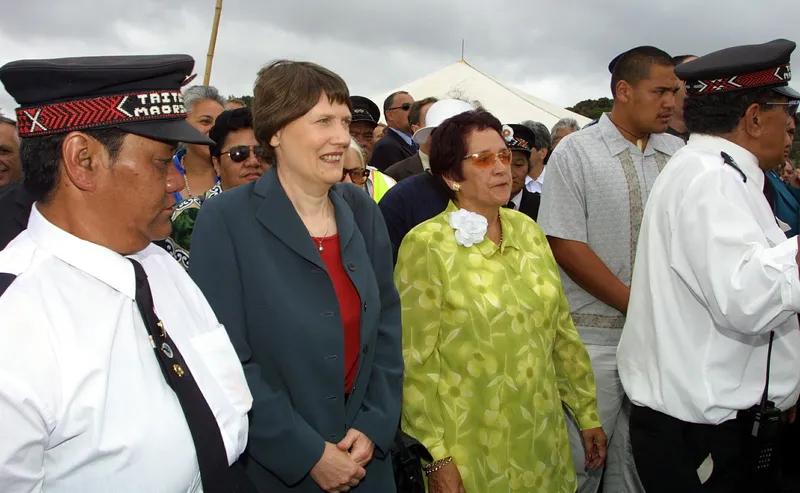
Helen Clark travelled to Waitangi, but this time stayed away from Te Tii Marae. That came after heated exchanges in 2004, during which she was heckled and jostled by protesters enraged by controversial foreshore and seabed legislation, which vested ownership of the terrain to the Crown and ruled out Māori seeking customary title. (2004 was also the year when Don Brash, fresh from his Ōrewa speech as National leader, was splattered in Waitangi mud.)
2008
Again, Helen Clark visited Waitangi but steered clear of the Te Tii pōwhiri. John Key, the leader of a National Party that had by now opened up a big polling lead over Labour, and dubbed a “glamour boy” at Waitangi by a Northern Advocate reporter, did attend the marae, and promised to attend every year if he became prime minister.
2011
For the third year, prime minister John Key encountered protest on his way to Te Tii. In 2011, after being escorted on to the marae by Māori Party co-leader Pita Sharples, he praised the party for their support in government and urged Māori to focus less on grievance of the past and more on the future.
2014
John Key was at Te Tii Marae for the political welcome and the dawn service on the day itself. Locals reportedly called the mood “fairly low-key and tame”, and the prime minister felt much the same way, despite a dead fish-themed protest over environmental policy. “Yes, some guy threw a bag of pilchards or something on the way out but, bluntly, I’ve been coming now for eight years, and … this would have to be at the milder end of the spectrum,” he said.
This was also the first year that women were allowed to speak at Te Tii Marae, and Greens co-leader Metiria Turei became the first female politician to do so.
2017
In 2016, with controversy swirling around the TPP trade deal, John Key had decided against going to Waitangi a few days beforehand, after being told he could not speak on the marae – effectively a “gagging order”, he said. In his absence, Steven Joyce stole the show, kind of. Would he return in 2017? That was never tested, because he resigned as prime minister later that year.
His successor, Bill English, was refused full rights to speak at the Te Tii Marae in 2017, so decided to scarper after the February 3 Iwi Chairs Forum. On Waitangi Day, he joined Ngāti Whātua at Bastion Point, which received at least one glowing review.
2020
In February 2018, six months after she became Labour leader, Jacinda Ardern had arrived as prime minister at Waitangi. The first female prime minister to speak at the political pōwhiri – now relocated across the bridge and up the hill at Te Whare Rūnanga – declared from the verandah: “Hold us to account. Because one day I want to be able to tell my child that I earned the right to stand here … Only you can tell me when I have done that.”
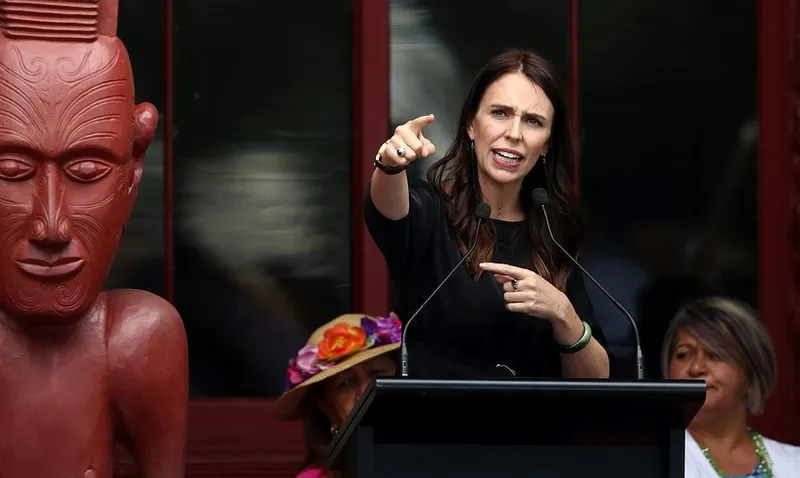
Two years later, she called back to that speech, saying: “When I first came here, I said hold me to account and I will keep coming back here so you can do just that. Not because we lack scrutiny, there is plenty of that, but because we should never be afraid of it.” The National leader, Simon Bridges, said if she were held to account, Ardern would be found wanting, provoking a rebuke from Ardern’s deputy, Winston Peters, who accused Bridges of politicising the occasion.
Ardern would go on to win the 2020 election by a landslide in a time of Covid, but it would be her last election-year Waitangi.
2023
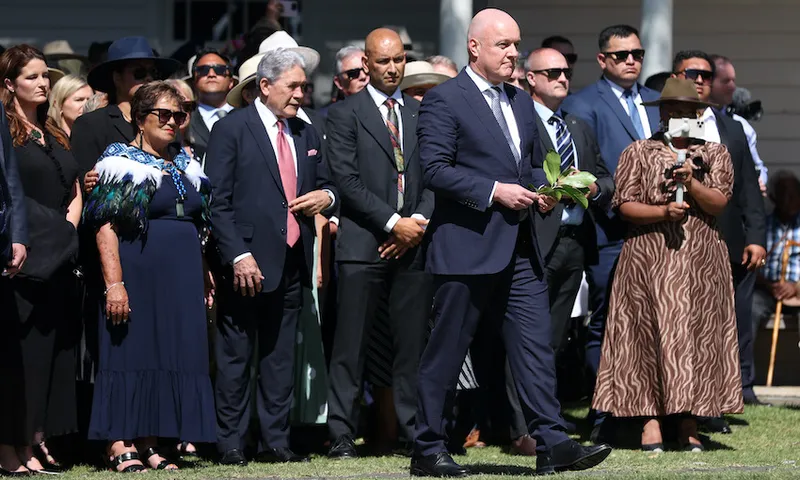
After two years of commemorations cancelled because of the pandemic, the political exchanges resumed at Waitangi, with a pair of Chrises newly in the top jobs, Chris Luxon having replaced Judith Collins, who had replaced Todd Muller, who had replaced Simon Bridges, and Chris Hipkins having replaced Ardern, who just a few days before Waitangi Day had decided to quit as prime minister.
The most remarkable contribution from a politician, arguably, was from David Seymour, with the Ngāpuhi leader of the Act Party delivering his speech entirely in te reo, and with only glancing reference to his notes.

Toby Manhire
Toby Manhire is editor-at-large at The Spinoff. He loves to cast a pod, whether it's Gone By Lunchtime, At Large or Juggernaut. He is a former editor of The Spinoff and has worked as a journalist in NZ and the UK since the last millennium.


