‘Undemocratic’ and ‘racist’? Here’s what’s going on with Far North District Council

Davina Smolders (right) has been pressuring the government to intervene in what she labels ‘racist and undemocratic’ processes (Photos: Far North District Council and Act Party; additional design: The Spinoff)
The country’s northernmost council is facing criticism for the makeup of one of its advisory councils, with allegations of racism and requests for Crown intervention.
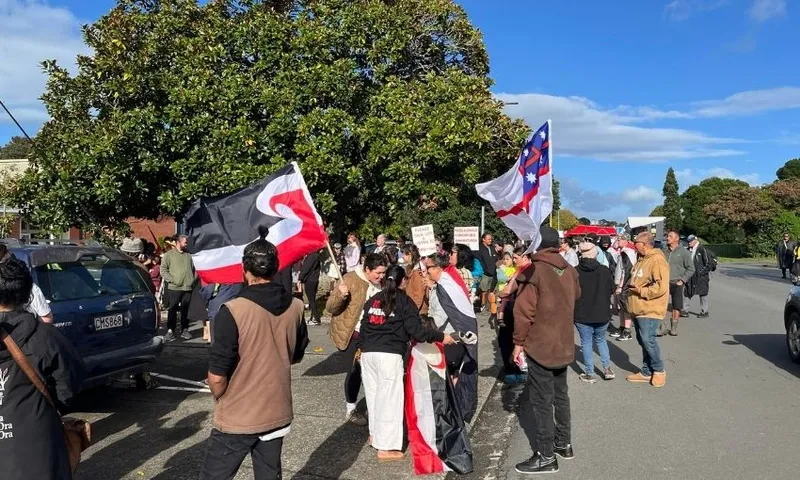
A large crowd gathered outside the Far North District Council chambers in Kaikohe yesterday. Inside, councillors held an extraordinary meeting to vote on the appointment of 10 non-elected representatives to a council committee.
While the resolution passed with only one vote opposed, the bigger issue of unelected members sitting on a council committee – and having full voting rights – has caused a stir among local ratepayers and the wider public.
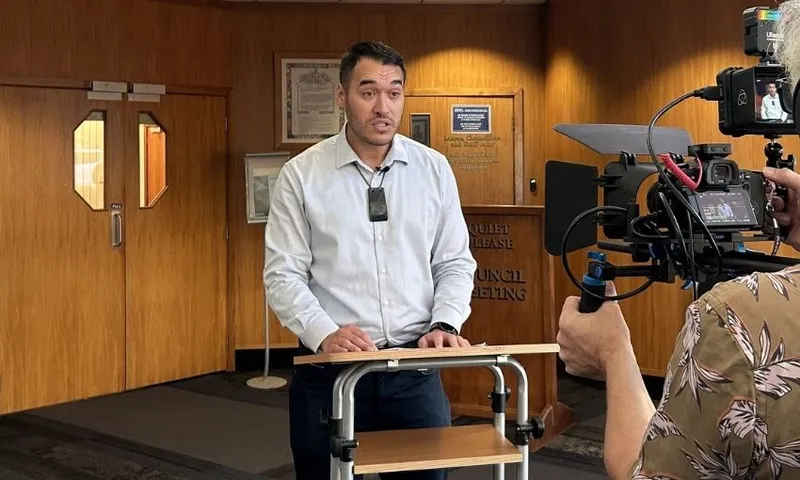
Councillor Davina Smolders has requested central government intervention, asking local government minister Simon Watts to send a Crown observer to engage with the council.
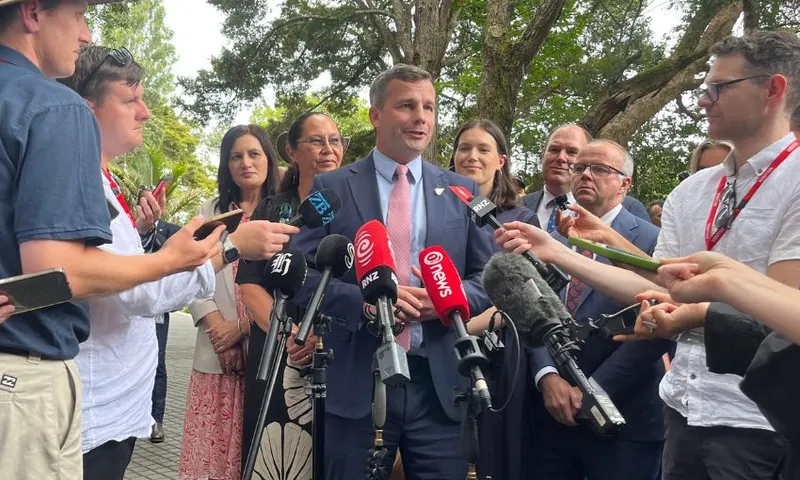
“We’ve got a huge problem in the Far North District Council,” deputy prime minister David Seymour recently said on Duncan Garner’s Editor in Chief podcast.
What’s the problem?
The “huge problem” Seymour is referring to is the fact local hapū and iwi have representatives sitting on a council committee called Te Kuaka. According to the council’s website, the committee’s purpose is: “To provide strategic leadership and guidance that strengthens te ao Māori perspectives within council decision-making, ensuring genuine te Tiriti-based partnership and leadership between the council and iwi/hapū.”
For Smolders – a first-term councillor who ran under the Act Party banner – the representation of unelected hapū and iwi on the committee is “undemocratic and extremely concerning”.
Also speaking on Garner’s podcast, Smolders claimed there were six elected councillors on the committee and 15 “unelected representatives, all with votes”. She spoke about the committee making decisions that cost ratepayers money, saying it lacked “understanding” of the council’s financial obligations.
“They don’t understand the whole big picture… They’re shaping, forming and directing all the decisions,” Smolders said.
Why is it an issue?
Despite having existed for decades, particularly through treaty settlement legislation, co-governance has become a contentious political issue in recent years. Specifically, debate has centred on the role of Māori in decision-making over public resources, services and whenua. Recent co-governance arrangements in broader public services like healthcare, freshwater management and local council representation have caused the issue to bubble to the surface.
Those opposed to co-governance argue the arrangements provide separate rights based on ethnicity, which they say is undemocratic. Smolders and Seymour say the inclusion of hapū and iwi representatives on Te Kuaka is “racist”.
“They appear to be inventing a new form of local government which is half elected, half unelected,” Seymour said.
Why is the council appointing unelected members to a committee?
Te Kuaka is the council’s committee for Māori strategic relationships. The members appointed to the committee represent local hapū and iwi in the district. They speak for the people with whom the council is hoping to engage and develop meaningful relationships. According to mayor Moko Tepania, the decision to include these representatives on the committee and in council processes is reflective of “the realities” of the Far North district, where over half the population identifies as Māori.
“All governance arrangements and decisions are transparent and publicly available. There are no hidden agendas and decision making has not been handed to unelected parties,” Tepania said in a statement.
Are Māori the only unelected members allowed to sit on a council committee?
No. All councils have the power to allow unelected members to sit on committees, and Far North District Council is just one of several around the country that has chosen to exercise it.
In May 2022, the council resolved to allow external appointments to committees, recognising the appointment of external non-elected persons “can enhance the available skills and expertise around the decision-making table”.
Councils commonly appoint independent experts, community board members or representatives from other organisations to specific committees, none of whom are elected by the general public. Generally, these people have expertise in matters relevant to the committees they join. Sometimes – as is the case with some of the hapū and iwi representatives on Te Kuaka – there are internal democratic processes that organisations follow to select a representative.
What powers do they really have?
“Our Te Kuaka committee, and most of our committees, do not make final decisions. They provide advice only. All binding decisions, be it financial, statutory or strategic, are made by your elected council,” Tepania said in a statement.
The powers council committees can have vary, but the Local Government Act prohibits certain powers from being delegated to committees. This includes core, high-level governance decisions like setting rates, borrowing money and adopting bylaws. Only elected councillors can do these things, ensuring democratic accountability.
According to the council, a key part of what Te Kuaka does is oversee implementation of Te Pae o Uta Te Ao Māori Framework, developed to help improve “inclusivity and responsiveness” in the council’s work. It also provides advice to the council on strengthening partnerships with iwi and hapū, including representing Māori interests in key strategic documents like the long term plan.
At its last committee meeting, Te Kuaka recommended the council adopt an environmental management plan submitted by local iwi Te Patukeha, approved a bilingual name for Far North District Libraries, and received a number of reports.
What has the government said?
Smolders says she has made repeated requests for a Crown observer to be appointed to the council. There is a high threshold for such an intervention, which is usually made to support a council facing significant issues. So far, Watts has declined to appoint a Crown observer to Far North District Council.
“I am advised that the council’s current actions do not constitute formal ministerial intervention at this time,” Watts said in a statement to The Spinoff.
However, he said he had “asked officials to talk to the council and report back should they identify any concerns that warrant further investigation”. Watts highlighted that this was “standard practice” and a spokesperson from his office told The Spinoff it was “not a big deal”.
Meanwhile, Seymour said on the podcast: “We’re now seeing political authority that comes from ancestry.”
Act MP Cameron Luxton has drafted a private member’s bill barring non-elected appointees from having voting rights on council committees and launched a supporting petition that has gathered more than 3,000 signatures so far.
What happens now?
The council carried the motion to appoint the representatives to Te Kuaka. Previous attempts from Smolders to request reviews of mana whakahono ā rohe agreements under the Resource Management Act and memorandums of understandings with local hapū and iwi have all failed, as have her attempts to remove the rights of unelected committee members.
“It’s not about excluding anyone – it’s about ensuring we get the structure right. And this structure is not right,” Smolders said during the meeting.

Liam Rātana
Liam Rātana (Ngāti Wairupe/Ngāti Kurī) is editor of The Spinoff's Ātea section. He is passionate about indigenous and minority issues. Liam enjoys cooking, poetry, photography, and exploring the outdoors.


