Kō wai tēnei: Young Māori director Allie Howell

Design: The Spinoff
Ko wai tēnei? is a series profiling inspirational Māori in Aotearoa and beyond. Today, we get to know young Māori director Allie Howell.
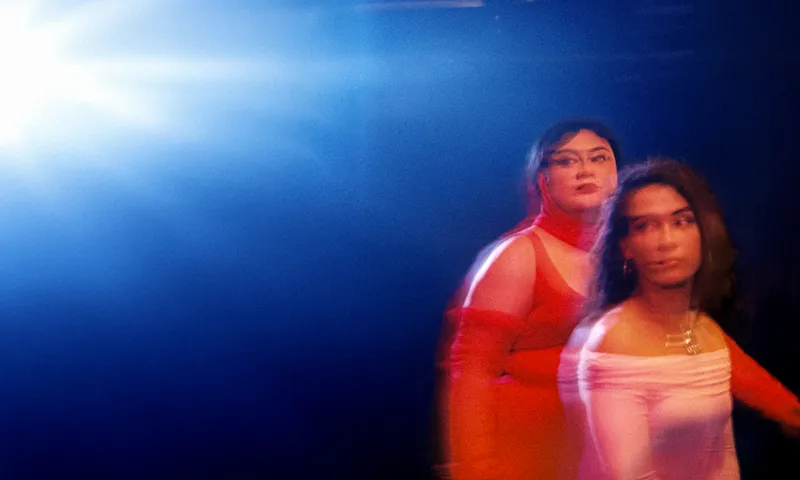
Allie Howell is a young trans Māori director and writer. Her short film Atu Pūao is a part of the 2025 Show Me Shorts festival and profiles a young Māori trans woman reckoning with safety, isolation and the fragile bonds of old friendships outgrown — as the promise of belonging rises just beyond the horizon amid the nightlife of a new city.
Ko wai koe? Nō hea koe?
Ko Allie Howell ahau. He uri tēnei nō Waitaha-a-Hei, Ngāti Rangiwewehi me Pākehā (Hōrana, Kōtirana, Ingarani). I tipu ake au ki Paraparaumu, ki te takiwā o Te Waewae-Kapiti-o-Tara-rāua-ko-Rangitāne. Kei Tāmaki Makaurau taku wāhi noho ai.
What’s the kaupapa that drives you right now?
Right now, I’m really interested in the whakapapa of irawhititanga ki Aotearoa, and how it connects back to our cousins across te Moana-nui-a-kiwa. We’ve recently just made a short film, Ata Pūao, about the ongoing urban migration of rangatahi irawhiti, and the cycles of care provided by whakawāhine, tangata ira tāne and MVPFAFF+ elders. We were heavily inspired by the mahi of Hinaleimoana Wong-Kalu, who used her film Kapaemahu as a medium to tell the history of māhū in the islands of Hawai’i. Exchanging kōrero about our tuakana takatāpui through film, art and wānanga has opened up doors to better connect to te ao Māori, and to learn about my role in different hāpori.
What’s the best piece of advice you’ve ever received?
All I can think of right now is my ballroom mother, Moe Laga, saying: “You think you’re all that!” It might not seem like advice, but she has a way of saying a lot with little words. Wrapped in these five words is a compliment, recognising that I’m doing something she sees as impressive or admirable. There’s also an acknowledgement of growth or improvement, she sees I’ve been working on myself and achieving greater things. And finally there’s a reminder to stay humble, because ultimately we’re a community, and while you might be “all that”, never forget the ones around you who helped nurture “all that”. You think you’re all that is the biggest compliment she could give.
What’s one challenge you’ve had to overcome on your journey?
A universal challenge which I’ve encountered a few times now has been relocating. I spent all my life in Paraparaumu, but at 17, I shifted to Ōtautahi. At 20, I shifted to Tāmaki Makaurau. The solution really has been community every time. It was the basis of our short film, but it’s also so true for so many urban takatāpui. Even when the world feels uncertain, community will always rise just beyond the horizon, ready to guide us home.
What’s a moment you’re really proud of?
This isn’t my moment to be proud of necessarily, but seeing my youngest brother Cooper excel in so many things has filled me with the most pride these past couple years. Being able to return to Paraparaumu and watch him play rugby, or compete in dance competitions, really fills my cup. Never did I think I’d be so happy to return to the rugby fields. Best believe I’m on the side lines yelling “PERIOD!” and “WORK!” as he sets up the game-winning try.
What does success look like to you?
I’m probably detrimentally obsessed with stability, but the Taurus-Sun in me really values it. True success to me will be sitting in my rocking chair on my front porch at 80 years old and being surrounded by whānau, blood and those chosen.
Who are three people you admire and why?
Carmen Rupe, Chrissy Witoko, Georgina Beyer. These tāhine have achieved so much for not only takatāpui, but MVPFAFF+, queer people, HIV positive people, Māori, women, and the culture of Aotearoa as a whole. Not a lot of people know that Georgina was also the first female mayor of Carterton and first Māori mayor in the Wairarapa district. For the set of our short film, Pounamu Rurawhe co-composed ‘Ngā Manukura’, a lament which we sang each morning to ground our kaupapa in the histories of these three tuakana tāhine. I hope to hear these rangatira takatāpui sung about in kapa haka, talked about on marae and taught to the generations to come.
What keeps you grounded?
Whakapapa. I no longer practice organised religion, but I hold a lot of spirituality in my connections to my tūpuna — whether that be my Māori and Pākehā ancestors arriving in Aotearoa, or learning of my grandparents schoolyard stories. Knowing the paths before me, really grounds my ability to walk in the present.
What’s one whakaaro you want to leave our readers with?
I remember reading a Kahungunu whakataukī: He ao te rangi ka uwhia he huruhuru te manu ka tau. The context behind it is quite important, but in a general sense, these are kupu to live by. Dressing for the occasion goes a long way!
Where are you at the marae hui? In the whare or in the kitchen?
I’ve never been to our marae, but I hope to one day. That said, when I’m at my partner’s marae, I’m either helping out (I hope), or likely at work. When kaupapa calls, there’s got to be someone still going to mahi and paying the bills. And I don’t mind working if it means my partner is able to see their whānau.
Finally – what’s something about you most people don’t know?
I dressed up as Michael Jackson for a couple years of primary school. Suit, tie, hat, glove and all! On the day of his death, one of the teachers even pulled me out of class to personally let me know. So if you ever saw a goony looking kid performing ‘Bad’ at a 2007 talent quest in the Wellington region, kia ora anō!
Liam Rātana
Liam Rātana (Ngāti Wairupe/Ngāti Kurī) is editor of The Spinoff's Ātea section. He is passionate about indigenous and minority issues. Liam enjoys cooking, poetry, photography, and exploring the outdoors.


