So what are the kids up to for New Year’s these days?

The author trying to write this story.
Alex Casey infiltrates gen Z circles to find out how young people are planning to ring in 2026 across Aotearoa.
For decades, getting rat-arsed on New Year’s Eve has been a rite of passage for New Zealanders. Former young people told me about waking up to a heavenly sunrise on Mount Maunganui beach and thinking they had died, taking legal party pills at R&V and standing immobile on a path for two hours, and breaking their arm, drunk, while trying to win a “high kick” competition. “We played a game that involved counting the number of police you could smack on the bum,” recalled another. “The night ended in riots and my friend’s dad’s car got bottled.”
But in recent years, headlines suggest that the boozy tide might be turning. Various local studies have reported a “dramatic drop” in youth drinking compared to 20 years ago, reflecting a similar rise of a “sober-curious” gen Z cohort in the UK and US. The 2025 New Zealand Health Survey found that 21% of 18- to 24-year-old New Zealanders hadn’t had a drink in the past year, compared to 15% in 2012. Among 15- to 18-year-olds, the number of non-drinkers has risen from 40% to 51% over the same period.
These changing habits are having an impact on bars and live music venues, but what about New Year’s Eve?
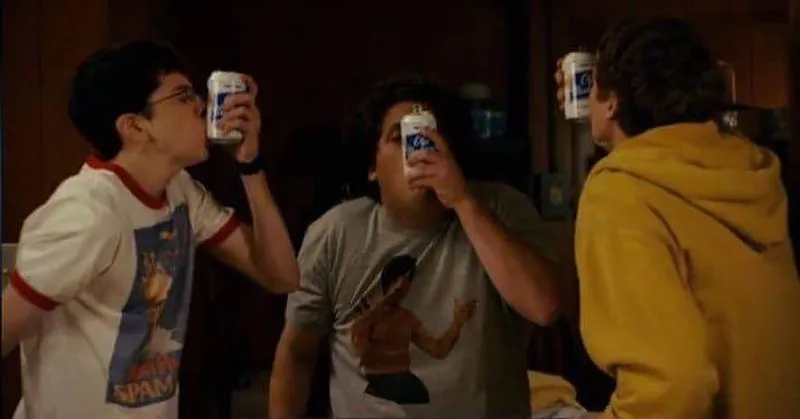
To find out, I bravely contacted every single gen Z person I have ever encountered in my entire life to ask what they had planned. “The whole blacking out shitfaced goodness is still happening, but I think there’s a change in youth valuing things like wellbeing and economic security,” said Sacha*, 20. “There’s an over-abundance of ‘designated drivers’ because everyone is watching their alcohol intake.” She’s spending New Year’s with her family – “something more low-key that doesn’t go till dawn” – with just “a few” quiet drinks.
Ray Thompson, national director for alcohol harm prevention organisation Red Frogs New Zealand, has observed how the pandemic changed drinking habits in young people on occasions like New Year’s Eve. “Over Covid, things like university parties and clubbing weren’t happening in the same way, so we now see more elements of overwhelm, and young people who don’t know how to hang out in groups any more,” he said. “While the overall amount of young people drinking is going down, we do still find those elements of drinking to excess.”
Along with social shifts, the cost of living has also impacted how young people approach New Year’s. “NYE at a mate’s place is always the go because you can get fucked up for cheap, and celebrate the New Year with your closest mates while not having to spend $$$ waiting an hour in traffic to get out of town,” said one 25-year-old. “I was looking at tickets to AUM [festival], and they’re like 400 bucks,” said James*, 21. “And then you have to pay for alcohol there, a tent and transport. A lot of people my age just can’t afford that sort of stuff.”
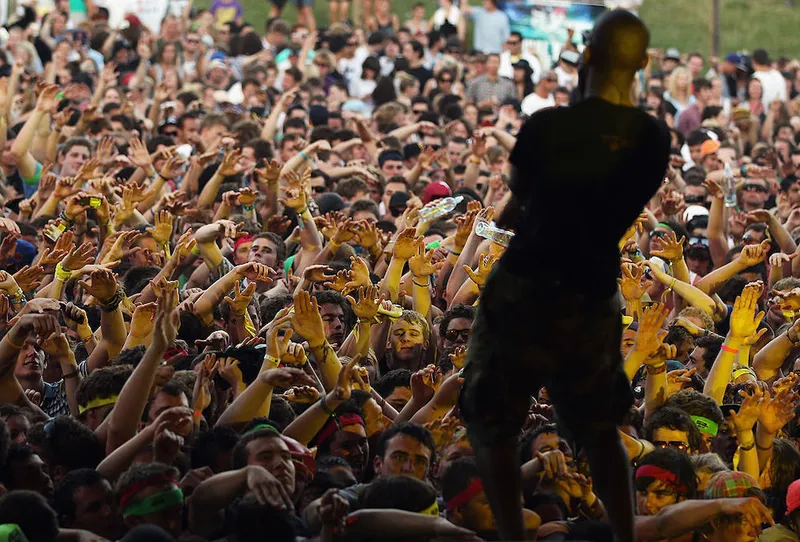
After spending the last three years at Rhythm and Vines, Ella*, 22, is splashing her cash at Lakes Festival in Christchurch followed by Rhythm and Alps in Wānaka this year. “I’m sad to be retiring [from R&V] but I am very much still a festival goer,” she said. “A part of me wants to grow out of it because it’s so expensive, but I do love a good New Year’s.” She and her friends still drink “a lot” at festivals, but she has noticed things becoming a lot more “drug-oriented” in recent years – especially ketamine and MDMA. “Last year at Rhythm and Vines, it was zombieland,” she said.
In Auckland, James* has noticed the same trend. “More people are taking substances now, because they’re cheaper and much more available. A gram of cocaine is about $200, but that’s how much you’d spend on a night out drinking anyway.” While he would rather “take ketamine than drink a box of beers” this New Year’s – “you can get into a k-hole, but that doesn’t happen very often” – he still doesn’t have firm plans. “Ideally a crammed house party in Mount Eden or Grey Lynn, and my New Year’s countdown song being ‘Ribs’ by Lorde.”
Sarah Helm, executive director for Te Puna Whakaiti Pāmamae Kai Whakapiri New Zealand Drug Foundation, told The Spinoff that people aged 15 to 24 are the highest users of MDMA, cannabis and hallucinogens – although cocaine use remains highest in the 24- to 35-year-old bracket. “For people taking cocaine in place of MDMA, it’s important to know that cocaine has different risks from MDMA. Cocaine can also come with what we call a ‘compulsive redosing’ effect – which means you could end up taking more than you intended,” she said.
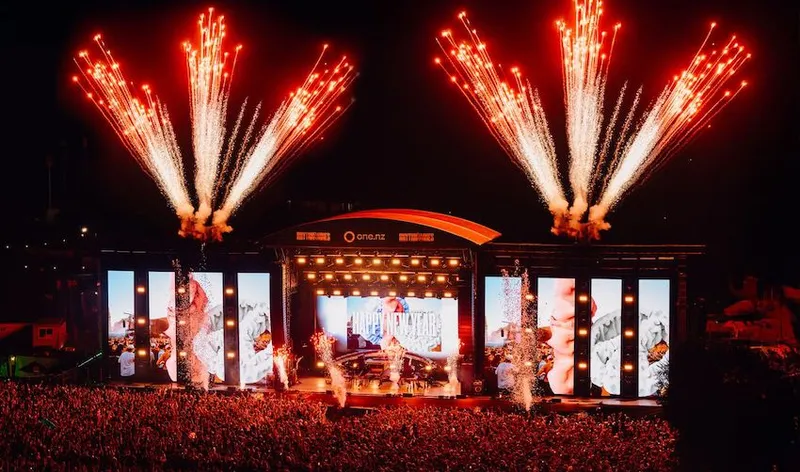
There have also been recent instances of super-strength MDMA pills circulating, where one pill contains upwards of two to three common doses. “One pill does not necessarily equal one dose. Start with a low dose and wait to feel the effects before deciding to take more,” said Helm. Her broad advice for anyone taking drugs over New Year’s is to stay aware that they might be mixed with something else, or be another drug entirely. Festivals will have drug-testing stations or you can find a drug-testing station before New Year’s Eve.
Inspector Ian Paulin, manager of alcohol harm prevention for NZ Police, has also seen a spike in young people using drugs of late. “Definitely over the last six years, even just looking at a cohort of students in Dunedin, MDMA use is through the roof in that area,” he said. “It’s a party drug that often won’t be taken in isolation – it will be taken with alcohol as well.” While he is aware of the various headlines about the decline in youth drinking, he says it is a different story on the ground. “Certainly last year in Wānaka, it was no different than any other year,” he said.
“It was probably no different than back in the 80s when I went there as a young fellow drinking.”
Paulin will be patrolling in Dunedin’s Octagon for New Year’s Eve, and is preparing for another big night. “If you graph alcohol harm over the last decade, you’ve got a massive spike on New Year’s Eve – anyone that’s ever policed in the last 40 years will tell you that.” His “old school” advice to young partygoers is simple – “make a plan about how you’re going to get home, or [have] some ability to pay for transport if you need to. Make sure you all keep together, and make sure someone in the group is going to remain reasonably sober, if not completely sober.”
Thompson at Red Frogs will also be out on the frontline at festivals and events over the next three weeks, helping volunteers provide supplies like pancakes, water, lollies and medical support to young people who may have pushed the boat out too far. “At the end of the day, most young people are just out there wanting to have a good time on New Year’s Eve, and having a good time is not actually synonymous with drinking as much alcohol as you can or taking as many substances as you can,” he said.
“Nobody starts their New Year’s thinking ‘man, I really hope I wake up under a bush tomorrow’.”
Alex Casey
Alex Casey is a senior writer at The Spinoff with over a decade of experience writing about popular culture and social issues in Aotearoa. She lives in Ōtautahi and likes watching reality TV and walking the dog, occasionally at the same time.


